Before streaming, before DVDs, before everything became compressed, optimized, and instantly accessible, there was a format that demanded attention—not just from your eyes and ears, but from your hands, your shelf space, and your patience. That format was the LaserDisc.
It was big. It was shiny. It was expensive. And it was completely impractical in almost every modern sense. Yet, for collectors, cinephiles, and early home theater enthusiasts, LaserDisc wasn’t just a way to watch movies—it was a statement.
Even today, decades after its decline, LaserDisc holds a strange and powerful appeal. It represents a moment in media history when physical ownership, analog beauty, and experimental home entertainment collided.
To understand why people still collect it, we need to go back to what it actually was—and why it mattered so much.
The Birth of LaserDisc: A Format Ahead of Its Time
The LaserDisc was introduced commercially in 1978, although its development dates back to earlier experimental optical video technologies in the 1960s and 1970s. It was primarily developed through collaboration between MCA and Philips, and later supported heavily by Pioneer, which became the dominant manufacturer.
At the time, home video was still evolving. VHS and Betamax were competing formats, both based on magnetic tape. LaserDisc, however, took a radically different approach:
- It used a 12-inch reflective disc
- It stored video using analog optical encoding
- It used a laser to read the information without physical contact
This made it the first commercial optical video disc format for home use.
But despite its innovation, LaserDisc never replaced VHS. Why? Because it was expensive, bulky, and required specialized players. Still, it offered something no tape ever could: stunning image stability and superior audio quality.
The Tech: Analog Video in a Digital-Feeling World
One of the most misunderstood aspects of LaserDisc is its technology.
Although it feels “digital” because it uses lasers, LaserDisc is actually an analog video format. The video signal is stored as frequency variations encoded on the disc surface—similar in concept to vinyl records, but for moving images.
Key Technical Characteristics:
- Video format: Composite analog video
- Audio: Analog FM or digital PCM (on later discs)
- Resolution: ~425 horizontal lines (better than VHS)
- Storage: Rotating optical disc read by laser
- Disc size: 30 cm (12 inches)
Unlike DVD, there are no pixels in the traditional sense. Instead, you get continuous scanlines—an image that feels fluid, organic, and slightly imperfect.
This is part of what makes LaserDisc visually distinctive. It doesn’t look “sharp” in a modern sense. Instead, it looks alive.
The Experience: Watching Movies Was Physical
Watching a LaserDisc was not passive.
You didn’t just press play and forget it. You interacted with it.
The Flip Factor
Most LaserDiscs were double-sided, but they couldn’t automatically switch sides. That meant:
- Movie pauses at the halfway point
- You physically eject the disc
- Flip it over
- Resume playback
It was like flipping a vinyl record during a concert—but for movies.
This interruption created a ritualistic viewing experience. It reminded you that the movie was not a stream—it was an object.
Why LaserDisc Looked So Good (For Its Time)
Even though LaserDisc is analog, it was still far superior to VHS in several ways.
1. No Magnetic Tape Degradation
VHS tapes wear out. LaserDiscs don’t physically degrade from playback since there is no physical contact with a head.
2. Sharper Image
With roughly 425 lines of horizontal resolution, LaserDisc delivered a noticeably clearer picture than VHS.
3. Stable Playback
No tracking issues. No tape jitter. No distortion from worn tape heads.
4. Better Color and Detail
The analog signal preserved smoother gradients and more consistent color reproduction.
However, it wasn’t perfect. LaserDisc suffered from:
- Visible noise in darker scenes
- Occasional “laser rot” (disc degradation)
- Noisy composite video limitations
Still, for its time, it was considered the closest thing to a theater experience at home.
Pioneer CLD and the Hardware Culture
If LaserDisc was the format, Pioneer CLD players were its heart.
Pioneer dominated the LaserDisc market with a range of players that became iconic among collectors:
- Pioneer CLD-D504
- Pioneer CLD-704
- Pioneer CLD-99 (high-end reference player)
- Pioneer HLD-X9 (elite Japanese model)
These machines were not cheap consumer electronics. They were engineered like high-fidelity audio equipment.
Features included:
- Dual-side playback mechanisms
- Digital/analog audio switching
- S-Video outputs (in later models)
- Heavy-duty chassis for vibration control
Owning a Pioneer CLD player in the 1990s was a status symbol among home theater enthusiasts. It meant you cared deeply about video quality—sometimes more than practicality.
The Criterion Collection: Where LaserDisc Became Art
Perhaps the most important cultural legacy of LaserDisc is its role in shaping modern film preservation and home media culture through the Criterion Collection.
Before DVDs, Criterion used LaserDisc as a platform for something revolutionary:
Special Features Were Born Here
Today, we take extras for granted:
- Director commentaries
- Behind-the-scenes documentaries
- Restored cuts
- Essay booklets
But on LaserDisc, these were groundbreaking innovations.
Criterion pioneered:
- Audio commentary tracks
- Film restoration presentations
- Supplementary scholarly essays
- Alternate cuts and director-approved editions
For the first time, movies weren’t just sold—they were curated.
LaserDisc became a museum format. Each release was treated like an archival object rather than a mass-market product.
LaserDisc vs DVD: The Format That Lost the War
When DVDs launched in the late 1990s, LaserDisc’s fate was sealed.
Why DVD Won:
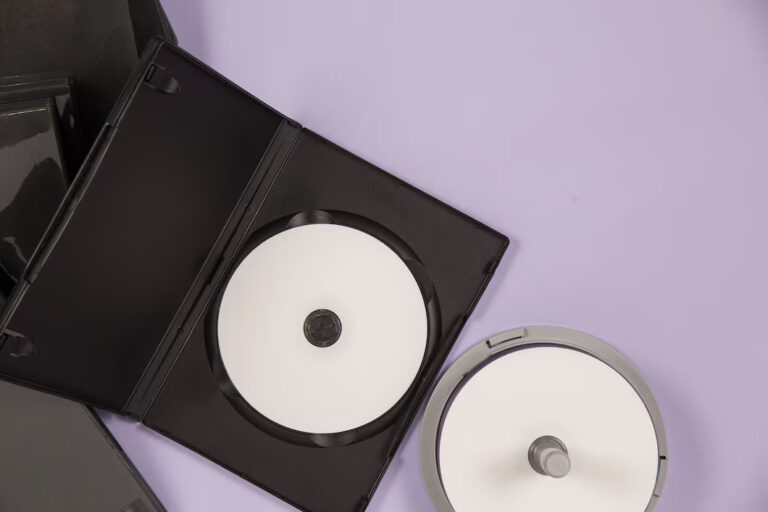
- Smaller size (12 cm vs 30 cm discs)
- Digital compression efficiency
- Lower production costs
- Higher storage capacity
- No need to flip discs
- Easier manufacturing and distribution
LaserDisc Advantages That Disappeared:
- Analog warmth in video reproduction
- Larger physical artwork and packaging
- Early adoption of special features
- Audiophile-grade PCM audio quality
DVD improved nearly everything—but in doing so, it standardized and compressed the personality out of home video.
LaserDisc was expressive. DVD was efficient.
The Flip Side of Beauty: Why LaserDisc Was Impractical
For all its charm, LaserDisc was never designed for mass adoption.
1. Size Problem
At 12 inches, LaserDiscs were the same size as vinyl LPs. This made storage bulky and expensive.
2. Cost Barrier
Both players and discs were expensive compared to VHS.
3. No Recording Capability (Mostly)
Unlike VHS, LaserDisc was primarily playback-only for consumers.
4. Side Flipping
Interruptions broke immersion in long films.
5. Fragility and Laser Rot
Some discs developed oxidation issues, causing playback defects.
It was a format built for enthusiasts, not casual viewers.
LaserDisc as a Collector’s Dream
Today, LaserDisc exists almost entirely as a collector’s medium.
Why do people still collect it?
1. Physical Presence
A LaserDisc collection feels like a library of cinematic artifacts.
2. Large Artwork
Cover designs are oversized and visually striking—far more expressive than DVD cases.
3. Historical Value
It represents a transitional moment in media technology.
4. Exclusive Content
Some LaserDisc editions contain unique transfers or commentary tracks never reissued elsewhere.
5. Nostalgia and Ritual
Collectors enjoy the tactile experience of handling, flipping, and playing discs.
Owning a LaserDisc collection is less about convenience and more about connection to media history.
Strange and Rare LaserDisc Releases
One of the most fascinating aspects of LaserDisc collecting is the sheer variety of unusual releases.
1. Early Anime Imports
Japan’s LaserDisc market exploded in the 1980s, especially for anime. Many early anime releases were exclusive to LaserDisc.
2. Concert Films
Music performances were a major LaserDisc category, often with superior audio mastering.
3. Educational Discs
Training videos, encyclopedias, and interactive content were common.
4. Experimental Interactive Titles
Some LaserDiscs attempted early multimedia experiences using frame-by-frame navigation.
5. Cult Film Editions
Obscure horror and sci-fi films often received elaborate LaserDisc treatment long before DVD remasters.
The Analog Aesthetic: Why It Still Feels Special
In a digital world defined by compression and streaming, LaserDisc stands out because it is unapologetically physical.
There is something almost poetic about its imperfections:
- Slight video noise
- Mechanical playback sounds
- Manual disc flipping
- Large, heavy packaging
It forces patience. It forces attention.
And in return, it offers something modern formats often don’t: presence.
You are not just watching a movie. You are interacting with a machine.
The Emotional Appeal of Obsolete Technology
LaserDisc resonates emotionally because it represents a lost philosophy of media:
- Ownership over access
- Ritual over convenience
- Hardware over software
- Experience over speed
In a world where content is infinite and instant, LaserDisc feels grounding.
It reminds us that technology once required commitment.
You didn’t just press play—you prepared for the experience.
Why LaserDisc Still Matters Today
Even though it has been replaced technologically, LaserDisc continues to influence modern media culture:
- Blu-ray bonus features evolved from LaserDisc extras
- Film preservation standards were shaped by Criterion LaserDiscs
- Collecting culture around physical media began with formats like this
- High-fidelity home theater expectations trace back to LaserDisc enthusiasts
It is not a dead format. It is a foundational one.
Conclusion: Beautiful, Impractical, and Unforgettable
LaserDisc was never meant to win.
It was too big, too expensive, too inconvenient. But in its ambition, it achieved something far more interesting than market dominance.
It turned movies into objects again.
It made home viewing feel like an event.
It brought artistry, engineering, and ritual together in one glowing, spinning disc.
Today, we live in an age of invisible media—files, streams, and compressed convenience. LaserDisc stands as a reminder that technology can be both functional and beautiful, even if it is impractical.
And that is why it still matters.
Not because it was perfect.
But because it wasn’t.
About the Author