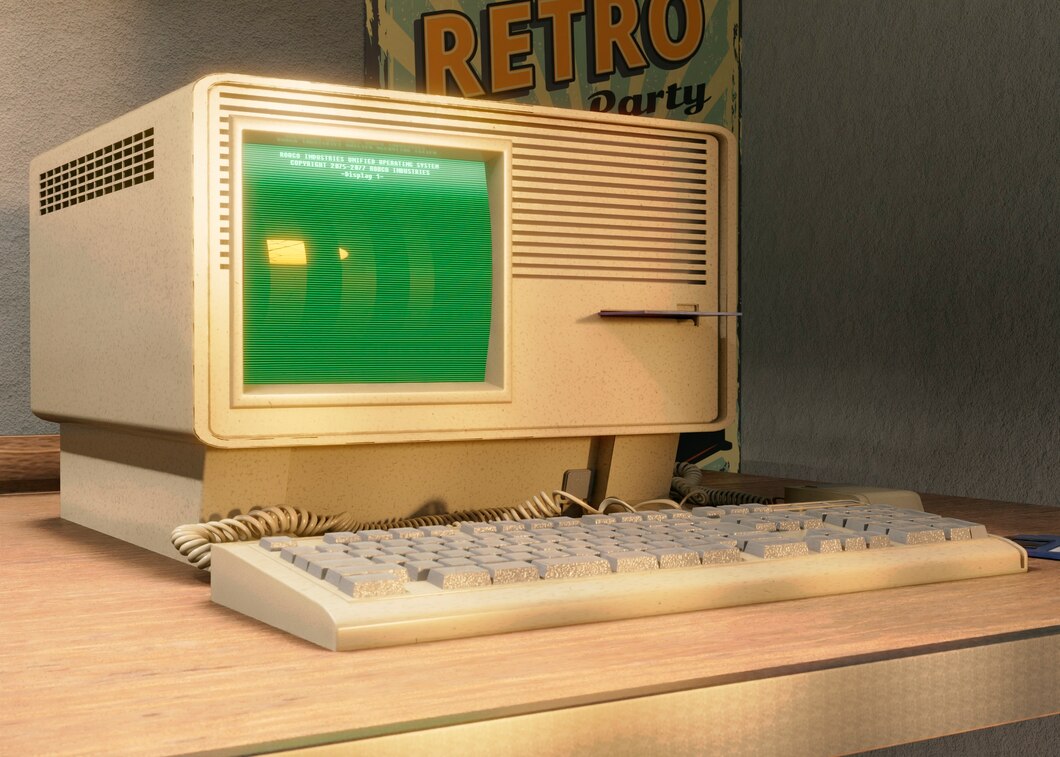
The “3D Maze” and “3D Pipes” screensavers are core memories for anyone who used Windows 95/98/NT. These screensavers weren’t just idle distractions; they represented liminal spaces—a threshold between active computing and downtime—and early experiments in 3D exploration that captivated millions. Sitting in front of a CRT monitor, users could watch as virtual pipes twisted endlessly across the screen or navigate a slow-moving maze populated by rats, psychedelic textures, and gravity-defying flips. Today, these retro screensavers are celebrated not only for their nostalgic value but also for their significance in the history of personal computing, OpenGL graphics, and the culture of digital aesthetics.
For many, staring at Pipes or wandering the 3D Maze was a contemplative experience, almost meditative—a digital liminal space. But these simple-looking programs have fascinating histories, from secret OpenGL experiments at Microsoft to hidden teapots in pipe joints and the legendary flips in Maze corridors.
In this article, we dive deep into the origins of Windows 3D pipes, the 3D Maze screensaver, their development lore, the algorithms behind their infinite designs, and why they remain icons of Windows 95 nostalgia.
The Origins of Windows 3D Screensavers
3D Graphics in the Mid-90s
By the mid-1990s, Microsoft sought to showcase the potential of 3D graphics without destabilizing the operating system. The introduction of OpenGL support in Windows NT and 95 opened doors for developers to experiment with real-time 3D rendering. While gaming engines were beginning to push 3D capabilities, most users had no reason to see these demonstrations unless developers built them into a visible feature. Enter the screensaver: a tool originally designed to protect CRT monitors from burn-in, now reimagined as a canvas for graphical experimentation.
The OpenGL Contest
The story of 3D Pipes and the Maze begins with a contest inside the Microsoft OpenGL team. Engineers were challenged to create programs that demonstrated Windows’ 3D capabilities without risking crashes or system instability. The contest encouraged creativity, algorithmic innovation, and efficient rendering. Three winners emerged, producing what would later become the iconic Windows screensavers:
- 3D Pipes – An endlessly generating network of twisting, colored pipes.
- 3D Maze – A navigable labyrinth with randomized walls, textures, and interactive elements.
- Flying Objects – A display of rotating 3D objects, from teapots to geometric shapes, floating in virtual space.
Legend has it that a marketing team member discovered these screensavers the night before a magazine demo. Recognizing their appeal, they demanded their inclusion in Windows 95, ensuring that these screensavers would be bundled with millions of computers worldwide.
The 3D Maze Screensaver: More Than a Labyrinth
The 3D Maze screensaver is a masterclass in both simplicity and engagement. On the surface, it’s a slow exploration through a randomized 3D labyrinth. But beneath that, there are layers of detail that make it unforgettable.
Rats, Flips, and Hidden Lore
One of the most talked-about features of the Maze is the rats. Small, pixelated rodents scurry along the corridors, adding life and subtle humor to an otherwise minimalistic environment. These rats also serve as a reminder that the Maze isn’t just a static screensaver—it’s a tiny ecosystem.
Equally famous is the flip mechanism. In certain corridors, gray rocks trigger the floor to become the ceiling, flipping the entire maze upside down. This feature adds a surreal, almost dreamlike quality, reinforcing the idea of the Maze as a liminal space where the rules of physics and perspective are playfully distorted.
Customizable Textures
Users could customize the Maze’s appearance, choosing from brick, wood, psychedelic patterns, or even plain colors. The psychedelic textures, in particular, made the Maze hypnotic and meditative, contributing to hours of staring in awe at your CRT monitor. For many, these visuals became intertwined with their Windows 95 nostalgia, representing a period of personal computing exploration and wonder.
The Algorithm Behind the Maze
The Maze’s algorithm was elegant yet efficient. Each corridor was generated using a pseudo-random procedural generation system, ensuring that the maze was different each time it ran. The program balanced randomness with playability, making sure that the path remained navigable while producing endless variation.
This approach foreshadowed the procedural generation techniques used in later video games and virtual simulations, highlighting how a simple screensaver became a precursor to modern digital content creation.
3D Pipes: The Infinite Flow
If the Maze is a navigable world, 3D Pipes is a meditative, infinite geometric experiment. Its simplicity belies the cleverness of its algorithm.
The Algorithm and Infinite Generation
3D Pipes uses an algorithmic growth system to spawn pipes continuously. Each pipe segment extends in a random direction, sometimes branching into multiple pipes. The system ensures no immediate collisions while creating visually complex, ever-changing structures. The result is mesmerizing: a constantly evolving network that can run for hours without repeating itself.
The Hidden Teapot
A fun Easter egg in 3D Pipes is the hidden teapot. At random pipe joints, a tiny OpenGL teapot appears, a nod to the classic Utah Teapot used by graphics programmers since the 1970s. Users who noticed the teapot felt rewarded, as if discovering a secret inside an endless digital landscape.
Colors and Visual Impact
The pipes’ colors shift dynamically, creating a sense of depth and motion. Combined with the endlessly generating structure, the screensaver became almost hypnotic, offering users a window into early 3D exploration that few other programs at the time could match.
Liminal Spaces and Early 3D Exploration
Both 3D Pipes and the Maze occupy what many describe as liminal spaces—virtual areas that feel between worlds. Users could lose themselves in the slow movement of a rat through the Maze or the hypnotic twisting of Pipes. These screensavers allowed a kind of digital meditation, offering both visual stimulation and a moment of pause from active computing.
Why Liminal Spaces Matter
In architecture and art, liminal spaces are transitional zones—stairwells, hallways, airports—that feel both familiar and uncanny. The Maze and Pipes replicate this sensation digitally. The corridors, flips, and infinite pipe networks create environments that are simultaneously navigable and abstract, inviting contemplation without a defined goal.
OpenGL History and Windows Screensavers
The inclusion of 3D Pipes and the Maze in Windows 95/98/NT also represents an important chapter in OpenGL history. At a time when OpenGL was primarily used for professional graphics and gaming, these screensavers introduced millions of users to real-time 3D rendering.
Technical Achievement
Rendering continuous 3D objects without crashing Windows was no small feat. The OpenGL team had to ensure compatibility with early consumer hardware while maintaining smooth performance. This challenge encouraged creative problem-solving and efficient coding practices, which later informed other graphics-heavy Windows applications.
Cultural Impact
These screensavers became a touchstone of Windows 95 nostalgia. For many, they symbolize the excitement of discovering 3D graphics for the first time, long before modern GPUs and high-resolution displays became commonplace. Their cultural resonance is so strong that enthusiasts continue to recreate or emulate them in modern operating systems.
The Maze’s Hidden Details
Beyond rats and flips, the Maze hides subtle interactive and aesthetic details:
- Collision detection ensures that the player (or screensaver) can navigate without clipping through walls.
- Texture mapping allows the floor, ceiling, and walls to display unique patterns.
- Dynamic lighting and perspective create a sense of depth despite the low-resolution graphics of the time.
These features contributed to the screensaver’s immersive quality, making it more than a simple visual filler—it was a mini digital environment with its own set of rules and charm.
3D Pipes: Mathematics as Art
While the Maze demonstrates procedural design for exploration, 3D Pipes shows how mathematical algorithms can create art.
- Branching probabilities determine the direction and length of each pipe segment.
- Collision avoidance prevents pipes from overlapping, maintaining clarity in the visualization.
- Randomized color assignment gives each new session a unique aesthetic identity.
Together, these elements form a system that balances randomness and structure, resulting in an ever-changing, infinitely generative visual spectacle.
Nostalgia and Modern Relevance
Even decades later, Windows 3D pipes and Maze screensavers continue to captivate. Nostalgic users recreate them online, in emulators, or even as live wallpapers. This ongoing fascination highlights how a screensaver—originally intended as a practical tool—transcended its purpose to become a cultural artifact and artistic experience.
Screensavers as Digital Art
The concept of screensavers as art is now well-recognized. Programs like Pipes and the Maze demonstrate:
- Algorithmic creativity
- Procedural design as a visual medium
- Early examples of user-driven customization in digital spaces
They also serve as historical markers in the evolution of computer graphics and user experience design.
Conclusion
The story of Windows 3D Pipes and the Maze screensavers is a tale of innovation, nostalgia, and digital artistry. From a last-minute marketing decision to bundle experimental OpenGL programs to hidden teapots, rats, and psychedelic textures, these screensavers became enduring icons of the 1990s computing experience. They embody early 3D exploration, liminal spaces, and the magic of procedural generation.
Today, these screensavers are celebrated not only for their entertainment value but also as landmarks in OpenGL history, Windows 95 nostalgia, and retro screensavers culture. They remind us of a time when simple programs could inspire hours of fascination and creativity, proving that even the most functional tools—like a screensaver—can become objects of art, wonder, and memory.
Whether it’s navigating a maze, staring at infinite pipes, or hunting for the hidden teapot, these screensavers continue to capture imaginations and highlight a foundational moment in computer graphics history.
About the Author