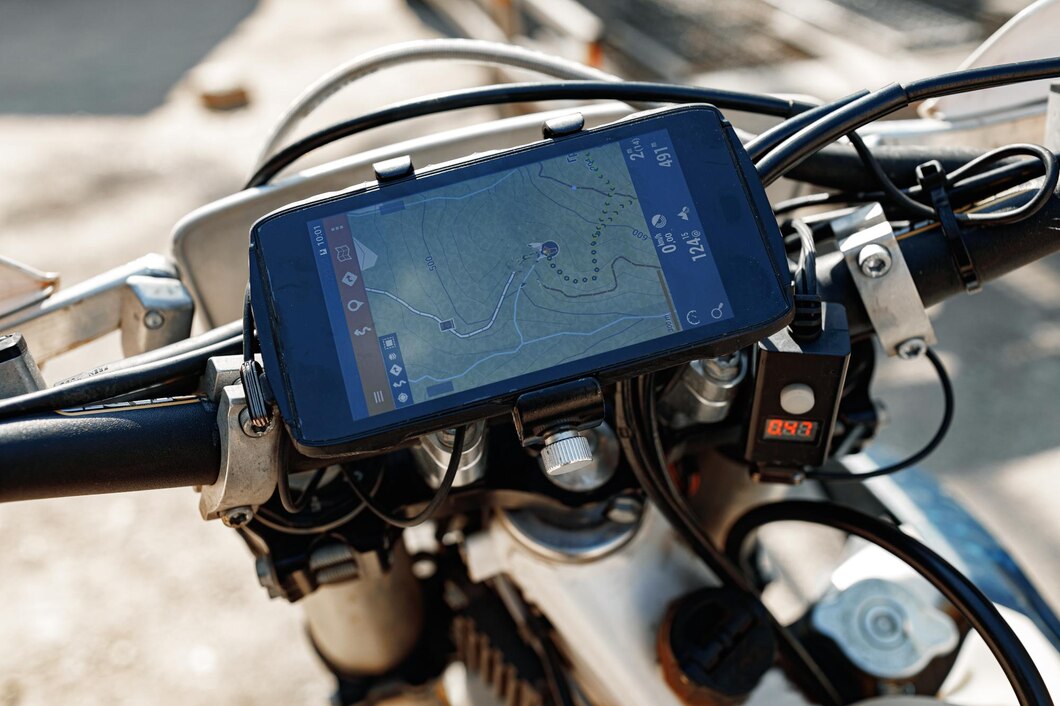
Today, getting from point A to point B is as simple as opening Google Maps or Apple Maps and following turn-by-turn instructions powered by satellites orbiting the Earth. But rewind to 1981—long before GPS became a household utility—and navigation looked radically different.
Enter the Honda Electro Gyrocator, a marvel of retro car tech that feels like something pulled straight out of a sci-fi movie. Built by Honda, this analog GPS system didn’t rely on satellites, radio signals, or even digital maps. Instead, it used inertial navigation, a technology more commonly found in submarines and aircraft, combined with a glowing CRT display and physical map sheets.
The Electro Gyrocator represents a fascinating moment in automotive history, where engineers pushed the limits of available technology to solve a problem we now take for granted: “Where am I, and how do I get where I’m going?”
A Glimpse Into Retro-Futurism: The Look and Feel
The Electro Gyrocator wasn’t just innovative—it looked futuristic even by today’s standards. Installed in early 1980s Honda models like the Accord, the system featured a CRT (cathode ray tube) display with a distinctive amber glow. This wasn’t a sleek touchscreen; it was a chunky, boxy monitor embedded into the dashboard.
Instead of digital maps, drivers inserted transparent plastic overlays printed with road layouts. These overlays sat directly on the screen, creating a tactile, physical connection between driver and map. As the car moved, a glowing dot would trace the vehicle’s position on the map.
This combination of analog and electronic elements created a unique aesthetic—what we now call retro-futurism. It was a vision of the future imagined through the lens of 1980s engineering: bold, experimental, and unapologetically mechanical.
How It Worked: Analog GPS Without Satellites
At the heart of the Honda Electro Gyrocator was a concept known as inertial navigation. Unlike GPS, which calculates position using signals from satellites, inertial navigation determines location based on movement and direction over time.
The Core Components
- Helium Gas Gyroscope
The system used a helium-filled gyroscope to detect changes in direction. This device could measure angular velocity—essentially how the car turned. - Distance Sensors
Sensors connected to the car’s transmission tracked how far the vehicle traveled. - CRT Display with Map Overlay
A physical map sheet was placed on the screen, and a glowing cursor moved across it.
Step-by-Step Operation
- When the driver started the journey, they manually set the starting position on the map.
- As the car moved, the gyroscope tracked direction changes while sensors measured distance.
- The system calculated the new position using these inputs.
- A dot on the screen moved accordingly, tracing the vehicle’s path.
In simple terms, it worked like this:
Start position + direction + distance = current location
This is the same principle used in submarines, where GPS signals cannot reach. The Electro Gyrocator brought that high-end engineering into a consumer vehicle—decades ahead of its time.
The Science Behind the Magic: Inertial Navigation Explained
To truly appreciate the Electro Gyrocator, you need to understand the brilliance—and limitations—of inertial navigation.
Unlike satellite-based systems, inertial navigation is self-contained. It doesn’t rely on external signals, making it incredibly reliable in environments where communication is impossible. However, it has a critical flaw: drift.
What Is Drift?
Over time, small measurement errors accumulate. Even a tiny miscalculation in direction or distance can lead to significant inaccuracies after several kilometers.
For example:
- A 1% error in distance measurement can result in a 1 km deviation over 100 km.
- Slight inaccuracies in the gyroscope can gradually skew direction.
This meant that the Electro Gyrocator required frequent recalibration. Drivers often had to reset their position manually using known landmarks.
Despite this limitation, the system was groundbreaking. It demonstrated that real-time navigation was possible without external infrastructure—a concept that would later evolve into modern GPS.
The User Experience: Driving With the Future
Using the Honda Electro Gyrocator was nothing like today’s plug-and-play navigation apps. It required interaction, attention, and a bit of patience.
What Drivers Had to Do
- Insert the correct map sheet for their region
- Align the starting position manually
- Monitor the dot as it moved across the screen
- Swap map overlays when traveling to a new area
There were no voice instructions, no automatic rerouting, and certainly no traffic updates. If you missed a turn, the system wouldn’t tell you—it would simply continue tracking your movement.
Yet, for its time, this was revolutionary. Drivers could see their position in real time, something that had never been possible in a consumer car before.
Why It Was Ahead of Its Time
The Electro Gyrocator debuted in 1981, nearly two decades before GPS navigation became widely available in cars. Systems like Google Maps wouldn’t launch until 2005, and in-car GPS units didn’t become mainstream until the late 1990s and early 2000s.
Key Innovations
- Real-time position tracking
- In-car visual navigation display
- Integration of aerospace technology into automobiles
It wasn’t just a gadget—it was a proof of concept for the future of navigation.
Limitations and Challenges
Despite its brilliance, the Honda Electro Gyrocator faced several practical challenges:
1. Accuracy Issues
As mentioned earlier, inertial drift made long-distance navigation unreliable.
2. Limited Map Coverage
Drivers needed physical map sheets for each region. Traveling outside mapped areas rendered the system useless.
3. High Cost
The technology was expensive, making it accessible only to a niche market.
4. Complexity
Compared to today’s intuitive systems, the Electro Gyrocator required significant user input and understanding.
These limitations prevented it from achieving widespread adoption, but they didn’t diminish its importance.
The Evolution: From Analog to Satellite Navigation
The journey from the Electro Gyrocator to modern navigation systems is a story of technological evolution.
Key Milestones
- 1980s: Analog systems like the Electro Gyrocator
- 1990s: Early GPS units in luxury vehicles
- 2000s: Portable GPS devices and digital maps
- 2010s–Present: Smartphone navigation apps with real-time data
Modern systems rely on the Global Positioning System, which uses a network of satellites to determine location with high accuracy.
Compared to inertial navigation, GPS offers:
- Greater precision
- No drift over time
- Global coverage
Yet, the Electro Gyrocator laid the groundwork for these advancements.
Retro Car Tech and the Allure of the Analog Future
The Honda Electro Gyrocator is more than just a piece of engineering—it’s a symbol of a unique era in technology. The 1980s were filled with bold experiments, where engineers weren’t afraid to try unconventional solutions.
Why Retro Tech Still Fascinates Us
- Tactile interaction (physical maps, buttons, and knobs)
- Visible mechanics (you could see how it worked)
- Distinctive aesthetics (CRT screens, amber glow)
In a world dominated by invisible algorithms and cloud computing, there’s something deeply satisfying about a system you can physically interact with.
Engineering Legacy: What the Electro Gyrocator Taught Us
The Electro Gyrocator didn’t become a commercial success, but its impact on engineering and design is undeniable.
Lessons Learned
- User Experience Matters
Even the most advanced technology must be easy to use. - Accuracy Is Critical
Navigation systems must be reliable over long distances. - Integration Is Key
Future systems would combine multiple technologies—satellites, sensors, and software.
Today’s navigation systems often use a hybrid approach, combining GPS with inertial sensors for improved accuracy—bringing the story full circle.
A Forgotten Pioneer in Automotive History
Despite its innovation, the Honda Electro Gyrocator remains relatively unknown. It’s often overshadowed by later developments in GPS technology.
Yet, it deserves recognition as:
- The first commercially available in-car navigation system
- A pioneer of analog GPS
- A bold experiment in automotive engineering
For enthusiasts of 1980s gadgets and retro car tech, it’s a hidden gem—a reminder that the future doesn’t always arrive in the way we expect.
Conclusion: The Road That Led to Modern Navigation
The next time you open Google Maps and effortlessly find your way, take a moment to appreciate the journey that made it possible.
The Honda Electro Gyrocator was a stepping stone—a daring attempt to solve a complex problem with the tools of its time. It combined inertial navigation, mechanical ingenuity, and analog design into a system that was as fascinating as it was flawed.
In many ways, it represents the essence of innovation:
not perfection, but progress.
From glowing CRT screens and plastic map overlays to satellite networks and AI-driven routing, navigation has come a long way. But the spirit of experimentation that gave us the Electro Gyrocator continues to drive technology forward.
And that’s what makes this piece of automotive history so compelling—it’s not just about where we are, but how we got here.
About the Author