Mechanical keyboards are no longer just tools—they are collectibles, passion projects, and symbols of craftsmanship. From RGB-lit gaming setups to minimalist typing rigs, enthusiasts across the world are rediscovering the joy of tactile feedback and satisfying keystrokes. Yet, among all the modern innovations, one keyboard continues to dominate conversations: the IBM Model M.
Released in the mid-1980s, the Model M wasn’t designed to be trendy or aesthetic. It was built for durability, reliability, and industrial-level performance. Decades later, it has become the gold standard for clicky keyboards—a relic that refuses to fade into obscurity.
This article explores the fascinating journey of clicky keyboards, from the legendary Model M and its buckling spring mechanism to modern switches like Cherry MX. Whether you’re a hobbyist, writer, programmer, or retro enthusiast, this deep dive will help you understand why clicky keyboards still matter—and why the Model M remains the king.
The Origins of Mechanical Keyboards
Before sleek laptops and ultra-thin keyboards dominated the market, typing was a mechanical experience—literally. Early computers borrowed heavily from typewriter technology, where each keypress triggered a physical mechanism.
In the 1970s and early 1980s, keyboards were built with:
- Individual switches under each key
- Heavy-duty materials
- Designed for long-term use in offices and industries
Unlike today’s disposable electronics, these keyboards were engineered to last decades. Companies like IBM led the charge, creating hardware that prioritized function over form.
Enter the IBM Model M: A Legend is Born
When IBM introduced the Model M in 1984, it wasn’t just another keyboard—it was a revolution.
Designed as a successor to the Model F, the Model M featured a unique switch mechanism known as the buckling spring. This innovation transformed typing into a tactile and auditory experience unlike anything before or since.
Key Features of the Model M
- Buckling spring switches
- Heavy steel backplate for durability
- High-quality plastic construction
- Distinctive click sound
- Full-size layout with function keys
The Model M quickly became standard in offices worldwide. It was shipped with IBM PCs and used by professionals who demanded reliability.
Buckling Spring: The Science Behind the Click
At the heart of the Model M lies its most iconic feature—the buckling spring mechanism.
How It Works
Each key contains:
- A coiled spring positioned vertically
- A pivoting hammer beneath the spring
- A membrane that registers the keystroke
When you press a key:
- The spring compresses
- At a certain point, it buckles sideways
- This sudden movement triggers the hammer
- The hammer strikes the membrane
- A click sound and tactile bump occur simultaneously
Why It Feels So Good
The buckling spring provides:
- Precise actuation point
- Strong tactile feedback
- Audible confirmation of each keypress
Unlike modern keyboards where the signal may register before you feel it, the Model M ensures that what you feel and hear is exactly when the input happens.
This synchronization is what makes typing on a Model M incredibly satisfying.
Built Like a Tank: Durability That Defies Time
One of the most remarkable aspects of the Model M is its longevity.
Industrial-Grade Construction
The keyboard was designed for:
- Offices with heavy daily use
- Government institutions
- Industrial environments
Key durability features include:
- Thick plastic casing
- Steel backplate for rigidity
- Replaceable keycaps
- High-quality internal components
Lifespan
Most Model M keyboards are:
- Still functional after 30–40 years
- Capable of handling millions of keystrokes
- Easily repairable
In an era where electronics are replaced every few years, the Model M stands as a testament to sustainable design.
The Sound of Productivity: Why Clicky Matters
The loud, crisp sound of the Model M is not just nostalgic—it’s functional.
Benefits of Clicky Feedback
- Improved typing accuracy
- Reduced bottoming out
- Better typing rhythm
- Enhanced focus for some users
For writers and programmers, the audible click creates a rhythm that can boost productivity. It turns typing into an engaging experience rather than a mundane task.
The Decline of Mechanical Keyboards
In the 1990s and early 2000s, mechanical keyboards began to disappear.
Why Did This Happen?
- Rise of membrane keyboards (cheaper to produce)
- Demand for quieter office environments
- Shift toward thinner and lighter devices
- Cost-cutting by manufacturers
Mechanical keyboards were seen as outdated and unnecessarily expensive. The Model M itself was discontinued by IBM, though production continued under other companies.
The Revival: Mechanical Keyboards Make a Comeback
Around the 2010s, something unexpected happened—mechanical keyboards returned.
What Sparked the Revival?
- Gaming industry demand for precision
- Rise of enthusiast communities (Reddit, forums)
- YouTube reviews and sound tests
- Custom keyboard culture
Suddenly, people began to appreciate:
- Tactile feedback
- Build quality
- Customization options
The Model M, once forgotten, became a cult favorite.
Enter Cherry MX: The Modern Standard
While the Model M dominated the past, modern mechanical keyboards are largely built around Cherry MX switches.
What Are Cherry MX Switches?
Cherry MX switches are:
- Individual mechanical switches
- Available in different types
- Widely used in gaming and enthusiast keyboards
Popular Variants
- Cherry MX Blue – Clicky and tactile
- Cherry MX Brown – Tactile but quieter
- Cherry MX Red – Linear and smooth
Comparison with Buckling Spring
| Feature | Buckling Spring (Model M) | Cherry MX |
| Sound | Loud and sharp | Varies by type |
| Feedback | Strong tactile | Mild to moderate |
| Build | Heavy and industrial | Lightweight and modern |
| Customization | Limited | Highly customizable |
While Cherry MX offers versatility, many enthusiasts argue that it still doesn’t match the raw feel of a buckling spring.
Unicomp: Keeping the Legacy Alive
After IBM exited the keyboard business, a company called Unicomp took over production.
What Unicomp Does
- Manufactures Model M keyboards
- Uses original tooling and designs
- Updates connectivity for modern systems
Today, you can still buy a brand-new Model M-style keyboard, thanks to Unicomp.
Using the Model M in 2025
Despite its age, the Model M is surprisingly usable today.
Connectivity Challenges
Original Model M keyboards use:
- PS/2 connectors
Modern computers use:
- USB ports
The Solution: Converters
Enthusiasts use tools like:
- Soarer’s Converter
- PS/2-to-USB adapters
These allow the Model M to function seamlessly on modern systems.
Compatibility
With the right setup, the Model M works with:
- Windows
- macOS
- Linux
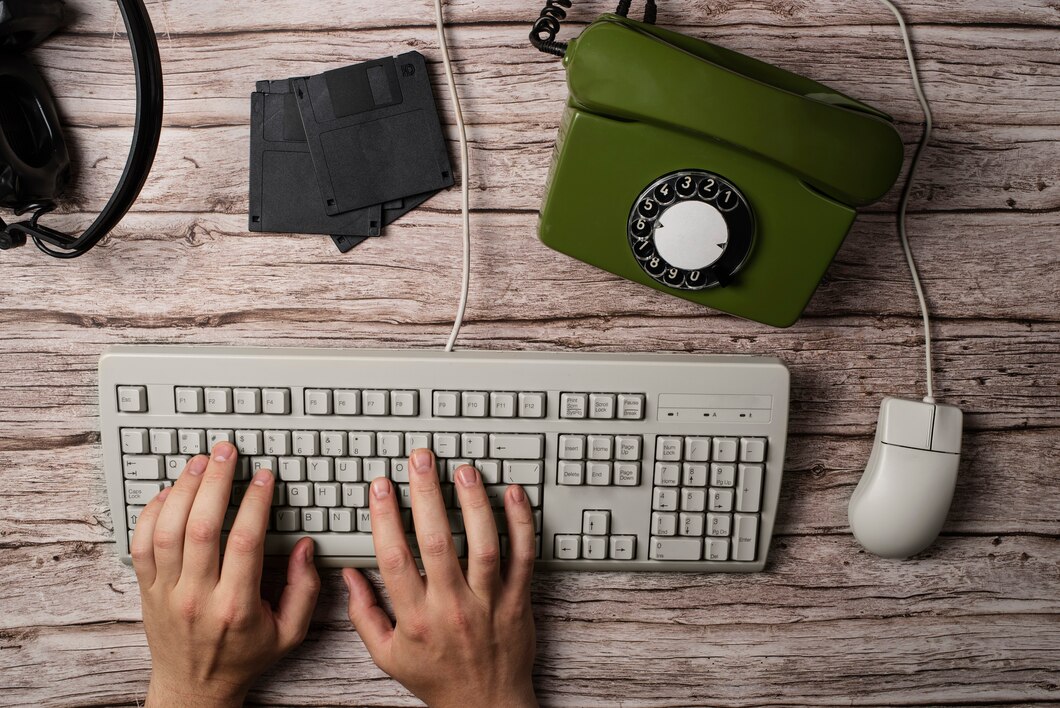
Retro Battlestations: Aesthetic Meets Function
The Model M is not just a keyboard—it’s a centerpiece.
What is a Retro Battlestation?
A retro battlestation combines:
- Vintage hardware
- Classic design aesthetics
- Modern functionality
The Model M fits perfectly into this setup, offering both nostalgia and performance.
Why Enthusiasts Still Love the Model M
Even in a world full of RGB keyboards and wireless devices, the Model M holds a special place.
Top Reasons
- Unmatched typing feel
- Legendary durability
- Iconic sound
- Historical significance
- Minimalist, timeless design
For many, using a Model M is not just about typing—it’s about experiencing a piece of computing history.
Downsides of the Model M
No keyboard is perfect, and the Model M has its limitations.
Common Drawbacks
- Extremely loud
- Heavy and bulky
- Limited customization
- Requires adapters for modern use
Despite these issues, enthusiasts often consider them part of the charm.
Mechanical Keyboard Hobby: Beyond the Model M
Today’s mechanical keyboard hobby is vast and diverse.
Modern Trends
- Custom keycaps
- Hot-swappable switches
- RGB lighting
- Compact layouts (60%, 75%)
- Wireless connectivity
Yet, even with all these innovations, the Model M remains a benchmark.
Choosing Between Vintage and Modern
If you’re considering a mechanical keyboard, you might wonder:
Should You Choose a Model M?
Choose the Model M if you:
- Love loud, clicky keyboards
- Appreciate vintage hardware
- Want unmatched durability
Choose Cherry MX or Modern Keyboards if you:
- Prefer quieter typing
- Want customization
- Need portability
The Cultural Impact of Clicky Keyboards
Clicky keyboards have influenced:
- Gaming culture
- Programming communities
- Content creation setups
They symbolize a return to quality and intentional design in a world dominated by disposable tech.
The Future of Mechanical Keyboards
As technology evolves, mechanical keyboards continue to adapt.
Emerging Trends
- Optical switches
- Hall-effect keyboards
- Eco-friendly materials
- AI-enhanced typing tools
Yet, the core appeal remains unchanged: a satisfying typing experience.
Conclusion: Why the Model M is Still the King
The IBM Model M is more than just a keyboard—it’s a legend.
It represents:
- A time when products were built to last
- A commitment to quality over cost
- A typing experience that engages all your senses
While modern keyboards offer convenience and customization, none have truly replicated the magic of the buckling spring.
For enthusiasts, the Model M is not just a tool—it’s an experience, a statement, and a connection to the roots of computing.
Final Thoughts
Mechanical keyboards are a massive modern hobby with retro roots—and at the center of it all stands the Model M, the undisputed king of clicks.
Whether you’re building your first setup or diving deep into the hobby, understanding the legacy of the Model M will give you a deeper appreciation for every keystroke you make.
In a fast-changing digital world, some things never go out of style—and the sound of a buckling spring is one of them.
About the Author