90s tech culture was a fascinating period when 1990s technology, 90s technology, and everyday life were rapidly moving from analog systems toward digital experiences. Technology in the 90s introduced people to home computers, dial-up internet, CD players, video game consoles, pagers, camcorders, and portable music players. These 90s gadgets and 90s tech gadgets were more than convenient devices—they shaped how people communicated, worked, entertained themselves, and experienced the emerging digital world. Unlike today, there was no constant stream of notifications from smartphones, social networks, or streaming platforms. 90s computer culture, 90s internet culture, and early forms of digital entertainment created a very different lifestyle. Looking back at technology before smartphones, life before smartphones, and technology before social media reveals just how dramatically consumer technology has changed.
What Was Technology Like in the 90s?
If you are wondering what was technology like in the 90s, the simplest answer is that it was becoming increasingly digital but was still largely disconnected from the internet.
Many households had televisions, VCR players, landline telephones, stereos, radios, and personal computers. Computers were becoming more common, but they were not yet devices that people carried everywhere.
The typical home computer was often used for:
- School assignments
- Word processing
- Playing computer games
- Creating spreadsheets
- Printing documents
- Learning basic programming
- Storing files
- Accessing early online services
- Exploring CD-ROM educational software
The computer was generally placed in one location, often a bedroom, study, or family room. There was no expectation that you would take it with you everywhere.
That distinction is important when understanding 90s digital culture.
Today, technology follows people throughout the day. In the 1990s, people usually had to intentionally go to a device to use it.
The Rise of 1990s Technology
The 1990s were a transitional decade in the evolution of technology.
Personal computers became increasingly accessible to ordinary consumers. Graphical interfaces made computers easier to operate, while CD-ROMs offered large amounts of multimedia content.
At the same time, the internet began moving from specialized communities into mainstream homes.
This combination created a major turning point in the history of consumer technology.
Technology was becoming:
- More affordable
- More accessible
- More graphical
- More interactive
- More entertainment-focused
- Increasingly connected
Yet it was still far from the always-online environment people experience today.
Popular Tech Gadgets of the 90s
The decade produced countless memorable devices. Many are now considered retro technology, nostalgic technology, or vintage tech.
Some of the most recognizable popular tech gadgets of the 90s included:
1. CD Players
Compact discs transformed music listening.
Compared with cassette tapes, CDs offered convenient track selection and clearer audio. Portable CD players became popular among teenagers and young adults.
The famous portable CD player allowed people to carry albums around, although skipping could sometimes be a problem when walking or moving around.
2. Cassette Players
Even as CDs became increasingly popular, cassette players remained extremely common.
People created personalized mixtapes by recording songs from the radio or copying tracks from other cassettes.
A mixtape could communicate emotions, friendship, memories, or romantic feelings in a way that feels almost nostalgic today.
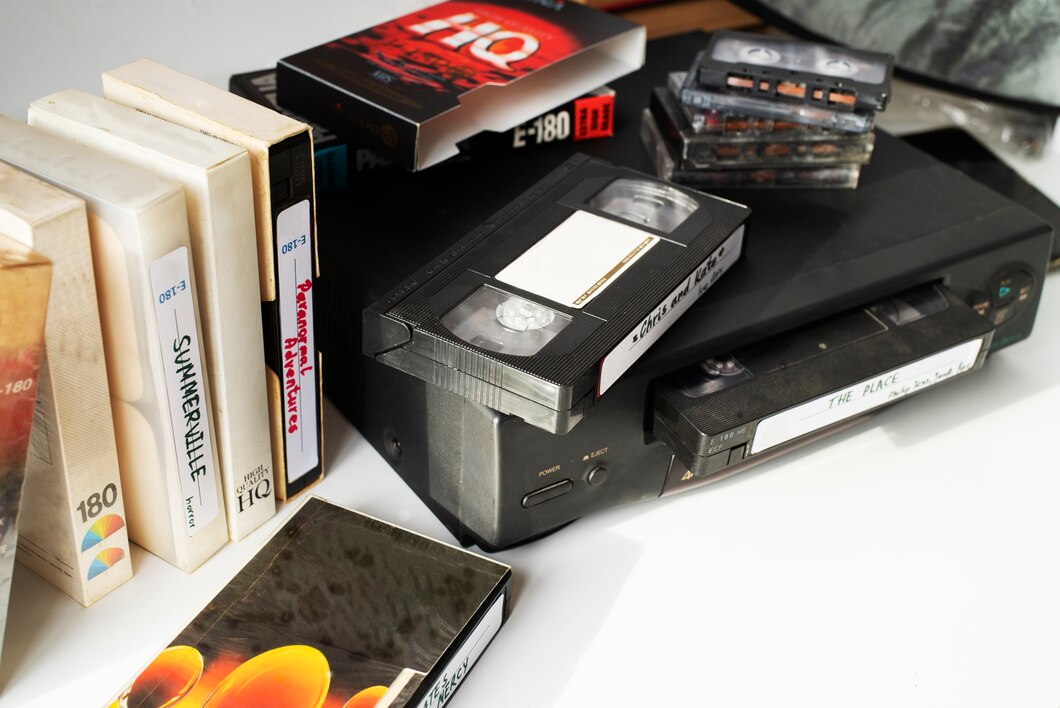
3. VHS Players
Before streaming existed, watching a movie usually involved physical media.
VHS tapes allowed households to record television programs and watch movies at home.
Families might rent movies from video stores, bring them home, and return them later.
This was a major part of technology before streaming.
4. Pagers
Pagers were an important communication device before mobile phones became widespread.
A person could receive a short notification or phone number and then find a landline telephone to return the call.
Compared with modern smartphones, pagers were extremely limited—but at the time, they represented a significant improvement in communication.
5. Camcorders
Home video became more accessible through consumer camcorders.
Families used them to record:
- Birthdays
- Weddings
- School performances
- Holidays
- Family gatherings
- Children’s milestones
Unlike today’s smartphone videos, these recordings were not instantly uploaded or shared online.
They were usually stored on physical tapes and watched later.
6. Game Consoles
Gaming became a major component of 90s entertainment.
Home consoles brought increasingly sophisticated graphics and gameplay into living rooms. Children and teenagers could spend hours playing games with friends or family.
Gaming culture also contributed significantly to 90s computer culture and broader youth technology trends.
7. Digital Cameras
Digital cameras began emerging toward the end of the decade.
They eventually changed photography by allowing users to preview images without developing film.
However, digital photography was still developing, and many consumers continued using traditional film cameras.
Technology Before Smartphones
Understanding technology before smartphones helps explain how different communication used to be.
A smartphone combines a phone, camera, music player, navigation system, calendar, messaging platform, web browser, gaming device, and countless other functions.
In the 1990s, those functions were distributed across separate devices.
You might have had:
- A landline telephone for calls
- A pager for notifications
- A camera for photographs
- A camcorder for videos
- A CD player for music
- A television for entertainment
- A computer for digital work
- A paper map for navigation
This separation defined pre-smartphone technology.
Instead of carrying one multifunctional device, people interacted with individual technologies for specific purposes.
Life Before Smartphones
Life before smartphones was not technology-free. It was simply less connected.
People still communicated, entertained themselves, researched information, listened to music, watched movies, and played games.
However, these activities generally required more planning.
If you wanted to meet a friend, you might call their home telephone.
If they were not there, you might leave a message or simply try again later.
If you were meeting someone somewhere, you usually agreed on a time and location in advance.
There was no expectation that everyone could instantly update their plans through messaging applications.
This aspect of life before smartphones and social media created a slower communication rhythm.
What People Used Before Smartphones?
So, what people used before smartphones depended on what they wanted to accomplish.
For communication, they used:
- Landline phones
- Pagers
- Fax machines
- Answering machines
For entertainment:
- Television
- VHS
- CDs
- Cassette tapes
- Radio
- Video game consoles
For photography:
- Film cameras
- Disposable cameras
- Camcorders
For information:
- Encyclopedias
- Newspapers
- Magazines
- Libraries
- Printed maps
For computing:
- Desktop computers
- Floppy disks
- CD-ROMs
- Printers
The result was a technology ecosystem made up of many specialized tools.
Technology Before Social Media
The concept of sharing everyday life online was almost nonexistent compared with today’s environment.
Technology before social media meant that photographs, opinions, updates, and personal experiences were generally shared privately or through traditional media.
People could write letters, make phone calls, send emails, participate in online forums, or chat through early online services.
But there was no universal feed showing what hundreds of friends, celebrities, companies, and strangers were doing throughout the day.
That difference shaped behavior.
People could experience events without immediately thinking about photographing, posting, commenting, or sharing them.
The Birth of 90s Internet Culture
One of the most important developments of the decade was the emergence of 90s internet culture.
The internet began moving beyond universities, research institutions, and technical communities and gradually entered homes.
Dial-up connections became a familiar part of household life.
Connecting to the internet could involve:
- Turning on the computer.
- Opening the dial-up connection.
- Hearing the modem make its recognizable sequence of sounds.
- Waiting for the connection.
- Opening a web browser.
- Visiting websites.
The experience was much slower and more deliberate than today’s broadband and mobile internet.
Early Internet Culture
Early internet culture developed around experimentation.
People created personal websites, joined discussion forums, used chat rooms, exchanged emails, and explored increasingly diverse online communities.
Websites often looked simple compared with modern platforms.
Many pages contained:
- Basic text
- Simple graphics
- Animated GIFs
- Visitor counters
- Guestbooks
- Bright backgrounds
- Under-construction messages
- Personal profiles
The internet felt less standardized.
Users were not simply consuming content from a few enormous platforms. Many people explored individual websites and small online communities.
90s Internet and Computer Culture
The relationship between computers and the internet became increasingly important during the decade.
90s internet and computer culture influenced education, entertainment, communication, and business.
Children discovered educational websites and computer games. Students began using computers for research and assignments. Adults explored email and online services.
Businesses started recognizing the commercial potential of the web.
This was one of the most important steps in the transition toward today’s digital economy.
Dial-Up Internet and the Sound of Connection
Few experiences represent 90s technology as strongly as dial-up internet.
The connection process was slow enough that getting online could feel like an event.
Web pages loaded gradually. Images appeared piece by piece. Downloading large files may require considerable time.
And because the connection frequently used the telephone line, someone using the phone could interrupt internet access.
This limitation made people more conscious of their online time.
Today, users may remain connected all day without thinking about it. In the 1990s, going online was often a specific activity.
Technology Before Streaming
Modern streaming has completely changed entertainment.
With services available on demand, people can watch movies, shows, music videos, and other content almost instantly.
Technology before streaming worked very differently.
Entertainment depended heavily on physical formats and scheduled broadcasts.
For movies, people might:
- Rent VHS tapes
- Buy VHS tapes
- Watch movies on television
- Record programs
For music, they might:
- Buy CDs
- Buy cassettes
- Listen to radio
- Record songs from radio broadcasts
For television, viewers generally watched programs according to broadcast schedules.
Missing an episode could mean waiting for a rerun.
This made entertainment more tied to time and place.
How People Used Technology in the 90s
Understanding how people used technology in the 90s requires looking beyond individual gadgets.
Technology was integrated into daily life in ways that now seem surprisingly limited.
A teenager might use a home computer for homework and games, listen to music on a cassette player, watch VHS movies, and talk with friends on a landline.
A professional might use a desktop computer, fax machine, telephone, and email.
Families might gather around a television rather than individually watching content on separate personal devices.
Technology was present, but it had not yet become completely personalized.
90s Digital Lifestyle
The 90s digital lifestyle was a hybrid between analog and digital living.
People increasingly used computers, CDs, digital games, and early internet services, while still relying heavily on physical media and offline communication.
This hybrid environment made the decade unique.
You could create a document on a computer but print it on paper.
You could send an email but still use a landline telephone for most conversations.
You could own a CD but also maintain a cassette collection.
You could explore the internet while still relying on encyclopedias and newspapers for information.
Technology Trends of the 1990s
Several technology trends of the 1990s helped establish the foundation for the modern digital world.
Personal Computing
Computers became increasingly common in homes and workplaces.
Internet Adoption
The web became more accessible to ordinary consumers.
Mobile Communication
Mobile phones became increasingly visible, although they were nowhere near as capable as smartphones.
Digital Entertainment
CDs, computer games, and multimedia software expanded.
Portable Electronics
Consumers increasingly wanted technology that could travel with them.
Digital Photography
Digital cameras began challenging traditional photography.
Online Communities
Email, chat rooms, forums, and personal websites created new forms of digital interaction.
Together, these developments accelerated the evolution of technology.
How Technology Changed in the 1990s
The question of how technology changed in the 1990s can be answered through the shift from isolated devices to connected digital systems.
At the beginning of the decade, technology was largely centered around standalone devices.
By the end, computers and the internet were becoming increasingly connected.
The decade introduced consumers to the idea that technology could provide not only tools but also access to information, communication, entertainment, and communities.
That transformation laid the groundwork for the digital world of the 2000s and beyond.
Nostalgic 90s Technology Gadgets
Many people today remember nostalgic 90s technology gadgets because they were connected to specific experiences.
A cassette player might remind someone of making a first mixtape.
A VHS player might bring back memories of family movie nights.
A game console might remind someone of playing with friends after school.
A dial-up modem might bring back memories of discovering the internet for the first time.
These objects became cultural symbols because technology was often experienced collectively.
Why Retro Technology Still Feels Special
The popularity of retro technology shows that older devices still have emotional value.
Part of this nostalgia comes from their physical nature.
Modern technology is often represented by sleek screens and software updates. Older devices had buttons, switches, tapes, discs, wires, mechanical sounds, and physical media.
There was something tangible about using them.
A cassette had to be inserted.
A VHS tape had to be rewound.
A CD had to be placed inside a player.
A photograph had to be developed.
These physical interactions made technology feel more visible.
The Difference Between 90s Digital Culture and Today’s Digital World
The biggest difference between 90s digital culture and today’s digital environment is connectivity.
In the 1990s, technology was increasingly digital, but it was not yet constantly connected.
Today, connectivity is built into everyday life.
Modern users can:
- Message friends instantly
- Stream entertainment
- Work remotely
- Navigate unfamiliar locations
- Shop online
- Share photographs
- Follow news
- Attend virtual meetings
- Access cloud files
- Participate in global communities
The 1990s introduced many of the building blocks for these activities, but the experience was slower and more fragmented.
What Made 90s Tech Culture Unique?
The unique character of 90s tech culture came from its transitional nature.
It was a period when people were learning to move between two worlds.
The analog world was still dominant, but digital technology was becoming increasingly important.
The internet was emerging.
Personal computers were becoming mainstream.
Gaming was growing rapidly.
Portable electronics were evolving.
Digital media was replacing some physical formats.
Consumers were beginning to understand that technology could fundamentally change everyday life.
Yet there was still plenty of distance between people and their devices.
Lessons From 90s Technology
Looking back at 90s technology before smartphones can provide an interesting perspective on modern digital habits.
The 1990s demonstrate that technology does not have to be everywhere to be useful.
A computer could be valuable without being carried constantly.
A phone could serve its purpose without providing social media.
Entertainment could be enjoyable without unlimited streaming libraries.
Photography could be meaningful without instant sharing.
Communication could work without immediate responses.
This doesn’t mean older technology was better in every way. Modern devices provide extraordinary convenience and accessibility.
However, remembering the older digital lifestyle can encourage people to think more intentionally about how technology fits into everyday life.
Conclusion
90s tech culture represents one of the most interesting transitions in the history of consumer technology. The decade introduced or popularized many devices and ideas that would eventually lead to today’s connected digital world. From personal computers and CD players to gaming consoles, camcorders, pagers, and dial-up internet, technology in the 90s transformed everyday experiences without completely replacing the analog world.
Looking at life before smartphones, technology before social media, and technology before streaming also reveals how dramatically communication and entertainment have evolved. People once depended on landlines, physical media, printed information, scheduled television, and face-to-face interactions. The rise of early internet culture, personal computing, and digital entertainment gradually changed those habits.
Today, many of those devices are considered vintage tech, nostalgic technology, or retro technology. Yet their importance goes beyond nostalgia. They represent the foundations of the digital lifestyle we now take for granted. Understanding how technology changed in the 1990s helps us appreciate how quickly consumer technology has evolved—and why the 1990s remain such a memorable chapter in the story of modern technology.
About the Author