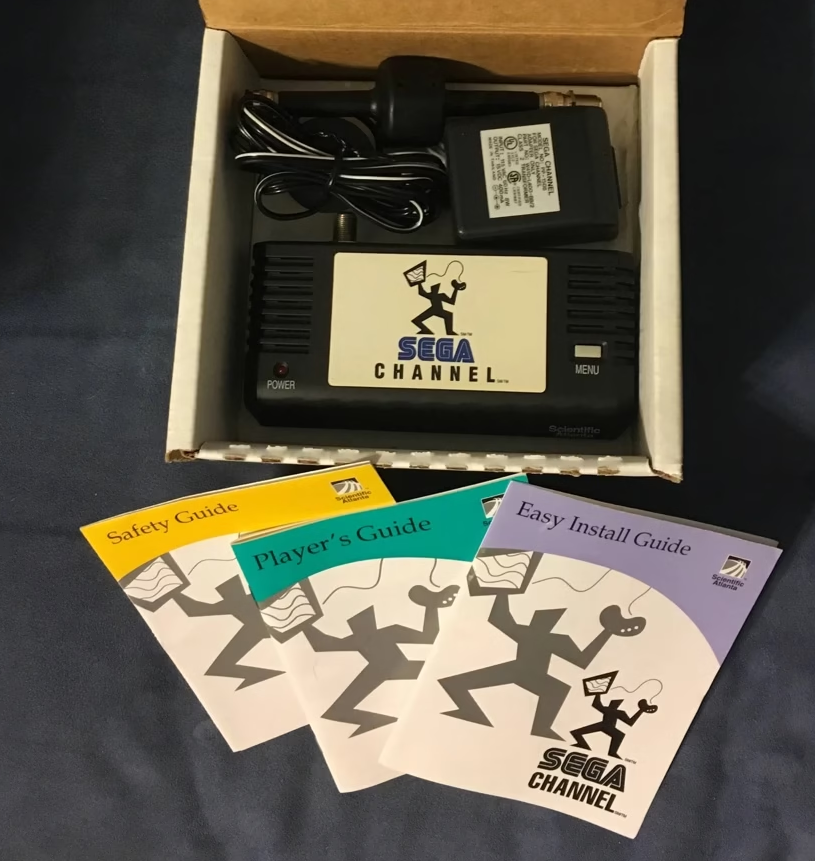
You have picked a bad game. The controls feel wrong, the enemies seem personally offended by your existence, and the picture on the box made a very convincing case for something that apparently is not in here. Usually, this is where you start trying to get your money’s worth. With Sega Channel, you could go back to the menu and choose something else.
That was a wonderful offer to make a Genesis owner in the 1990s. Games were birthday presents, Christmas presents, carefully considered purchases and weekend rentals. You studied the screenshots, read the reviews and hoped somebody you knew had already played the thing. Picking badly could leave you with a long weekend and a cartridge you were becoming rather tired of defending.
Sega Channel gave you room to be curious. There were dozens of games to browse, and trying another one did not require another trip to the shop. They arrived through the same cable connection that brought television into the house. Today, we might barely look up from the controller at that prospect. In 1994, it was quite a trick.
The best thing on cable might be a Genesis game
Sega Channel began its American rollout in December 1994, after earlier trials. Sega had joined forces with TCI and Time Warner, putting a games company into business with people who already knew how to add another service to the cable bill. The offer was a rotating library of roughly 50 games for a monthly payment, often around $15, although prices varied by provider. Interviews with the people behind the service describe the partnerships and the difficulty of getting it into homes.
For a family already buying or renting Genesis games, that was an inviting bit of arithmetic. The harder part was finding out whether your cable company offered it. Sega could put together an excellent lineup and an irresistible advertisement, but the answer still depended on where you lived. A friend across town might have a very different answer from the person on your telephone.
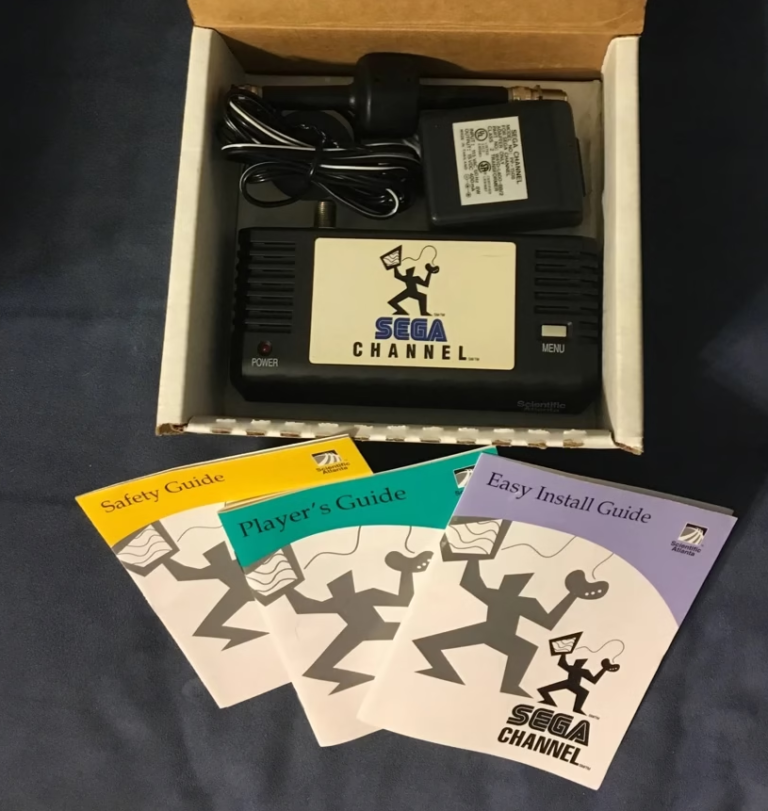
Once you could get it, the adapter went into the cartridge slot, with a connection to the cable feed. The box, power supply and little pile of instruction booklets were familiar enough. Console owners were getting quite good at finding room for one more accessory. This one, though, promised to make the cartridge collection look a little less important.
Switch on, find the menu, pick a game and wait. You did not get the immediate start of a cartridge, but a download normally took about a minute. Long enough to become impatient if you stared at the screen. Barely enough time to fetch a drink if you were sensible about it.
Somewhere in Denver, somebody needed a CD
The game was already heading towards your house before you chose it. Sega Channel repeatedly broadcast the available data, and the adapter collected the game you selected as it passed. It did not send your choice back to a server. It listened for the right material in a loop. Nathan Misner’s reconstruction of the system explains how Sega made that one-way connection feel like a service taking your order.
Behind it sat some wonderfully ordinary equipment. The General Instrument server manual describes a machine reading scheduled content from CDs, copying it to a hard drive and passing it to channel computers for transmission. The American uplink was in Denver. Satellite distribution carried the material onwards to cable systems, which delivered it to subscribers.
All that machinery, all those arrangements, and the evening’s entertainment still depended on getting a disc into a computer. There is something rather pleasing about that. The future of games distribution had arrived, and it had brought a CD case.
Once the download finished, your Genesis ran the game locally. Its own hardware supplied the action. Turning the console off erased the downloaded game code, while fetching a different game could wipe saved progress. Those limitations, also documented by Misner, were worth knowing before casually deciding to try something else.
During play, though, you could forget the cable company. There were enemies to deal with, jumps to miss and a controller that somebody else in the room probably wanted a turn with. The elaborate delivery system had done its job when you stopped thinking about it.
Go on, try that one
The menu helped make the service feel welcoming. Categories such as Swords & Spells and Wings & Wheels invited a browse, while Test Drives offered samples of selected games. Hints, news and submitted artwork gave subscribers reasons to linger. Former programming executive Michael Shorrock recalled that work in his Time Extension interview, alongside the negotiations needed to persuade publishers to put their games on the service.
The recovered September 1996 lineup gives a good idea of the temptation. There is Streets of Rage 2. There is Shinobi III. There is Dr. Robotnik’s Mean Bean Machine, ready to turn a sensible intention to play briefly into another attempt at a better run. You could move from street fights to ninjas to falling beans without taking the adapter out.
It is easy to imagine sticking to the names you recognised at first. Given that selection, who would blame you? But eventually an unfamiliar title might catch your eye. Perhaps the description sounded promising. Perhaps you had exhausted the obvious choices. Either way, finding out whether it was any good no longer meant spending the money you had saved for something else.
And if it was terrible, you could leave. There was no need to insist that it improved after the first level, or that the awkward controls were probably deliberate. Back to the menu. Another game would be along shortly.
A few surprises in the lineup
Subscribers could also find games that were difficult to explain to anyone shopping for cartridges. Garfield: Caught in the Act: The Lost Levels supplied additional stages through Sega Channel. Other releases had been squeezed down to fit its hardware. Super Street Fighter II: Limited Edition lost half its fighters, which is a fairly stern way to discover that your favourite character is not coming.
The Video Game History Foundation’s preservation work has documented these unusual releases. They complicate the pleasant idea that you can rebuild a childhood games collection by tracking down the right boxes. A Sega Channel subscriber might remember a particular version, sitting among a particular set of choices, that never had a box to buy.
The service had other problems that no amount of good programming could solve. It needed participating cable companies and connections that could deliver the signal reliably. By the middle of the decade, Sega was also selling the Saturn, and players had a new generation of machines to consider. The Genesis was still a splendid thing to have under the television, but it was getting harder to sell as the place to find the future.
Sega Channel closed in 1998. The difficult rollout and shifting priorities recalled in those staff interviews had caught up with it. The adapter could stay in the cartridge slot, but there would be no fresh selection waiting when you switched on.
Finding the menu again
For years, that left an awkward gap. You could keep the hardware and the booklets. You could collect advertisements. Bringing back what had actually come down the cable was considerably harder.
Then, in December 2025, the Video Game History Foundation announced the recovery of 144 Sega Channel ROMs, including almost 100 system ROMs. These were menus, variants and other recovered material, rather than 144 newly discovered full games. Shorrock and collector Ray, known as Sega Channel Guy, helped connect the preservation effort with old backups. Among the recovered releases was The Lost Levels.
The menus are a particularly lovely find. They bring back the part before the game: the browsing, the bright graphics, the possibility of choosing something you had never heard of. An adapter in a box cannot give you much of that. Seeing the screen again gets a little closer.
Game Pass subscribers will recognise the habit of opening a library without knowing exactly what they want. Sega Channel made that possible on a Genesis, with a smaller selection and a short wait between decisions. It could not follow you onto another device or leave you with a permanent shelf of downloads. It could give you an afternoon of trying things.
And that still sounds like a good afternoon. Start with something familiar. Give something odd a chance. Find a game you would never have persuaded anyone to buy, then become thoroughly unwilling to put the controller down when dinner is ready.
About the Author