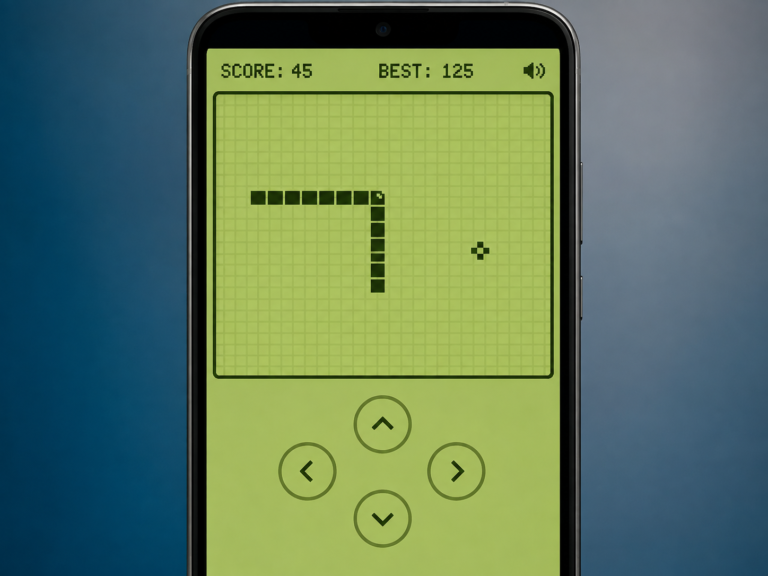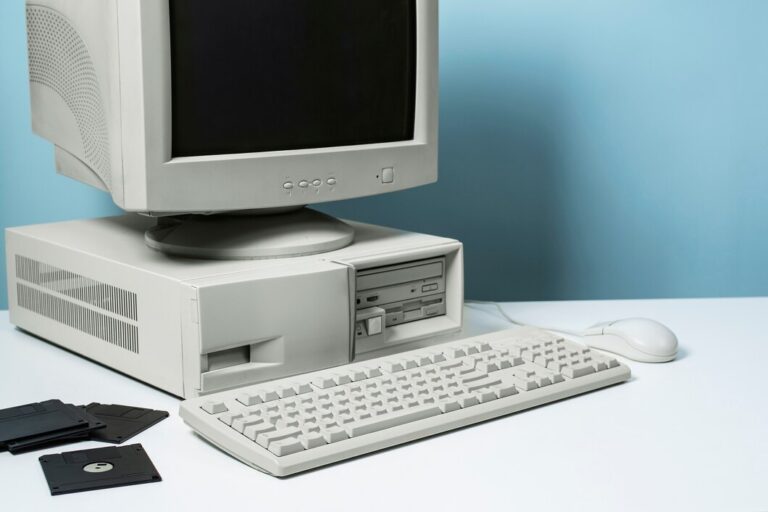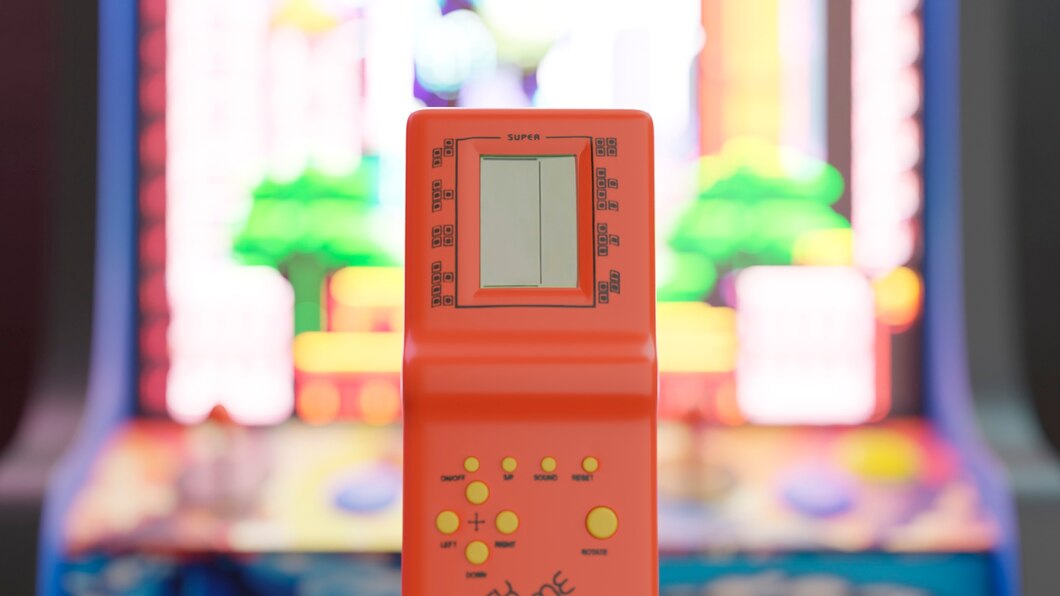
Retro game emulators have transformed the way people experience older titles, bringing gaming nostalgia, retro gaming, and beloved retro video games to modern computers, smartphones, and handheld devices. From classic game emulators and old game emulators to renewed interest in vintage gaming, classic gaming, and emulator gaming, players can revisit experiences that defined earlier generations. This retro gaming revival is more than a temporary trend. Nostalgic gaming, old-school gaming, and classic console games have become an important part of retro gaming culture, driven by video game nostalgia and the desire for an authentic retro gaming experience.
What Are Retro Game Emulators?
A game emulator is software designed to reproduce the behavior of another gaming platform. In simple terms, an emulator allows a modern device to imitate the hardware and operating environment of an older console or arcade system.
This technology makes it possible to play certain older games without owning the original hardware. A computer, phone, or dedicated handheld device can potentially recreate the environment needed to run software designed for an older platform.
The concept sounds straightforward, but emulation can be technically sophisticated. Older consoles often used hardware architectures that are very different from today’s devices. Developers of emulators therefore need to reproduce many aspects of the original system, including processor behavior, graphics processing, sound, memory management, controllers, and other hardware functions.
This explains why how retro game emulators work is such an interesting topic. Good emulation is not simply about copying a game’s graphics. The emulator attempts to reproduce the underlying platform closely enough for the game software to behave as it did on the original system.
The History of Retro Game Emulation
The history of retro game emulation goes back several decades. As personal computers became more powerful, programmers began experimenting with software capable of reproducing the behavior of older gaming hardware.
Early emulators were often limited. Some games could run slowly, graphics could contain errors, and sound reproduction might not resemble the original experience. As computing power improved, however, emulation became increasingly sophisticated.
The growth of the internet also played an important role. Communities of enthusiasts could exchange technical knowledge, document obscure hardware behavior, test compatibility, and improve emulator projects.
Over time, emulation expanded from relatively simple systems to increasingly complex platforms. Modern hardware provides significantly more processing capability than many older consoles, giving emulator developers greater resources to recreate historical gaming environments.
This technological progress contributed directly to the rise of retro game emulators. What once required specialized technical knowledge gradually became accessible to ordinary players.
Why Retro Gaming Is Becoming Popular Again
One of the biggest questions surrounding the current movement is why retro gaming is becoming popular when modern games offer sophisticated graphics, enormous worlds, online multiplayer, and advanced gameplay systems.
The answer is partly emotional.
For many players, older games are connected to childhood memories. A particular soundtrack may remind someone of school holidays. A familiar character may bring back memories of playing with siblings. An old console may remind someone of a family living room or a friend’s house.
This emotional connection is at the heart of gaming nostalgia.
However, nostalgia is not the only reason for the renewed interest. Many players appreciate the simplicity of older games. Classic titles often have straightforward objectives, recognizable gameplay loops, and shorter sessions. Players can understand the basic concept quickly without spending hours learning complicated systems.
Modern players who never experienced older consoles are also discovering retro video games for the first time. For them, classic titles are not merely memories. They are historical examples of how game design developed.
Why Gamers Love Classic Video Games
There are several reasons why gamers love classic video games.
Simple and Focused Gameplay
Many older games concentrate on a small number of mechanics. Instead of overwhelming players with dozens of systems, they often focus on movement, timing, exploration, puzzles, combat, or score-based challenges.
That simplicity can feel refreshing.
Challenging Experiences
Classic games were frequently designed around limited hardware and arcade-inspired principles. Some titles demand precision, memorization, and repeated attempts.
The challenge itself can become part of the appeal.
Memorable Art Styles
Technical limitations encouraged developers to create distinctive visual styles. Pixel art, limited color palettes, sprite animation, and simple environmental designs became recognizable characteristics of classic gaming.
Today, these visual styles have influenced many independent games.
Iconic Soundtracks
Music is another major component of video game nostalgia. Even simple melodies can remain memorable decades after a player first heard them.
Shorter Sessions
Not everyone has time for a 60-hour modern adventure. Old-school gaming can offer experiences that fit into shorter periods, making classic titles attractive to busy players.
How Retro Game Emulators Work
Understanding how retro game emulators work provides a better appreciation of the technology behind them.
An emulator essentially creates a software-based representation of another device. It receives instructions from game software and attempts to reproduce the behavior of the original hardware.
Depending on the system being emulated, this can involve reproducing:
- CPU operations
- Graphics processing
- Memory behavior
- Audio systems
- Input controls
- Timing mechanisms
- Display output
- Storage functions
The emulator translates or reproduces the instructions that the original console would have processed.
For example, when a player presses a button on a modern controller, the emulator interprets that input and presents it to the emulated system. The virtual console then processes the command and produces the appropriate response.
Modern processors are powerful enough to handle many of these tasks efficiently, which is one reason playing classic games on modern devices has become increasingly practical.
How Emulators Preserve Classic Games
One of the most important benefits of retro gaming emulators is their potential contribution to digital preservation.
Original gaming hardware can deteriorate over time. Controllers can fail, cartridges can become difficult to read, optical media can degrade, and proprietary components can become difficult to replace.
Emulation provides researchers, archivists, and enthusiasts with another method for studying and experiencing older software.
How emulators preserve classic games is therefore more complicated than simply making old titles playable. Preservation can involve documenting hardware behavior, recording software characteristics, maintaining compatibility information, and ensuring that historical experiences remain accessible on future systems.
This makes emulation relevant to gaming history as well as entertainment.
Retro Gaming and Modern Technology
The connection between retro gaming nostalgia and modern technology is particularly interesting.
Older games were created for hardware with severe technical limitations. Modern computers and mobile devices, meanwhile, can perform billions of operations per second and support high-resolution displays, wireless controllers, save-state features, and other conveniences.
This technological gap allows players to experience older games in new ways.
For example, modern emulator software may provide features such as:
- Flexible display options
- Controller customization
- Save states
- Screenshot functionality
- Audio adjustments
- Resolution scaling
- Fast-forward functions
- Multiple input configurations
These features can make older games easier to access while still preserving their original gameplay.
However, players who want an authentic retro gaming experience may prefer minimal enhancements. Others enjoy using modern features to make classic games more convenient.
The Role of Classic Game Emulators
Classic game emulators have helped expand access to older gaming libraries. Instead of requiring an original console connected to an old television, players can potentially use a modern computer or dedicated device.
This convenience has made emulator gaming particularly attractive to collectors, researchers, enthusiasts, and younger players exploring gaming history.
At the same time, emulation exists within legal and ethical boundaries. The legality of downloading, copying, or distributing game software and system firmware varies depending on jurisdiction and circumstances. Players should therefore understand the laws applicable to them and use legitimate sources whenever possible.
The technology itself and the distribution of copyrighted game software are separate issues. That distinction is important when discussing the future of emulation.
The Evolution of Retro Gaming
The evolution of retro gaming has followed a fascinating path.
Initially, retro gaming was largely associated with people who had grown up with older consoles. Later, it became a broader cultural phenomenon.
Companies began releasing miniature versions of classic consoles. Digital storefronts introduced older games to new audiences. Independent developers started creating modern games inspired by 8-bit and 16-bit design principles.
Social media and video-sharing platforms also contributed to this evolution. Players can now watch gameplay footage, restoration projects, speedruns, hardware reviews, collecting videos, and historical documentaries.
As a result, retro gaming culture has expanded beyond simply owning an old console.
It now includes collecting, restoration, preservation, game development, streaming, competitive play, fan communities, music, artwork, and historical research.
How Emulation Changed Retro Gaming
How emulation changed retro gaming can be understood through accessibility.
Before emulation became widely available, experiencing certain older games could require finding original hardware, locating compatible cables, maintaining aging consoles, and finding physical copies of games.
Emulation reduced some of those barriers.
A player interested in a particular historical system can research it, learn about its games, and potentially experience its software using modern equipment.
This has also helped younger generations explore games they never encountered when they were originally released.
As a result, the revival of classic video games is not limited to older players. It has become an intergenerational phenomenon.
Benefits of Retro Gaming Emulators
There are several potential benefits of retro gaming emulators beyond convenience.
1. Accessibility
Emulation can make older gaming experiences easier to access when original hardware is unavailable.
2. Preservation
It can support efforts to preserve historical software and hardware behavior.
3. Education
Students and researchers can use emulation to understand the development of computer and gaming technology.
4. Convenience
Modern devices can eliminate some of the setup requirements associated with aging hardware.
5. Exploration
New players can discover genres, mechanics, and franchises that influenced contemporary gaming.
6. Community Building
Emulation has contributed to communities dedicated to preservation, programming, collecting, speedrunning, and gaming history.
Retro Gaming Nostalgia and Modern Players
Nostalgia has become a powerful element of entertainment culture. Movies, music, fashion, toys, and technology from previous decades are frequently reintroduced to modern audiences.
Gaming is no exception.
Retro gaming nostalgia and modern technology have combined to create an unusual situation: old games can feel familiar to longtime players while simultaneously appearing new to younger audiences.
A player who grew up with an older console may appreciate a classic game because it reminds them of childhood. A younger player may appreciate the same game because its design offers something different from contemporary titles.
This creates two different forms of appreciation around the same software.
Retro Gaming Revival and the Indie Game Industry
The retro gaming revival has also influenced modern game development.
Many independent developers use pixel art, limited color palettes, side-scrolling mechanics, fixed-camera perspectives, arcade-style scoring, and other techniques associated with older games.
These games are not necessarily exact recreations. Instead, they reinterpret classic ideas using modern design principles.
This demonstrates that retro gaming is not simply about looking backward. It can also inspire new creative work.
Developers can take lessons from older games while adding modern storytelling, accessibility options, physics, controls, and visual effects.
Playing Classic Games on Modern Devices
One of the defining features of today’s nostalgic gaming environment is the ability to experience older software on devices that did not exist when those games were created.
Computers, handheld gaming systems, smartphones, and other modern hardware can provide platforms for older gaming experiences.
For players, this creates an interesting contrast. A game originally designed for a small television screen can now appear on a high-resolution display. A controller designed decades ago can be replaced with a modern gamepad.
Some players prefer this convenience, while collectors argue that original hardware provides a more authentic experience.
Neither approach is necessarily better. They represent different ways of appreciating gaming history.
The Best Retro Game Emulators
The phrase best retro game emulators does not necessarily refer to one universal application. The right choice depends on the gaming platform a player wants to emulate, the device they own, compatibility requirements, controller preferences, and desired features.
A good emulator should generally prioritize accurate system behavior, stable performance, reliable input handling, and strong compatibility.
For serious enthusiasts, accuracy may matter more than additional features. Casual players may prioritize ease of use.
The important point is to research emulator projects carefully and obtain software legally and responsibly.
The Emotional Side of Vintage Gaming
Vintage gaming is about more than technology.
Old games can represent different periods of a player’s life. They can remind people of friends, family members, holidays, childhood bedrooms, school breaks, or the excitement of receiving a new game.
That emotional connection explains why retro video games continue to attract attention even when newer games provide dramatically more advanced graphics.
Technology changes quickly, but memories remain powerful.
A game that appears technically simple today can still provide a meaningful experience because of what it represents to the person playing it.
Retro Gaming Trends in 2026
The retro gaming trends in 2026 continue to reflect the combination of nostalgia, preservation, collecting, and modern technology.
Several developments are particularly notable.
Growing Interest in Game Preservation
As older hardware becomes harder to maintain, preservation continues to attract attention from gaming communities and researchers.
Modern Retro-Inspired Games
Independent developers continue to create games influenced by classic mechanics and visual styles.
Dedicated Retro Handhelds
Compact gaming devices designed around older gaming experiences have helped make portable retro gaming increasingly attractive.
Retro Content on Social Platforms
Videos about classic consoles, game collections, restoration projects, speedrunning, and forgotten games continue to introduce retro gaming to new audiences.
Renewed Interest in Gaming History
Players are increasingly interested in understanding where modern game mechanics came from rather than simply playing new releases.
The Future of Retro Game Emulation
The future of retro game emulators and gaming nostalgia will likely be shaped by improvements in hardware, software preservation, community development, and access to historical information.
As technology advances, emulation may become increasingly accurate and efficient. At the same time, preservation efforts could become more important as original gaming hardware becomes older.
Artificial intelligence and advanced software tools may also influence how researchers document old systems, analyze software behavior, and restore historical gaming experiences. However, preserving the original character of a game will remain important.
The goal should not simply be to make old games run. It should also be to understand and preserve the history surrounding them.
Why Retro Gaming Still Matters
The continued popularity of classic gaming, old-school gaming, and video game nostalgia demonstrates that technological progress does not automatically make older experiences irrelevant.
Modern games offer incredible possibilities, but classic games can provide something different: simplicity, historical significance, distinctive design, and emotional connection.
Retro gaming experience has therefore become a bridge between generations. Older players can revisit familiar memories, while younger players can discover the foundations upon which today’s gaming industry was built.
From old game emulators and classic console games to preservation projects and retro-inspired modern releases, the movement continues to evolve.
Conclusion
The rise of retro game emulators represents more than a technological solution for running older software. It is part of a broader cultural movement surrounding gaming nostalgia, retro gaming, vintage gaming, and the preservation of interactive entertainment history.
Emulation has made it easier for people to explore older gaming experiences on modern devices, while the wider retro gaming revival has encouraged collecting, preservation, research, content creation, and new game development.
At the heart of this movement is a simple idea: great games can remain meaningful long after their original hardware has disappeared.
The continued interest in retro gaming trends in 2026 suggests that classic games will remain part of gaming culture for years to come. Whether players discover them through legitimate digital releases, original hardware, preservation projects, or appropriate emulation, the appeal of classic video games continues to demonstrate the lasting power of interactive experiences.
Retro gaming goes beyond simply revisiting older video games; it is about reconnecting with the memories, experiences, and culture associated with classic gaming. It is about remembering where gaming came from, understanding how it evolved, and discovering why certain experiences remain unforgettable.
About the Author