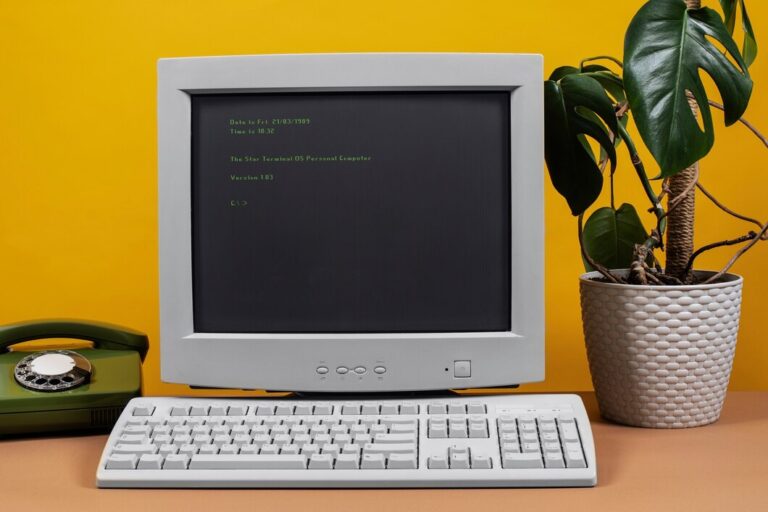
If you remember using a desktop computer during the 1990s, you probably remember its unmistakable appearance: a large beige tower, a matching monitor, a chunky keyboard, and a mouse that looked like it belonged in an office. Almost every computer seemed to follow the same design, regardless of the manufacturer.
Today, computers come in black, silver, white, and countless other colors. Some feature transparent panels, colorful lighting, and carefully designed finishes. Looking back, the widespread use of beige seems unusual, especially when modern technology is associated with sleek and stylish designs.
So, why were computers beige during the 1990s? The answer involves more than simply choosing a popular color. Computer manufacturers wanted their products to look professional, fit into existing workplaces, remain affordable to produce, and appeal to a growing audience of business users and home computer owners.
Beige became a familiar standard because it satisfied several practical and commercial needs. Eventually, however, changing consumer expectations and new design ideas transformed the appearance of personal computers.
How Beige Became the Standard for PC Design
The popularity of beige computers began before the 1990s. During the late 1970s and 1980s, personal computers were becoming more common in offices, schools, and homes.
Early computers were often viewed as specialized equipment rather than everyday consumer products. Their appearance reflected this perception. Manufacturers generally prioritized functionality, reliability, and compatibility over attractive styling.
The introduction of the IBM Personal Computer in 1981 played an important role in establishing the familiar desktop computer design. Its neutral appearance and practical construction influenced countless manufacturers producing IBM-compatible machines.
As more companies entered the personal computer market, many adopted similar designs. Beige computer cases became recognizable across brands, creating a visual standard that continued throughout much of the following decade.
The result was an industry where computers looked remarkably similar. Whether someone purchased a computer from IBM, Compaq, Dell, or another manufacturer, the overall appearance often followed the same familiar pattern.
The term beige box eventually became associated with ordinary desktop PCs. It described the large, rectangular computers that dominated offices and homes during the period.
According to the Science Museum, beige and similar neutral shades were widespread among personal computers from the late 1970s into the early 1990s. The color was closely connected to the growing popularity of computers in professional environments.
Manufacturing: Why Beige Computer Cases Were Practical
Manufacturing considerations also contributed to the popularity of beige computer cases.
During the 1980s and 1990s, computer manufacturers competed to offer increasingly powerful machines at reasonable prices. Keeping production costs manageable was important, particularly as personal computers became more accessible to ordinary consumers.
Computer cases were commonly made from plastic, which allowed manufacturers to create relatively lightweight enclosures with practical shapes and openings for components.
Producing a computer case in a standard color made manufacturing easier to organize. Companies could use similar designs across different product models and avoid unnecessary variations.
When manufacturers ordered large quantities of plastic components in a particular color, they could maintain consistent production and simplify inventory management. Custom colors might require additional coordination, separate production batches, or greater purchasing costs.
Beige was already widely used in office equipment, so it was an established and familiar option.
This does not mean beige was necessarily the cheapest possible color in every situation. Instead, its popularity helped make it a convenient standard for manufacturers working with large production volumes.
The same general principle can be seen in modern electronics, where black, silver, and white are frequently used across different product categories.
Standardization also benefited computer retailers and businesses. Matching computer components were easier to source, replace, and maintain when manufacturers followed similar visual conventions.
For companies purchasing hundreds of desktop computers, consistency was often more important than having a unique appearance.
Office Aesthetics: Computers Were Designed to Blend In
One of the strongest reasons behind the popularity of beige was the office environment.
During the 1990s, computers were becoming essential tools for businesses. They were used for accounting, document preparation, spreadsheets, communication, and administrative work.
However, computers were still relatively large pieces of equipment. A typical desktop setup occupied considerable desk space and included several separate components.
Businesses wanted these machines to fit naturally into existing workplaces.
Beige complemented the neutral colors commonly found in offices, including gray filing cabinets, cream-colored walls, wooden desks, and other traditional furniture.
A brightly colored computer might have looked distracting or out of place in a formal workplace. A beige computer, on the other hand, appeared professional and understated.
This approach helped computers seem like ordinary office equipment rather than unusual technological devices.
A 1996 Washington Post article examining computer colors explained that institutional buyers often preferred equipment that matched the existing appearance of their workplaces. Neutral shades made computers easier to incorporate into established office environments.
The same design philosophy extended beyond computer towers.
Monitors, keyboards, mice, printers, and other accessories frequently came in matching shades. This created a coordinated appearance across the entire workstation.
The office aesthetic also influenced home computers. Manufacturers often wanted personal computers to look dependable and professional, particularly when encouraging families and small businesses to purchase their first machines.
Beige helped communicate that computers were serious, useful tools.
Practicality: Why Beige Was a Safe Color Choice
Although beige is often remembered as a boring color, it offered several practical advantages from a design perspective.
First, it was relatively neutral. Unlike bright red, blue, or green, beige did not strongly compete with the surrounding environment.
This made it suitable for different settings, including corporate offices, classrooms, home studies, and living rooms.
Second, beige helped create a consistent appearance across computer products.
Manufacturers could produce towers, monitors, keyboards, and other accessories that looked like parts of the same system.
Third, beige was a conservative design choice during a period when personal computing was still developing.
Many consumers were unfamiliar with computers. Some viewed them as complicated machines that required specialized knowledge.
A familiar, understated appearance could make the technology seem less intimidating.
There is also a popular explanation that beige was chosen because it concealed dirt and aging better than pure white plastic. This idea is plausible in certain circumstances, although it should not be treated as the single proven reason for the industry’s color preference.
In reality, plastic aging depends on the material formulation, environmental exposure, and other factors.
Older computer cases sometimes became yellowish over time, creating the familiar appearance of aging plastic. This discoloration was not necessarily the original intended color.
The practical appeal of beige was therefore less about one specific technical advantage and more about its ability to satisfy several design requirements simultaneously.
Custom PCs and the Beginning of Computer Design Freedom
Although beige dominated the mainstream market, not every computer followed the same design approach.
Some manufacturers experimented with different colors, unusual shapes, and more distinctive materials.
Workstations designed for creative professionals sometimes featured bold colors because their manufacturers wanted to communicate innovation and distinguish their products from ordinary business PCs.
Silicon Graphics, for example, became known for colorful workstation designs during the 1990s. These machines demonstrated that computers could look different without sacrificing their professional purpose.
The growing popularity of home computing also created opportunities for more expressive designs.
Consumers were increasingly purchasing computers for personal use rather than simply accepting whatever equipment their employer provided.
This change gradually encouraged manufacturers to think about individual preferences.
Computer enthusiasts also began modifying their machines. Some users experimented with painting computer cases, adding custom components, or building systems that reflected their personal interests.
However, extensive customization was not yet as accessible as it is today.
Most desktop computers came with standard enclosures and limited opportunities for personalization. Changing the case color could require replacing the entire enclosure or undertaking a custom modification.
The idea of a computer as a personal design statement was becoming more attractive, but the mainstream industry still largely favored conventional beige equipment.
How Beige Computers Lost Their Popularity
By the late 1990s, consumer expectations were changing.
Computers were no longer limited to offices and technical environments. They were becoming common household products used for education, entertainment, communication, and internet access.
As the market expanded, manufacturers began recognizing that appearance could influence purchasing decisions.
Consumers wanted computers that looked modern and interesting, not simply functional.
The emergence of colorful consumer electronics helped encourage this shift. Products such as portable music players, game consoles, and other electronic devices demonstrated that technology could combine performance with distinctive visual design.
The computer industry began exploring darker colors, metallic finishes, unusual shapes, and decorative elements.
Black computer cases gradually became more popular, particularly among users who wanted a modern-looking desktop system.
Black offered a different kind of neutrality. It appeared more contemporary and suited the increasingly popular aesthetic of home entertainment equipment.
Silver and other metallic-looking finishes also became more common as manufacturers experimented with new product designs.
These changes reflected a broader transformation in consumer electronics: design was becoming an important part of the product experience.
The Return of Color: How Modern Computers Moved Beyond Beige
One of the most memorable moments in computer design history came in 1998, when Apple introduced the iMac G3.
Designed under Apple’s renewed focus on industrial design, the iMac G3 featured a distinctive translucent enclosure that looked dramatically different from traditional beige desktop computers.
Its original Bondi Blue appearance helped establish a new visual direction for personal computers.
Rather than hiding inside a conventional rectangular case, the computer became a recognizable design object.
The iMac G3 demonstrated that consumers could be interested in computers for their appearance as well as their technical capabilities.
Apple expanded the iMac color range in 1999, introducing additional shades that made computer design feel more personal and expressive.
The Henry Ford Museum of American Innovation identifies the iMac G3 as an important example of the transition from neutral computer cases to colorful, translucent designs.
This shift was not simply about changing plastic colors. It represented a broader change in how manufacturers understood computers.
A computer was no longer just an office machine. It could also be a household accessory, an entertainment device, and a reflection of personal taste.
The influence of colorful designs continued into the 2000s, when manufacturers increasingly experimented with black, silver, white, and other finishes.
Today, gaming PCs have taken customization even further, with transparent side panels, RGB lighting, elaborate cooling systems, and carefully selected components.
Interestingly, neutral colors have never completely disappeared. Black, silver, and white remain popular because they are versatile and fit different environments.
The difference is that consumers now have far more choices than they did during the beige-box era.
Frequently Asked Questions
Why were computers beige in the 90s?
Computers were beige because manufacturers wanted a neutral, professional appearance that blended into offices and homes. The color also became a convenient industry standard as companies produced large quantities of similar computer equipment.
What were beige computer cases made of?
Most beige computer cases were made from plastic, often molded into rectangular enclosures designed to hold internal components and provide ventilation.
When did beige computers become popular?
Beige computer designs became widespread during the late 1970s and 1980s and remained common throughout much of the 1990s.
Why did computer manufacturers stop using beige?
Manufacturers gradually moved away from beige as consumers began expecting more attractive and personalized technology. Black, silver, and colorful designs became increasingly popular, particularly as computers entered more homes.
Are beige computers still available?
Yes. Vintage beige computers remain popular among retro computing enthusiasts and collectors. Some modern computers also use neutral-colored cases, although the classic beige appearance is now primarily associated with older desktop systems.
Conclusion
The story of beige computers reveals how technology design is influenced by practical needs, manufacturing decisions, workplace culture, and consumer expectations.
Why were computers beige? Because beige offered a dependable, neutral appearance that suited the offices where personal computers first became widely popular. It also helped manufacturers maintain consistent designs, simplify production, and appeal to customers who preferred professional-looking equipment.
As computers became household products, the importance of appearance gradually increased. Manufacturers began experimenting with new colors, shapes, and materials, eventually moving away from the familiar beige box.
The introduction of colorful computers such as the iMac G3 helped demonstrate that technology could be both functional and visually appealing.
Today, beige computer cases are remembered as a defining feature of 1990s computing. Although the color may seem outdated, it represents an important chapter in the evolution of personal computer design.
The beige box was not simply an unattractive computer. It was a product of its time, reflecting the practical priorities and design expectations of an industry that was still finding its place in everyday life.
About the Author