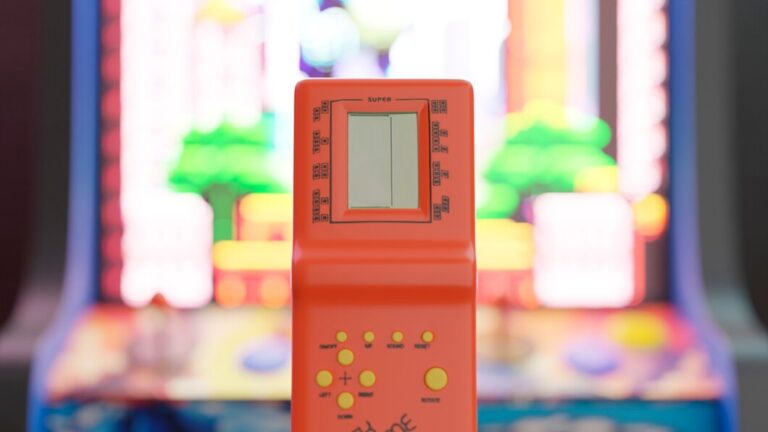
The Snake game history is closely connected with the rise of mobile phones and the transformation of simple games into global cultural icons. The Nokia Snake game turned a basic concept into an unforgettable experience for millions of people, making the history of Snake game an important part of early mobile gaming. The Snake game on Nokia was easy to understand, required no complicated instructions, and worked perfectly with the small screens and physical buttons of Nokia mobile games. Over time, the classic Snake game became more than a pastime—it became a symbol of Snake game nostalgia, retro mobile games, and the early relationship between phones and gaming. Understanding Nokia Snake history also reveals how a tiny feature-phone game helped shape expectations for mobile entertainment.
The Origins of the Snake Game
The Snake game origins actually predate Nokia mobile phones. The basic idea behind Snake belongs to a family of arcade and computer games built around controlling a moving object that grows longer as it collects items.
One of the earliest inspirations came from arcade games such as Blockade, released in the late 1970s. In that game, players controlled a growing trail while trying to avoid collisions. Similar concepts appeared across computer systems and arcade games during the following years.
These early versions established the fundamental mechanics associated with Snake:
- Control a continuously moving object.
- Collect items to increase its length.
- Avoid hitting walls or obstacles.
- Avoid colliding with the object’s own body.
- Continue playing until a mistake ends the game.
The concept was remarkably simple, but simplicity became one of its greatest strengths.
Before smartphones, many games were designed for dedicated arcade machines, home computers, and gaming consoles. Bringing this type of gameplay to a telephone would eventually create a completely different gaming experience.
From Arcade Concept to Mobile Phone
The history of Snake game took an important turn when the concept was adapted for mobile devices.
Early mobile phones had severe technical limitations compared with modern smartphones. Screens were small, processing power was limited, storage was minimal, and most devices had physical keypads rather than touchscreens.
These restrictions could have made mobile gaming difficult.
Instead, they encouraged developers to create games that were:
- Easy to control
- Lightweight
- Fast to understand
- Visually simple
- Suitable for short sessions
Snake was almost perfectly designed for these conditions.
Its basic movement could be controlled using directional buttons. Its visual representation could be displayed using simple blocks or pixels. The game did not require advanced sound, detailed graphics, or large amounts of storage.
This made Snake an ideal candidate for mobile phones.
The Arrival of Snake on Nokia Phones
The origins of the Nokia Snake game are generally associated with Finnish programmer Taneli Armanto, who developed the version that appeared on Nokia phones in the 1990s.
Snake was included on the Nokia 6110, introduced in 1997. This became a significant moment in mobile gaming history because the game was placed directly into a device that millions of people would carry.
The game did not need to be purchased separately.
There was no app store.
There were no downloads.
There were no advertisements.
There was simply a phone, a keypad, and a small game waiting inside it.
That accessibility played a major role in the popularity of the Snake mobile game.
Why Nokia Snake Game Became Popular
Understanding why Nokia Snake game became popular requires looking beyond the game itself.
One major reason was accessibility.
People did not have to identify themselves as gamers to play Snake. If they owned a compatible Nokia phone, they could simply open the game and start playing.
This helped introduce gaming to people who might never have purchased a console or visited an arcade.
Another reason was simplicity.
Players could understand the objective almost immediately. Move the snake, collect the target, grow longer, and avoid crashing.
There was almost no learning curve.
The game also created a strong challenge. Although the rules were simple, controlling an increasingly long snake became progressively more difficult.
This combination of accessibility and challenge created an addictive gameplay loop.
The Classic Snake Game Experience
The classic Snake game was particularly well suited to the hardware of Nokia feature phones.
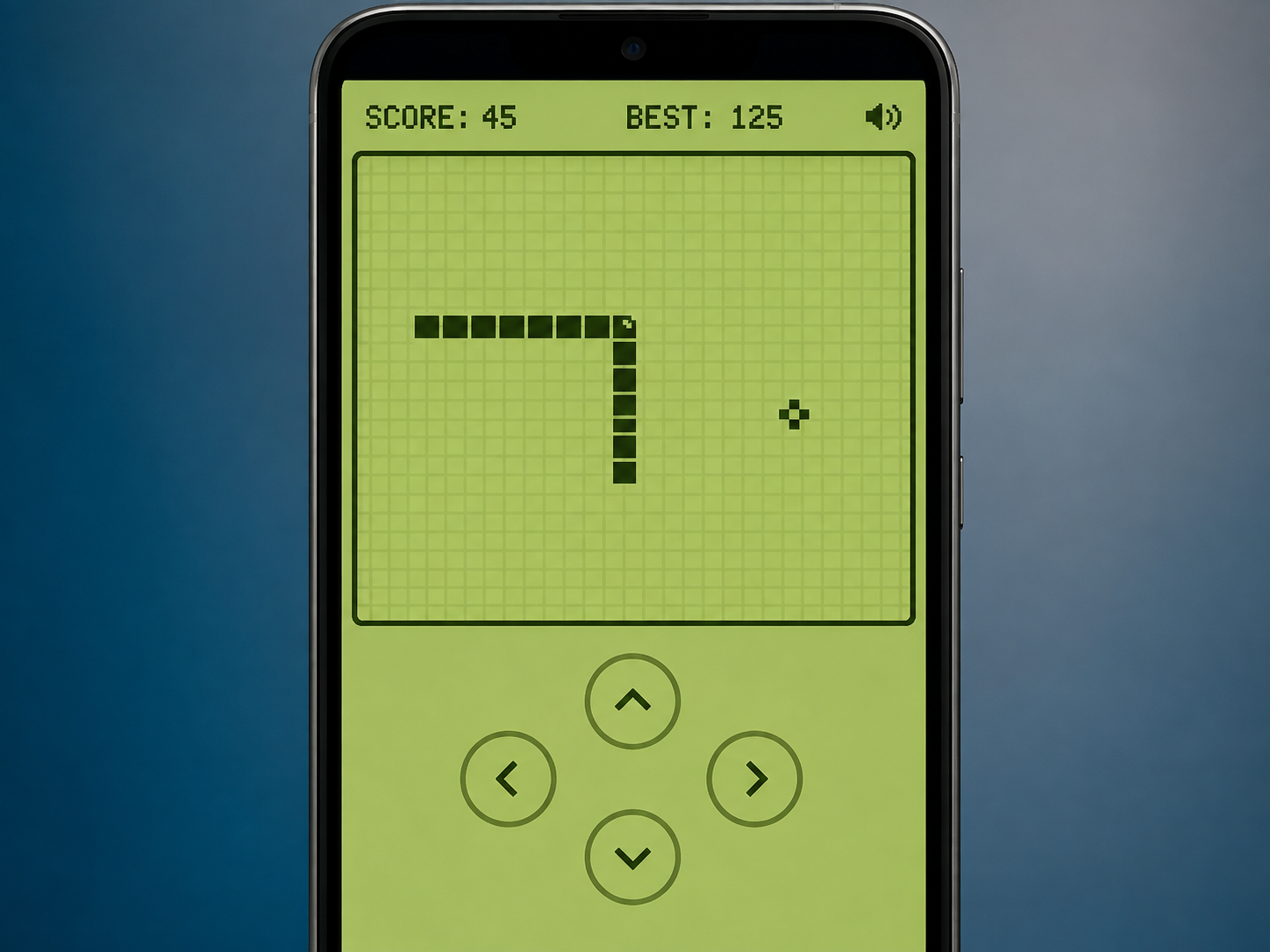
The screen often displayed simple monochrome or limited-color graphics. The snake could be represented using small blocks, while food appeared as another basic symbol.
These pixel graphics may seem primitive today, but they were perfectly functional.
Players didn’t need detailed characters or cinematic environments to understand what was happening.
Every movement mattered.
One wrong turn could end the game.
This created an unusual kind of tension. Because the controls were limited, success depended on planning, timing, and spatial awareness rather than complex button combinations.
Snake Game Nostalgia and Nokia Phones
Today, Snake game nostalgia remains one of the strongest examples of digital nostalgia associated with early mobile phones.
For many people, seeing the familiar Snake screen can immediately bring back memories of older Nokia phones, school breaks, long journeys, waiting rooms, or sharing phones with friends.
The game became connected to everyday experiences.
Unlike console games, which were usually associated with dedicated gaming environments, Snake was available almost anywhere.
A phone could be carried in a pocket.
That meant the game could be played while waiting for a bus, sitting in a classroom break, traveling, or simply passing time at home.
This helped make Snake part of everyday gaming culture.
How Nokia Made Snake Game Iconic
The question of how Nokia made Snake game iconic is really a story about distribution, design, and timing.
Nokia phones became extremely popular around the world during the late 1990s and early 2000s.
Because Snake was included with many Nokia devices, the game reached an enormous audience without requiring separate marketing as a standalone game.
Nokia effectively placed a video game in people’s pockets.
The company did not need to convince consumers to become gamers. Consumers simply discovered the game because it was already on their phone.
This is a crucial part of the Nokia Snake game impact on gaming history.
The History of Snake Game on Nokia Phones
The history of Snake game on Nokia phones did not end with the original version.
As Nokia introduced new devices, the game evolved.
Different versions offered improvements in graphics, sound, levels, game modes, and gameplay mechanics.
The original experience was relatively minimal, but later versions could offer more complex environments and features.
This demonstrated an important principle in game development: a successful core mechanic can remain recognizable while being adapted to new hardware.
The player still controlled a growing snake.
The fundamental objective remained familiar.
But the presentation and possibilities expanded.
Snake Game Evolution
The Snake game evolution reflects the broader development of mobile technology.
The earliest versions relied heavily on simple displays and physical keypads. As phones became more sophisticated, developers gained access to better graphics, sound, color screens, and improved processing capabilities.
Snake could therefore evolve from a basic monochrome experience into something more visually sophisticated.
The evolution of the Snake game also illustrates the transition from feature phones to smartphones.
Modern versions can include:
- Colorful graphics
- Touch controls
- Multiple levels
- Online leaderboards
- Multiplayer modes
- Special abilities
- Animated environments
- Customizable characters
- New challenges
Yet the fundamental concept remains recognizable.
That is part of the game’s remarkable legacy.
Nokia Mobile Games Before the Smartphone Era
The importance of Snake becomes even clearer when viewed alongside other Nokia mobile games.
During the feature-phone era, mobile gaming was fundamentally different from today’s gaming ecosystem.
There were no massive app stores offering millions of titles.
Games were often simple, small, and designed around the limitations of the device.
Nokia helped establish the idea that a phone could be more than a communication tool.
It could also provide entertainment.
Snake was particularly effective because it required almost no explanation.
This made it one of the most recognizable examples of early mobile games.
Snake and the Rise of Retro Mobile Games
The popularity of Snake contributed to the cultural foundation of retro mobile games.
When people today discuss retro gaming, they often think about arcade cabinets, classic consoles, and 8-bit computer games.
But mobile phones eventually became part of that nostalgia.
The old Nokia experience represents a unique form of retro gaming because it was portable and personal.
A console belonged to a household.
An arcade machine belonged to a public space.
A Nokia phone belonged to an individual.
That distinction made mobile games feel particularly personal.
How Snake Changed Mobile Gaming
The question of how the Snake game changed mobile gaming is larger than the success of a single title.
Snake demonstrated that mobile games did not need to imitate console games.
A successful mobile game could be designed around the strengths of the device itself.
For feature phones, those strengths included:
- Physical buttons
- Small displays
- Limited hardware
- Portable usage
- Short play sessions
- Simple interfaces
Snake used these limitations creatively.
This helped establish a design philosophy that would become extremely important later: mobile games should be convenient, accessible, and easy to start.
Snake and the Psychology of Simple Games
The success of Snake also demonstrates why simple games can remain engaging.
The game contains a straightforward feedback loop.
The player collects an item.
The snake grows.
The available space becomes smaller.
The difficulty increases.
Eventually, the player makes a mistake.
Then the player tries again.
This cycle encourages repeated attempts.
Importantly, each new attempt gives players a chance to improve their previous score.
That competitive element made Snake particularly appealing when people compared scores with friends and family.
The game became a tiny personal challenge.
Why Snake Was Popular on Nokia Phones
There were several reasons why Snake was popular on Nokia phones.
It Was Easy to Learn
Players could understand the controls quickly.
It Required No Extra Equipment
The phone itself provided everything needed.
It Was Portable
The game could be played almost anywhere.
It Encouraged Repeat Play
Players often wanted to beat their previous score.
It Worked With Basic Hardware
Snake did not require advanced processors or graphics.
It Reached Non-Gamers
People could enjoy the game without considering themselves video game enthusiasts.
These qualities helped Snake become a cultural phenomenon rather than simply another software feature.
Snake Game and Gaming Nostalgia
The connection between Snake game nostalgia and mobile gaming remains strong because the game represents a specific technological period.
It reminds people of a time when mobile phones were primarily used for calling and texting.
Games were an unexpected bonus.
Modern smartphones have powerful processors, high-resolution displays, advanced graphics, and access to enormous gaming libraries.
The contrast makes the original Snake experience even more memorable.
A tiny game running on a basic phone can now feel like a snapshot of technological history.
The Role of Pixel Graphics
Pixel graphics were not merely an aesthetic choice in the early Nokia era.
They were a practical solution to hardware limitations.
Small screens could display simple geometric shapes effectively.
Instead of relying on realistic visual effects, Snake communicated through movement and structure.
The player did not need to see a detailed snake.
A sequence of blocks was enough.
This simplicity became part of the game’s identity.
Modern developers often deliberately use pixel art to create retro aesthetics, showing how limitations from earlier technology have become recognizable visual styles.
Snake Compared With Arcade Games
The relationship between Snake and arcade games is also significant.
Many arcade games were built around simple rules but demanding gameplay. Snake followed a similar philosophy.
The controls were straightforward, but mastering the game required practice.
However, Snake changed the context.
An arcade machine required a physical location.
Snake could be played privately and repeatedly on a personal device.
This represented an important step in the movement of gaming from public entertainment spaces toward personal digital devices.
Snake as Part of Mobile Gaming History
The story of Snake is inseparable from mobile gaming history because it helped demonstrate the commercial and cultural potential of games on phones.
The game proved that people were willing to use a communication device for entertainment.
That idea would later become enormously important as mobile phones developed into smartphones.
The eventual smartphone gaming industry would introduce far more sophisticated experiences, but the basic concept of carrying games everywhere was already familiar to millions of people.
Snake helped establish that habit.
The Transition to Touchscreen Gaming
The arrival of smartphones and touchscreen gaming fundamentally changed how players interacted with mobile games.
Physical keypads disappeared from many devices.
Touch controls became standard.
Mobile games could now use gestures, virtual buttons, swipes, taps, and multitouch interactions.
Snake adapted to this new environment through numerous modern interpretations.
However, touchscreen versions also demonstrate why the original Nokia experience was special.
Physical directional buttons provided tactile feedback and made the movement feel precise.
The limitations of the old hardware were actually part of the game’s character.
Nokia Snake Game Legacy
The Snake game legacy extends far beyond the Nokia brand.
The game has been recreated, redesigned, referenced, and reimagined across countless platforms.
Its mechanics have inspired games that experiment with growing trails, increasingly limited spaces, and score-based progression.
The basic formula is easy to recognize even when the visuals are completely different.
This demonstrates the strength of the original design.
A game does not necessarily need complex technology to have a lasting influence.
Sometimes a clear idea is enough.
Classic Nokia Games and Digital Nostalgia
Snake was not the only reason people remember classic Nokia games, but it became the defining example.
For many users, the Nokia experience consisted of a combination of communication and entertainment.
The phone represented independence and connectivity, while Snake provided a simple source of amusement.
This combination helped create a unique form of digital nostalgia.
People who grew up with smartphones may remember early mobile games differently from those who experienced feature phones.
For older devices, the limitations themselves are part of the memory.
The monochrome screen, physical keypad, startup tones, and simple games all form part of a recognizable technological era.
Snake’s Influence on Gaming Culture
The cultural influence of Snake is easy to underestimate because the game was so simple.
Yet it helped normalize the idea that gaming could happen anywhere.
Gaming no longer needed to be associated exclusively with consoles, computers, or arcades.
A person could carry a game in their pocket.
This was an important shift in gaming culture.
It also helped broaden the gaming audience.
Someone who never owned a dedicated gaming system could still experience the basic satisfaction of playing for a high score.
That accessibility would become increasingly important as mobile gaming developed.
The Snake Game Impact on Gaming History
The Snake game impact on gaming history comes from its combination of simplicity, availability, and timing.
It arrived during a period when mobile phones were becoming mainstream.
At the same time, technology was gradually making phones more capable of supporting entertainment features.
Snake fit perfectly into that transition.
It showed that a game could be:
- Small
- Portable
- Accessible
- Easy to understand
- Highly replayable
- Technically simple
- Culturally memorable
These characteristics helped shape expectations for future mobile games.
Why Snake Became an Iconic Mobile Game
So, how Snake became an iconic mobile game comes down to several interconnected factors.
First, the underlying gameplay was already strong.
Second, Nokia adapted the concept effectively to mobile hardware.
Third, Nokia phones became widely distributed.
Fourth, the game required almost no learning.
Fifth, players could compete against their own scores.
Finally, Snake arrived at precisely the right moment in the development of personal mobile technology.
The result was a game that became associated with an entire generation of phones.
Snake Game Origins and Its Lasting Appeal
Looking back at the Snake game origins, it is fascinating to see how an idea developed for earlier electronic gaming environments eventually became a defining feature of mobile entertainment.
Its journey demonstrates that successful game design is not always about technological complexity.
Snake’s core mechanic remains understandable decades after its earliest versions.
The player moves.
The player collects.
The player grows.
The player avoids collision.
That is enough to create challenge and replayability.
The Future of Snake and Retro Gaming
Snake continues to have a place in modern retro gaming.
Developers can now add sophisticated graphics, online features, social competition, and new gameplay mechanics while preserving the basic concept.
At the same time, the original Nokia version remains interesting because it represents an important stage in technological development.
As new generations discover retro games, Snake provides an accessible introduction to the history of early mobile entertainment.
It demonstrates how far gaming technology has progressed while also showing that engaging gameplay does not necessarily depend on advanced graphics.
Conclusion
The history of Snake game is ultimately a story about how simplicity, accessibility, and technology can come together to create something culturally significant. The Nokia Snake game transformed a straightforward growing-trail concept into one of the most recognizable examples of early mobile games.
The classic Snake game worked because it perfectly matched the limitations and strengths of Nokia feature phones. Simple controls, pixel graphics, portable hardware, and an addictive scoring system made it ideal for quick gaming sessions.
More importantly, Snake helped change perceptions of what a mobile phone could be. It became an entertainment device as well as a communication tool and helped lay part of the foundation for modern mobile gaming.
The Snake game legacy continues today through remakes, retro collections, mobile adaptations, and the memories of people who spent countless minutes trying to make their snake longer without crashing.
That is why the story of how Nokia made Snake game iconic is more than a nostalgic look at an old phone game. It is an important chapter in mobile gaming history, showing how one remarkably simple idea helped connect millions of people with gaming and became a lasting symbol of gaming nostalgia and digital nostalgia.
About the Author