The history of personal computers is a story of transformation. Computers that once occupied entire rooms eventually became machines that could sit on a desk, and later devices that could fit inside a backpack or even a pocket. Along the way, countless pieces of hardware, operating systems, programming languages, storage formats, and computer brands appeared, became popular, and eventually disappeared.
Today, computers are so deeply integrated into everyday life that it is easy to forget how unusual personal computing once was. Early machines were expensive, technically demanding, and primarily designed for governments, universities, research organizations, and large businesses. The idea that an individual could own a computer for work, education, communication, or entertainment was revolutionary.
Vintage computers provide a fascinating window into that transformation. Machines such as the Altair 8800, Apple II, Commodore 64, IBM PC, and original Macintosh did more than introduce new technology. They helped establish ideas about how people would interact with computers and influenced the development of the digital world that followed.
Understanding personal computer history also reveals that modern computing did not emerge from a single invention. It developed through decades of experimentation, competition, engineering breakthroughs, changing consumer expectations, and increasingly affordable hardware.
What Is a Personal Computer?
A personal computer, commonly called a PC, is a computer designed primarily for use by an individual rather than being operated exclusively as a shared institutional or industrial system.
Modern examples include desktop computers and laptops. Historically, however, the definition of a personal computer was less straightforward because early machines varied greatly in their capabilities, size, price, and intended audience.
A personal computer generally contains several major components:
- A processor that performs calculations and executes instructions
- Memory for temporarily storing information
- Storage for programs and files
- Input devices such as keyboards or mice
- A display for presenting information
- An operating system or software environment
What made personal computers revolutionary was not simply their technical specifications. Their importance came from putting computing power directly into the hands of individuals.
Before personal computing became widespread, access to computers was often controlled by institutions. Users might submit jobs to a central computer or access a shared system through terminals. Personal computers changed that relationship by giving individuals greater control over hardware and software.
The evolution of computers from centralized machines to personal devices was therefore both a technological and cultural transformation.
Before the Personal Computer
The story of personal computing begins long before the first machines sold as personal computers.
Early electronic computers emerged during the middle of the twentieth century. Machines such as ENIAC demonstrated that electronic components could perform complex calculations at extraordinary speeds compared with mechanical systems.
These early computers were enormous. They required substantial physical space, large amounts of electrical power, specialized cooling, and teams of technicians.
Computers such as UNIVAC later demonstrated that electronic computing could have important commercial applications. Businesses, governments, and scientific institutions began adopting increasingly sophisticated machines.
However, these systems were not personal computers.
Computing was generally centralized. A single expensive computer might serve an entire organization. Users often interacted with machines through specialized terminals or submitted programs using punched cards and other physical media.
The invention and development of the transistor changed this landscape. Transistors were smaller, more reliable, and generally more practical than vacuum tubes. Later, integrated circuits placed multiple electronic components onto small pieces of semiconductor material.
The microprocessor represented another critical step.
Instead of requiring many separate components to construct a computer’s central processing unit, engineers could place much of the processing functionality onto a single chip.
This dramatically reduced the size and potential cost of computers.
As semiconductor technology improved, hobbyists and engineers began experimenting with small computing systems. A new question emerged:
What if an individual could own a computer?
That question helped launch the personal computer era.
The Birth of Personal Computing
The late 1970s became a defining period in PC history. Advances in microprocessors made it possible for small companies and hobbyists to build relatively compact computers that were far less expensive than traditional mainframes and minicomputers.
Computing magazines and hobbyist communities played a particularly important role.
People who were interested in electronics could build, modify, program, and exchange information about their machines. This created a culture in which computers were not simply professional tools but objects for experimentation.
Two machines stand out from this early period: the Altair 8800 and Apple II.
Altair 8800
The Altair 8800, introduced in 1975 by MITS, is widely regarded as one of the machines that helped ignite the personal computer revolution.
Rather than looking like today’s desktop computer, the Altair was essentially a compact electronics kit. Its front panel featured switches and indicator lights, and users could interact with the machine in a highly technical way.
For experienced electronics enthusiasts, this was part of the appeal.
The Altair demonstrated that a relatively small computer could be owned and operated by individuals. It attracted hobbyists who wanted to experiment with programming and hardware.
The machine also played an important role in the early history of Microsoft. Bill Gates and Paul Allen developed a version of the BASIC programming language for the Altair, providing users with a more accessible way to program the system.
This was an important development because software would become just as important as hardware in the growth of personal computing.
The Altair itself was not an easy computer for an average household to use. However, its influence extended far beyond its sales figures.
It helped establish a community of computer enthusiasts and demonstrated that there was an emerging market for personal computing products.
Apple II
The Apple II, introduced in 1977, helped take personal computing in a more consumer-friendly direction.
Unlike many earlier hobbyist machines, the Apple II was designed as a more complete computer. It included a keyboard and supported color graphics, and its design made it considerably more approachable for users who were not electronics experts.
The machine could be connected to displays and storage devices and used for programming, productivity, education, and games.
One of its major strengths was expandability. Users could add hardware and software according to their needs.
The Apple II became particularly influential in schools and homes. It demonstrated that personal computers could become useful beyond technical experimentation.
Software also became increasingly important. Word processors, spreadsheets, educational programs, and games gave people practical reasons to purchase a computer.
The personal computer was gradually becoming something ordinary people could actually use.
IBM PC and the PC Revolution
The arrival of the IBM PC in 1981 was a major turning point in personal computer history.
IBM was already one of the most recognizable names in business computing. Its decision to enter the personal computer market gave the category enormous credibility among businesses.
The IBM PC used an Intel processor and ran Microsoft’s operating system, initially known as PC DOS in IBM’s version.
The machine’s architecture also had an important long-term effect.
IBM used components that could be sourced from outside suppliers rather than designing every element as a completely closed system. This contributed to the development of compatible machines from other manufacturers.
Eventually, companies began producing computers that could run much of the same software as IBM PCs.
These machines became known as IBM-compatible PCs.
This compatibility helped create a large software ecosystem. Businesses could invest in applications knowing that their software could potentially run across a broad range of compatible hardware.
The spreadsheet program Lotus 1-2-3 became particularly important in business computing. Word-processing software and database applications also expanded the practical value of PCs.
The computer was no longer simply an interesting technical device.
It was becoming a workplace tool.
The IBM PC also helped establish the architecture that would dominate desktop computing for decades.
Macintosh and GUI Computing
While IBM-compatible PCs were becoming increasingly popular in offices, another major development was changing how people interacted with computers.
Graphical user interfaces, or GUIs, allowed users to interact with computers through visual elements such as windows, icons, menus, and pointers.
Apple introduced the Macintosh in 1984.
The Macintosh was heavily associated with graphical interaction and mouse-based navigation. Instead of requiring users to remember numerous commands, the graphical environment allowed them to select options visually.
This represented a major change in computer usability.
The Macintosh was influenced by earlier graphical computing research, particularly work associated with Xerox PARC. Apple helped bring these ideas into a consumer product with a distinctive interface and strong emphasis on ease of use.
The Macintosh became especially influential in publishing, graphic design, education, and creative industries.
Desktop publishing was one area where Macintosh computers gained a strong reputation. Better graphics capabilities combined with printers and page-layout software allowed individuals and small organizations to produce professional-looking documents.
The broader lesson was significant: computers did not have to feel like technical machines.
They could be designed around human interaction.
Rise of Home Computers
During the late 1970s and 1980s, computers increasingly entered homes.
This period saw intense competition among manufacturers. Commodore, Atari, Tandy, Sinclair, Acorn, Amstrad, and other companies introduced machines aimed at families, students, hobbyists, and young programmers.
Home computers were often more affordable than business-oriented systems.
They were also closely connected to gaming.
Machines such as the Commodore 64 became enormously popular because they could be used for both general computing and entertainment. Users could play games, write programs, create documents, and experiment with software.
The Commodore 64 is particularly notable for its combination of affordability, sound capabilities, graphics, and extensive software library.
Other machines, including the ZX Spectrum, BBC Micro, Atari 8-bit computers, and Amstrad CPC series, developed strong communities in different markets.
These computers introduced an entire generation to programming.
A child who typed BASIC commands into a home computer could begin understanding concepts such as variables, loops, conditions, and program logic without attending a university computer science course.
Home computers also created a culture of magazines, software shops, programming clubs, cassette tapes, floppy disks, and computer fairs.
Many technologies that seem nostalgic today were once everyday parts of digital life.
Windows and Mainstream Computing
Microsoft Windows played a central role in making graphical computing increasingly mainstream.
Early versions of Windows operated alongside Microsoft’s DOS environment. Over time, Windows became more capable and developed into a major desktop operating system.
The release of Windows 3.0 in 1990 represented an important milestone. It offered a more capable graphical environment and helped expand Microsoft’s presence in consumer and business computing.
Windows 95 was another landmark.
Released in 1995, it introduced a redesigned user experience that became highly recognizable, including the Start menu and taskbar. It also supported increasingly consumer-friendly hardware and software.
The popularity of Windows helped standardize many aspects of desktop computing.
People could purchase computers from different manufacturers while still expecting familiar software and interfaces.
The growing popularity of the World Wide Web during the 1990s further accelerated PC adoption.
A computer was no longer only a tool for writing documents, playing games, or calculating numbers.
It became a gateway to online information and communication.
Email, web browsing, online communities, digital publishing, and eventually online shopping changed the role of the personal computer.
How Personal Computers Changed Society
The impact of personal computers extends far beyond technology.
One of the most significant changes occurred in education.
Schools began using computers for programming, writing, research, educational games, and administrative tasks. Students could access information and create digital projects in ways that had previously required specialized equipment.
Businesses were transformed as well.
Word processors reduced reliance on typewriters. Spreadsheet software changed accounting and financial analysis. Databases made it easier to organize large quantities of information.
Desktop publishing allowed small businesses and individuals to produce newsletters, brochures, advertisements, and other materials without depending entirely on specialized printing services.
Personal computers also changed communication.
Email became an increasingly important method of exchanging information. Later, the web created a global platform where individuals could publish and access information.
The entertainment industry changed dramatically too.
Computers became gaming platforms, music-production tools, video-editing systems, and creative workstations.
The rise of digital photography, multimedia software, and internet publishing further expanded what individuals could create.
Perhaps the most important change was empowerment.
Personal computers allowed ordinary users to become creators rather than merely consumers of technology.
A person could write software, design graphics, publish articles, create music, edit video, build websites, or start an online business from a computer.
That idea is now normal, but it was revolutionary during the early decades of personal computing.
Forgotten Hardware of the PC Era
The story of vintage computers is also a story of hardware that has largely disappeared from everyday life.
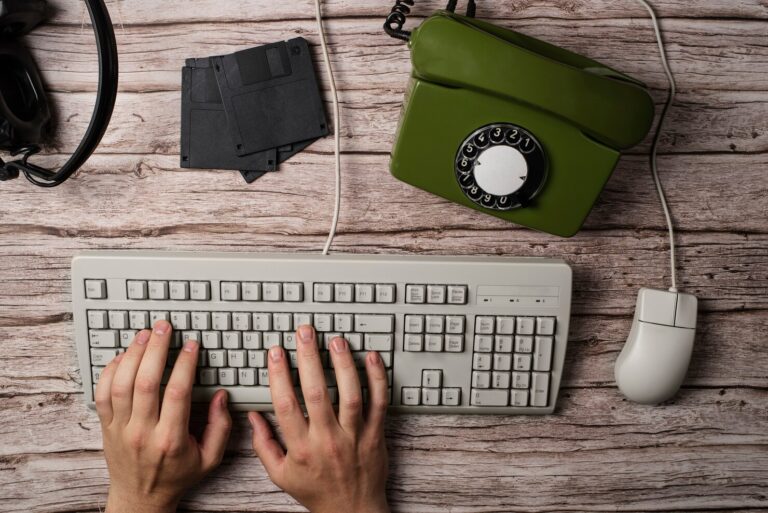
Floppy disks were once essential for storing and transferring programs and documents. Different generations of floppy disks offered different capacities, but their basic role was the same: portable storage before USB drives and cloud services became common.
CRT monitors were another defining part of vintage computing.
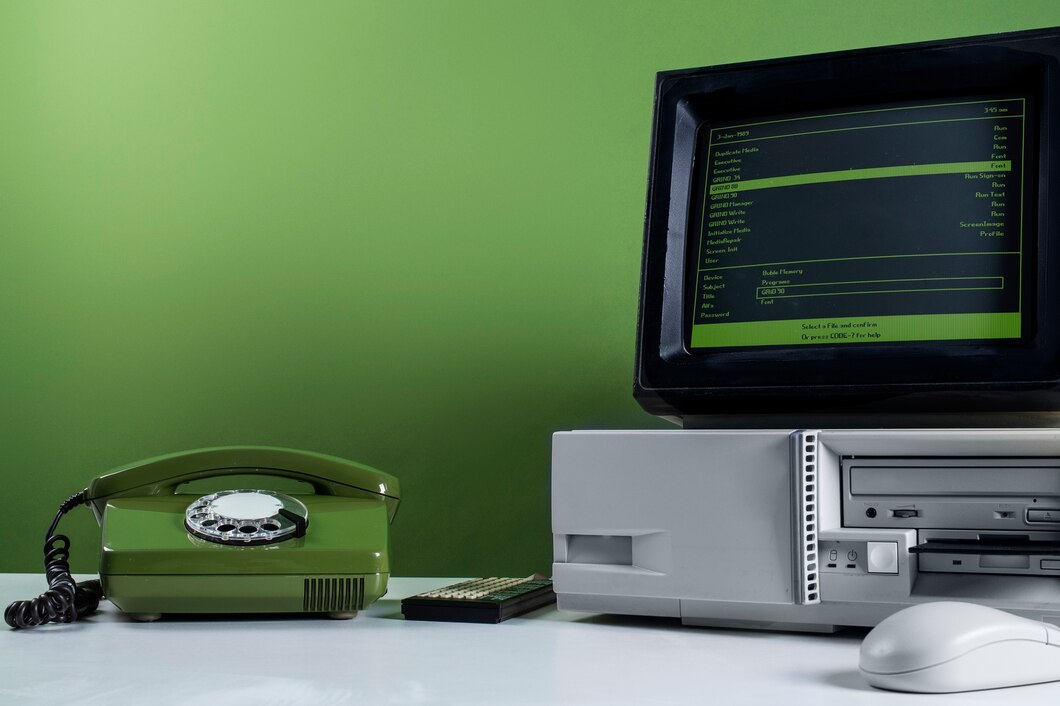
These large displays used cathode-ray tube technology and occupied substantial desk space. Their bulky designs look unusual compared with today’s thin LCD and OLED screens.
Dial-up modems provided another iconic piece of hardware.
Instead of using broadband connections, users could connect computers to telephone lines. The distinctive sounds produced during the connection process became one of the defining audio memories of early internet access.
Other once-common technologies included:
- Dot-matrix printers
- Parallel-port devices
- Serial mice
- Internal expansion cards
- SCSI storage devices
- Zip drives
- CRT televisions used as displays
- External floppy drives
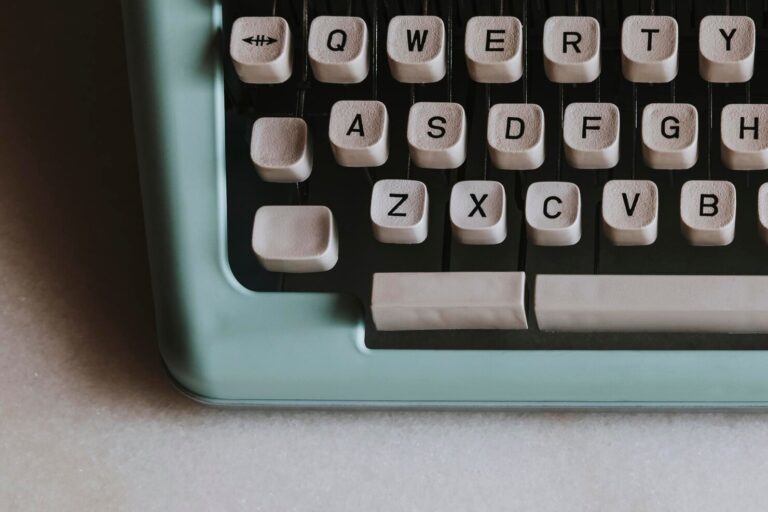
- Mechanical keyboards
- Tape-based storage systems
Although many of these technologies are obsolete for mainstream use, they played important roles in the development of personal computing.
Software That Became Part of Computing History
Hardware tells only half of the story.
Software shaped how people experienced their computers.
Early users often interacted with command-line environments. They had to type commands to launch programs, manage files, and perform other tasks.
Graphical interfaces gradually reduced that barrier.
Programs such as early word processors, spreadsheets, paint programs, games, desktop publishing applications, and educational software gave people reasons to use computers regularly.
Programming languages also had a major influence.
BASIC was especially important because it was relatively approachable for beginners. It allowed people to write programs without needing to understand every detail of machine-level operation.
Later languages and development environments expanded what personal computers could do.
The software ecosystem also encouraged third-party developers to create new applications, which in turn made computers more useful and attractive to consumers.
This created a feedback loop:
Better hardware → better software → more users → larger software market → further hardware development.
That cycle helped drive the rapid expansion of PC technology.
From Desktop PCs to Modern Computing
The desktop computer remained central to computing for decades, but technology eventually began moving in new directions.
Laptops became increasingly capable and affordable. Portable computers offered many of the functions of desktops while allowing users to work from different locations.
The internet changed computing again.
Instead of storing everything locally, users could increasingly access information and services online.
Cloud computing later made it possible to store files, run applications, and synchronize information across multiple devices.
Smartphones created another major shift.
Many tasks once associated with desktop computers could now be performed through a mobile device. Email, browsing, photography, video, social media, navigation, payments, and entertainment became available from almost anywhere.
Yet desktop PCs did not disappear.
They remain important for gaming, professional software, engineering, content creation, scientific research, business applications, and other tasks that benefit from larger displays and powerful hardware.
Modern computers are also dramatically more powerful than their predecessors.
A contemporary laptop can perform calculations that would have been unimaginable on many early personal computers, while consuming far less physical space.
The journey from room-sized machines to compact computing devices illustrates the extraordinary pace of technological development.
Why Vintage Computers Still Matter
Vintage computers are more than nostalgic objects.
They provide a physical record of technological history.
Looking at an old computer can reveal how engineers approached limitations involving memory, storage, processing power, display technology, and user interfaces.
They also show how quickly consumer expectations change.
A computer that once seemed advanced may now appear extremely limited. Yet those limitations encouraged creativity.
Users learned how to write efficient programs because memory was scarce. They learned how to manage storage because disk space was limited. Hardware enthusiasts modified systems because commercial options were restricted.
Modern technology often hides these constraints.
Vintage computing makes them visible again.
Retro computing communities continue to preserve old machines, software, manuals, magazines, and peripherals. Some enthusiasts restore original hardware, while others use emulators to recreate historical systems.
These activities help preserve a part of digital heritage that could otherwise disappear.
The Lasting Legacy of the Personal Computer
The history of personal computers is not simply a timeline of machines.
It is the history of an idea: that computing power could belong to individuals.
The Altair helped energize the computer hobbyist movement. The Apple II helped make personal computing more approachable. The IBM PC helped establish a dominant business-computing platform. The Macintosh popularized graphical interaction. Home computers brought programming and gaming into living rooms. Windows helped make graphical desktop computing mainstream.
Each stage built upon earlier developments.
The machines themselves may now seem primitive compared with modern laptops, desktops, tablets, and smartphones. But their influence remains visible everywhere.
Modern software interfaces still use windows, menus, icons, and pointers. Modern PCs still rely on processor architectures and software concepts developed during earlier generations. Programming remains an important skill, and personal computing continues to give individuals tools for creation and communication.
From a technical perspective, the machines of the past were limited.
From a historical perspective, they were transformative.
Conclusion
The journey through personal computer history reveals how computing moved from specialized institutional technology to an everyday part of human life.
The first personal machines were often difficult to operate and required considerable technical knowledge. Over time, hardware became smaller and more powerful, software became easier to use, and prices became more accessible.
The first personal computer is difficult to identify with absolute simplicity because the definition of “personal computer” has changed over time. Rather than being the result of one invention, personal computing emerged through a series of machines and innovations that gradually made individual ownership practical.
From early computers and microprocessor-based hobbyist machines to IBM-compatible PCs, Macintosh systems, home computers, laptops, and modern connected devices, every generation contributed something to the larger story.
Vintage computers and forgotten technologies therefore deserve more than nostalgia. They remind us that today’s digital world was built through decades of experimentation, competition, failures, breakthroughs, and creative ideas.
Understanding the PC history of these machines helps us appreciate how extraordinary modern computing really is—and how quickly technology can transform the way people work, learn, communicate, and create.
About the Author