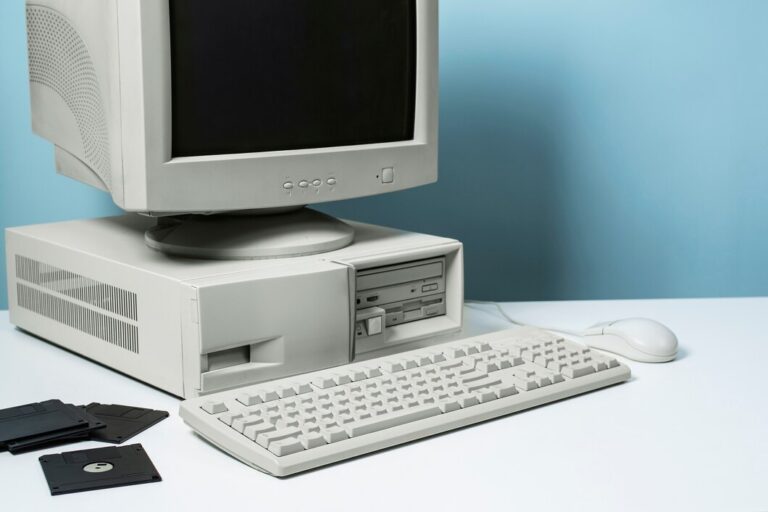
Before cloud storage, USB drives, external hard disks, and high-capacity memory cards became everyday technology, computers relied on removable magnetic media to store and transfer information. Among the most recognizable examples was the floppy disk. For several decades, floppy disks played an important role in personal computing, software distribution, document storage, and data exchange.
The story of floppy disk history is also a story of how storage technology changed to meet the demands of increasingly capable computers. What began as a large 8 inch floppy used primarily with computer systems eventually became a smaller 5.25-inch disk and later the familiar 3.5 floppy disk with a rigid protective casing.
Each generation improved portability, usability, reliability, or storage capacity. The disks became physically smaller while computers and software demanded increasingly more space. Eventually, optical media, hard drives, flash storage, and internet-based services made floppy disks less practical.
Understanding the floppy disk evolution provides an interesting look at an important stage in the development of modern computing.
Origins of the Floppy Disk
The origins of the floppy disk can be traced to efforts to create a convenient way of loading and storing information on computers. During the 1960s, large computer systems often depended on storage methods that were expensive, physically large, or difficult to handle.
IBM played an important role in the development of the early floppy disk. In the late 1960s and early 1970s, engineers worked on a removable magnetic disk format that could provide a practical way to load software and other information into computer systems.
The earliest floppy disk was considerably larger than the disks people later encountered with home computers. It used a flexible magnetic surface housed in a protective envelope. Because the magnetic disk itself was flexible, the term “floppy” eventually became associated with the format.
The first versions were primarily designed for computer manufacturers and larger systems rather than ordinary home users. Their purpose was not simply to provide personal file storage. They could also be used to distribute software, load system information, and make computer systems easier to operate.
This early development established the basic concept that would define floppy disks for years: a removable magnetic disk that could be inserted into a drive, written to, removed, and transported.
The 8-Inch Floppy
The 8 inch floppy was one of the earliest widely recognized floppy disk formats. IBM introduced an early 8-inch floppy disk in the early 1970s as part of its efforts to provide removable storage for computer systems.
The physical size was substantial compared with later formats. An 8-inch disk was roughly the size suggested by its name, making it unsuitable for the compact personal computers that would emerge later.
However, its size made sense in the context of the computers of the period. Computer storage technology was developing rapidly, and a removable magnetic medium offered a practical method for distributing and loading information.
Early 8-inch disks had relatively limited capacity by modern standards. Yet the amount of information they could hold was useful for the systems for which they were designed.
How the 8-Inch Format Worked
An 8-inch floppy contained a flexible magnetic disk inside a protective envelope. A floppy drive rotated the disk while a read/write head interacted with the magnetic surface.
Data was represented through changes in magnetic patterns on the disk. When information needed to be retrieved, the drive read those patterns and converted them into data that the computer could process.
The disk was divided into tracks and sectors, allowing the computer to locate specific pieces of stored information.
The removable nature of the format was one of its major advantages. Instead of keeping all information permanently inside the computer, users and technicians could physically exchange disks.
Why the 8-Inch Disk Mattered
The 8-inch floppy helped establish removable magnetic storage as a practical part of computing.
It provided a relatively convenient method for:
- Loading software
- Transferring files
- Storing programs
- Distributing system information
- Backing up selected data
- Moving information between compatible systems
Although enormous by today’s standards, the 8-inch floppy represented a step toward more accessible removable storage.
The 5.25-Inch Floppy
As personal and smaller business computers became more important, the large 8-inch format created obvious practical limitations. A smaller disk would be easier to handle and would require a smaller drive.
The result was the 5.25-inch floppy disk.
The 5.25 floppy became closely associated with the rise of personal computing during the late 1970s and 1980s. Its smaller physical dimensions made it much better suited to desktop computers than the earlier 8-inch format.
One of the important moments in the development of this format came with the introduction of a 5.25-inch floppy disk for the personal computer market. The format became widely adopted across numerous computer systems.
Design of the 5.25-Inch Disk
The 5.25-inch disk retained the basic flexible magnetic media concept but placed it inside a smaller protective envelope.
Unlike later 3.5-inch disks, the 5.25-inch disk was physically flexible and relatively delicate. Users had to handle it carefully to avoid damaging the magnetic surface.
The disk typically had a central opening for the drive mechanism and a large exposed area where the drive could interact with the magnetic material.
A characteristic feature of many 5.25-inch disks was the ability to use a write-protect notch or mechanism. Depending on the disk design and computer system, covering the notch could prevent accidental modification of stored information.
5.25-Inch Floppies and Personal Computers
The 5.25-inch floppy became particularly important during the expansion of personal computing.
Early personal computers often used floppy disks as their primary method of loading software. Without modern hard drives or fast internet connections, a user might start a computer by inserting a disk containing the operating system or application.
A second disk could contain documents or program data.
This meant the floppy drive was not merely an accessory. For many systems, it was central to how the computer operated.
Floppy disks were used for:
- Operating systems
- Word-processing software
- Spreadsheets
- Games
- Databases
- Programming tools
- Personal documents
- Business records
The format also contributed to software distribution. Programs could be copied and physically transported relatively easily.
The 3.5-Inch Floppy Disk
The next major step in the floppy disk evolution was the introduction of the 3.5-inch format.
The 3.5 floppy disk addressed several weaknesses of the 5.25-inch design. Although it retained magnetic storage technology, it used a significantly smaller rigid plastic casing.
This casing provided much greater physical protection than the flexible envelope used by earlier disks.
A sliding metal shutter covered the magnetic media when the disk was outside the drive. When inserted into a compatible drive, the mechanism moved the shutter aside so the drive could access the disk.
This design made the disk easier to carry and less vulnerable to accidental contact with the magnetic surface.
Why 3.5 Inches Became Popular
The 3.5-inch format offered a combination of portability, durability, and convenience that suited the rapidly expanding personal computer market.
Users could place several disks into a bag, drawer, or briefcase without taking up much space.
The rigid casing also made the disk feel more like a finished consumer product than the fragile 5.25-inch format.
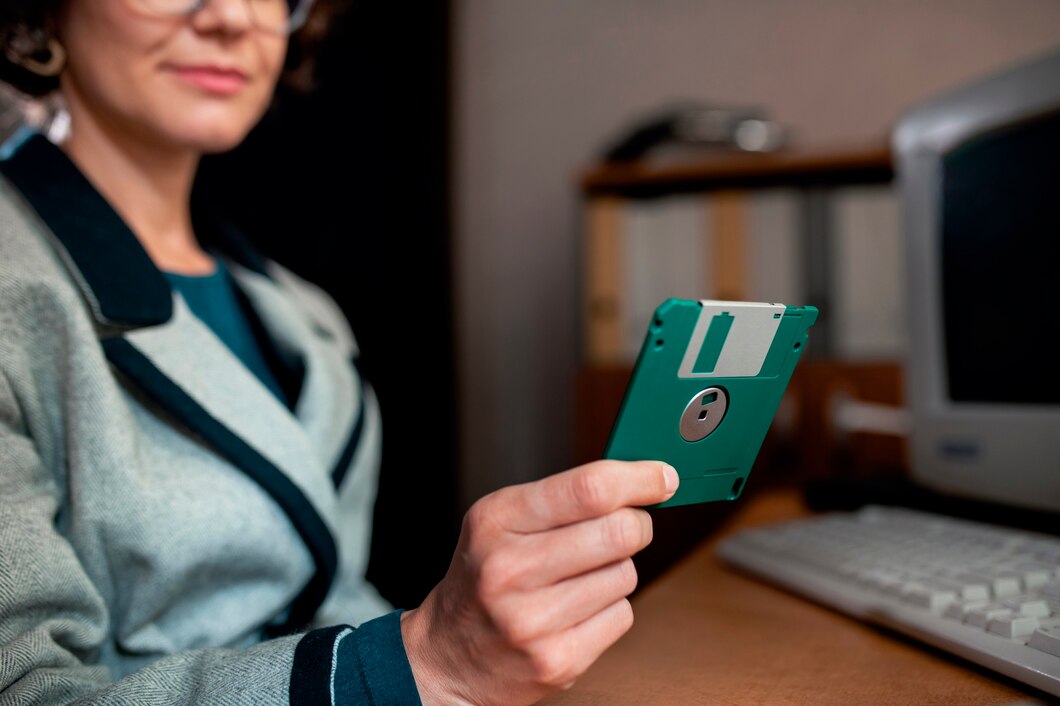
During the late 1980s and 1990s, 3.5-inch floppy disks became extremely common in homes, schools, offices, and businesses.
They were used to move documents between computers, install software, save assignments, distribute drivers, and store small personal files.
Storage Capacity Through the Generations
One of the most interesting parts of floppy disk history is the gradual increase in storage capacity.
Early floppy disks could store only a relatively small amount of data. However, capacity increased through changes in disk design, recording methods, formatting, and drive technology.
Typical capacities varied depending on the disk type, formatting method, and computer system.
| Floppy format | Common capacity examples |
| 8-inch | Around 80 KB to several hundred KB |
| 5.25-inch | Around 160 KB to 1.2 MB |
| 3.5-inch | Around 720 KB to 1.44 MB |
These figures should be viewed as representative examples rather than universal limits. Different versions of each format existed, and actual usable capacity depended on how a disk was formatted.
From Kilobytes to Megabytes
The movement from the earliest floppy disks to high-density 3.5-inch disks illustrates how quickly storage expectations changed.
A disk holding a few hundred kilobytes could once be useful for software or documents. Later, users expected a single disk to hold around 1.44 MB.
By today’s standards, even 1.44 MB is extremely small. A modern smartphone photograph can easily exceed the capacity of a standard high-density floppy disk.
Yet during the height of floppy use, that capacity was enough for many ordinary documents and small applications.
Everyday Use of Floppy Disks
Floppy disks were more than a storage technology. They became part of everyday computer culture.
Education
Schools and colleges used floppy disks for assignments, programming exercises, and educational software.
Students could save documents on a disk and move them between school computers and home systems.
Offices
Businesses used floppy disks to exchange reports, spreadsheets, databases, and other small files.
Before email attachments became commonplace, physically handing someone a floppy disk could be a practical way to transfer information.
Software Installation
Floppy disks were widely used to distribute software.
Large programs were often divided across multiple disks. A user might insert Disk 1, follow installation instructions, and then replace it with Disk 2, Disk 3, and so on.
This multi-disk process became a familiar part of installing computer software.
Computer Games
Floppy disks also played a major role in computer gaming.
Many classic computer games were distributed on one or more floppy disks. Users installed the games onto their computers or sometimes ran them directly from the disk.
As game files became larger, however, developers increasingly needed more disks or alternative distribution formats.
Boot Disks
Floppy disks were also valuable for troubleshooting.
A boot disk could contain the files necessary to start a computer when the main operating system could not load correctly.
Technicians and experienced users often kept bootable disks containing diagnostic utilities or system tools.
Why Floppy Disks Declined
Despite their importance, floppy disks eventually became impractical.
One major problem was limited capacity.
As software became more sophisticated and files became larger, the capacity of floppy disks could no longer meet growing demands.
A 1.44 MB disk might be sufficient for a small collection of documents, but it was not suitable for large multimedia files, modern applications, music collections, or high-resolution images.
Hard Drives
The growing availability of hard disk drives reduced the need to store frequently used software and files on removable floppy disks.
A computer could keep considerably more information internally, allowing programs and documents to be accessed without changing disks.
Optical Media
CD-ROMs offered dramatically greater capacity than floppy disks.
A standard CD could store hundreds of megabytes of data, making it much more practical for distributing software, music, multimedia, and large collections of files.
USB Flash Drives
Flash storage eventually transformed removable storage.
USB flash drives were small, durable, rewritable, and capable of storing vastly more data than floppy disks.
They also avoided some of the mechanical limitations associated with floppy drives.
Internet and Cloud Storage
Internet connectivity further reduced the need for physical media.
Instead of carrying a disk from one computer to another, users could increasingly send files through email, upload them to online services, or access them through networked systems.
Cloud storage later made files accessible across multiple devices without requiring physical media at all.
The Decline of the Floppy Drive
By the late 1990s and early 2000s, floppy disks were increasingly being replaced by CDs, DVDs, USB drives, and other storage technologies.
Some computers continued to include floppy drives for years because businesses and individuals still relied on existing disks.
Eventually, manufacturers began removing floppy drives from mainstream computers.
The shift took place at different times across various regions and locations. Some industries and specialized systems continued using floppy technology long after consumers had moved to newer storage formats.
The continued presence of floppy disks in older industrial equipment, medical systems, aviation-related equipment, and other specialized environments demonstrates that technological replacement can take much longer than consumer trends suggest.
Legacy of Floppy Disks
Although floppy disks have largely disappeared from everyday computing, their influence remains visible.
The save icon used in many software applications still resembles a 3.5-inch floppy disk. Many younger users recognize the symbol even if they have never physically used the storage medium it represents.
The word “disk” also remains part of computing vocabulary.
Floppy disks helped normalize several concepts that remain important today:
- Removable storage
- Portable files
- Software distribution
- Data backups
- Bootable media
- File sharing between computers
They also provided users with an early understanding of the importance of managing limited storage space.
When capacity was measured in kilobytes and megabytes rather than gigabytes and terabytes, users had to think carefully about what they saved.
What the Floppy Disk Taught About Storage Technology
The floppy disk evolution demonstrates a recurring pattern in technology: storage devices tend to become smaller, more convenient, more durable, and more capable over time.
The progression from an 8 inch floppy to the 5.25 floppy and eventually the 3.5 floppy disk shows how manufacturers adapted existing ideas to meet changing needs.
The technology did not simply become smaller for the sake of appearance. Each size reduction addressed practical challenges.
The 8-inch format provided removable magnetic storage for early computer systems. The 5.25-inch format brought the concept into a smaller and more accessible form for personal computers. The 3.5-inch design added greater physical protection and convenience while improving storage capacity.
Eventually, however, the underlying magnetic floppy technology could no longer compete with newer storage systems.
Floppy Disks in Historical Perspective
Looking at floppy disk history today can make the technology seem extremely limited. Modern storage devices can hold millions of times more data than early floppy disks.
However, judging older technology only by modern standards misses its historical importance.
The floppy disk appeared during a period when computer storage was expensive and difficult to manage. It offered a practical method of moving information between machines and gave personal computer users a convenient way to save their work.
The format also helped make computers more flexible. A user could load different programs from different disks, exchange information with another person, or carry important files between locations.
These capabilities may seem ordinary today, but they were significant developments during the growth of personal computing.
From Floppy Disks to Modern Storage
The journey from floppy disks to modern storage reflects the rapid expansion of digital information.
A standard 3.5-inch floppy disk with approximately 1.44 MB of capacity once seemed useful for many common tasks. Today, users routinely work with files that are hundreds of megabytes or several gigabytes in size.
Storage has moved through several important stages:
Floppy disks → hard drives → optical discs → USB flash storage → solid-state storage → cloud-based storage
Each transition addressed limitations associated with the previous generation.
Modern SSDs provide fast access and high capacity without the same mechanical structure as traditional floppy drives. USB flash drives provide convenient portable storage. Cloud services allow files to be stored remotely and accessed through internet-connected devices.
The underlying objective, however, remains similar: storing information so that it can be retrieved when needed.
Frequently Asked Questions
What was the first floppy disk size?
The earliest widely recognized floppy disk format was the 8-inch disk, developed for computer systems during the late 1960s and introduced commercially in the early 1970s.
What is an 8 inch floppy?
An 8 inch floppy is an early removable magnetic storage disk approximately eight inches across. It was used primarily with larger computer systems before smaller floppy formats became widespread.
When did 5.25-inch floppy disks become popular?
The 5.25-inch format became widely associated with personal computers during the late 1970s and 1980s. Its smaller size made it more practical than the earlier 8-inch format for desktop computing.
What is a 3.5 floppy disk?
A 3.5 floppy disk is a smaller removable magnetic storage medium enclosed in a rigid plastic casing. High-density versions commonly stored approximately 1.44 MB.
Why were floppy disks called floppy?
The name came from the flexible magnetic disk material used inside the protective envelope of early formats. Later 3.5-inch disks had rigid protective cases, but the “floppy” name remained.
How much data could a floppy disk hold?
Capacity varied considerably by format and disk type. Representative capacities ranged from tens of kilobytes for some early disks to approximately 1.44 MB for common high-density 3.5-inch disks.
Why did floppy disks become obsolete?
Their limited storage capacity, slower data transfer, physical limitations, and dependence on dedicated drives made them less practical as larger and faster storage technologies became available.
Are floppy disks still used?
Although uncommon in everyday consumer computing, floppy disks and floppy-compatible systems can still be encountered in certain legacy or specialized environments where older equipment depends on them.
Conclusion
The story of the floppy disk history is ultimately a story of adaptation. The journey from the large 8 inch floppy to the smaller 5.25 floppy and widely recognized 3.5 floppy disk reflects the changing needs of computer users.
Each generation made removable storage more practical. Disks became smaller and easier to transport, while storage capacities increased. Floppy disks supported software distribution, gaming, education, office work, backups, and file transfers during an important period in computing history.
Eventually, their limited capacity could not keep pace with increasingly large digital files. Hard drives, CDs, DVDs, USB flash drives, solid-state storage, and internet-based services offered greater capacity and convenience.
Even though floppy disks are largely obsolete today, their legacy remains visible in computing terminology, interface icons, legacy systems, and the history of personal computers.
The floppy disk evolution is therefore more than a progression of three physical sizes. It represents a broader shift in computing—from expensive and limited storage toward the enormous, fast, portable, and often cloud-connected storage systems people use today.
About the Author