Before USB flash drives, cloud storage, and high-capacity memory cards became everyday tools, moving files between computers often meant relying on floppy disks. These small magnetic disks were convenient, but their limited capacity became increasingly frustrating as software, photographs, documents, and multimedia files grew larger. The arrival of the Iomega Zip Drive introduced a different approach: removable magnetic media that looked familiar but could store dramatically more information.
The story of Zip drive history is therefore more than the story of one storage product. It represents an important stage in the transition from traditional floppy disks to modern portable storage. Zip disks offered greater capacity, convenient physical portability, and relatively simple file transfer at a time when many computers still depended on floppy drives. Their popularity eventually declined as recordable CDs, inexpensive hard drives, flash memory, and other technologies offered competing advantages.
Storage Limitations Before the Zip Drive
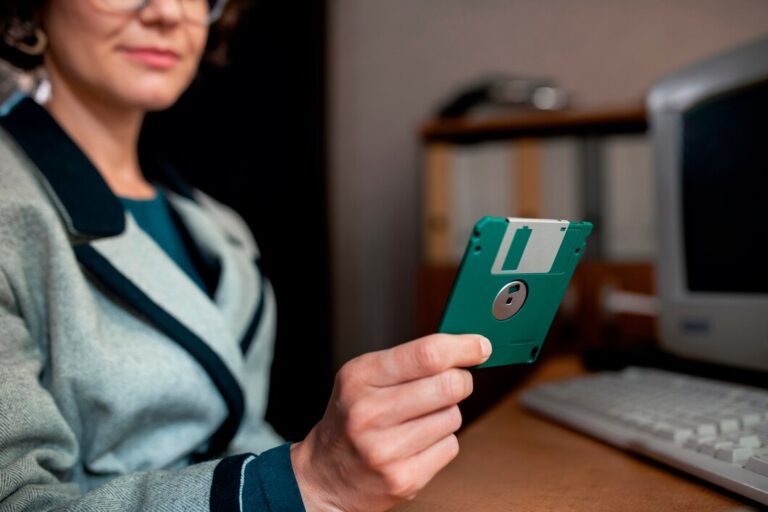
The floppy disk was one of the defining storage technologies of the personal-computer era. The 3.5-inch floppy became especially widespread because it was relatively compact and more durable than earlier floppy formats. By the mid-1990s, however, its capacity was becoming a serious limitation.
A standard high-density 3.5-inch floppy stored about 1.44 MB. That was sufficient for small text documents and basic files, but increasingly inadequate for larger software packages, graphics, databases, and other data.
Imagine trying to move a collection of files that occupied 20 or 30 MB. Instead of copying everything onto one disk, users might have needed a stack of floppy disks. Managing those disks was inconvenient, and transferring large collections took considerable time.
Hard drives offered substantially more space, but they were installed inside computers and were not designed to function like a pocket-sized removable medium. There were removable-cartridge products before Zip, including higher-capacity systems such as SyQuest drives and Iomega’s earlier Bernoulli products. These demonstrated that removable storage could provide more capacity than conventional floppy disks, but they did not achieve the same combination of compactness and mainstream appeal that Zip eventually found.
This created an opportunity for a product that could occupy the space between the ordinary floppy and the internal hard drive.
The Arrival of the Iomega Zip Drive
Iomega introduced the Zip system in 1994. The original Zip disk stored 100 MB and used a cartridge that was approximately the size of a 3.5-inch floppy disk.
That capacity was a major selling point.
A 100 MB Zip disk could hold roughly dozens of times the data of a conventional 1.44 MB floppy. This meant users could move substantially larger collections of documents and other files using a single removable cartridge.
The design was also familiar enough to make sense to existing computer users. Instead of learning an entirely different concept for removable media, users inserted a cartridge into a dedicated drive and accessed files much as they would with other disk-based storage.
Technically, Zip drives were not simply ordinary floppy drives with larger disks. The system used a different magnetic-storage design, including a non-contact read/write head that operated above the disk surface. The Computer History Museum describes the Zip technology as sitting conceptually between floppy disks and hard disks.
That combination of capacity, portability, and familiar disk-based operation helped define the product’s identity.
Zip Disk Capacity and Its Evolution
The first 100 MB Zip disk was only the beginning.
As storage requirements increased, Iomega introduced higher-capacity versions. The Zip family eventually included 250 MB and 750 MB media, while later developments extended the technology even further. The Computer History Museum notes that Zip capacities ultimately increased from the original 100 MB to as much as 2 GB in later versions of the technology.
The progression can be summarized broadly as:
- Zip 100: 100 MB
- Zip 250: 250 MB
- Zip 750: 750 MB
- Later Zip technology: capacities eventually reached higher levels, including 2 GB
The 250 MB version was particularly significant because it gave users more than twice the storage of the original cartridge while retaining the basic Zip concept.
By the early 2000s, the Zip 750 offered 750 MB of removable storage. Contemporary coverage noted that it could store more than a typical CD-based medium while remaining compatible with older 100 MB and 250 MB Zip media when used with the appropriate newer drive.
This upward movement in capacity illustrates one of the central challenges in removable storage: every successful format eventually has to compete with newer technologies that can store more information at lower cost.
Why Zip Drives Became So Popular
The Iomega Zip Drive arrived at a particularly useful moment in personal-computing history.
Home users, businesses, graphic designers, students, photographers, and other computer users were increasingly working with files larger than the traditional floppy could conveniently handle.
Zip offered several practical advantages.
More space than a floppy
The difference between 1.44 MB and 100 MB was substantial. A single Zip disk could replace a large collection of floppy disks for many file-transfer tasks.
Easy physical transportation
The cartridges were removable, allowing users to move data from one computer to another. A person could copy files at home and take the cartridge to school, work, or another computer.
Useful for backups
Zip media was also used for personal backups. A removable cartridge provided a way to keep a second copy of important files away from the primary computer.
Familiar storage concept
Users did not need to understand networking or online storage to transfer files. The physical cartridge provided a straightforward method of moving information.
Strong market adoption
The format became a major removable-storage product during the 1990s. The Computer History Museum notes that by the end of that decade, Zip drives and disks had become among the most popular aftermarket PC peripheral purchases.
For a period, Zip was effectively a practical floppy disk alternative for users who needed substantially more capacity.
Competition Arrives
No storage technology remains dominant forever. Zip faced competition from several directions.
Recordable CDs became increasingly attractive because optical discs could provide substantial storage at relatively low media costs. The Computer History Museum identifies low-cost CDs as one of the factors that contributed to Zip’s eventual decline.
Other removable-media products also competed for the same market. Imation’s SuperDisk, for example, offered higher-capacity removable storage while retaining compatibility with conventional floppy disks. Other manufacturers continued developing removable magnetic cartridges and related technologies.
Zip therefore had to compete not only against one rival but against an entire changing storage ecosystem.
The emergence of CD-R and CD-RW was especially important. Optical media became inexpensive enough for users to record and distribute their own data. CDs also benefited from widespread availability of CD drives in personal computers.
Then came another major shift: flash memory.
The Decline and Failure of Zip
The decline of Zip did not happen because removable storage suddenly became unnecessary. Quite the opposite happened. People continued to need portable storage, but newer technologies increasingly provided better combinations of capacity, convenience, price, and compatibility.
One problem associated with Zip media was reliability. The format developed a reputation for certain drive and media failures, including the phenomenon popularly known as the “click of death.” Contemporary computer publications also warned that Zip media could be affected by reliability issues over time.
Reliability concerns matter especially for backup media. A storage product can be attractive because it is portable and convenient, but users also expect their saved information to remain accessible when needed.
At the same time, competing storage became increasingly affordable.
Recordable CDs offered a relatively inexpensive way to store hundreds of megabytes. DVDs subsequently offered considerably greater capacity. Hard drives became larger and cheaper. Then flash-based products began transforming portable storage.
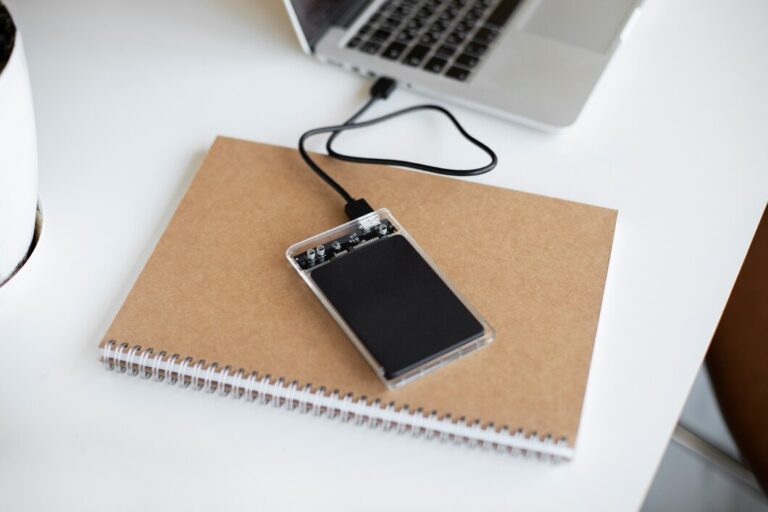
The Computer History Museum identifies 2000 as an important point in the development of portable personal storage, noting that USB flash “sticks” began displacing disk-based portable storage and eventually replaced floppy disks for transporting many types of personal files.
Flash storage had an important advantage: it had no spinning disk or mechanical read/write head. A tiny USB device could hold data without requiring the user to carry a larger removable disk mechanism.
As these alternatives matured, the reasons for choosing Zip became less compelling.
Zip Drive History and the Transition to Modern Storage
The importance of Zip becomes clearer when viewed as part of a much larger progression.
Storage technology moved through several stages:
Floppy disks → Zip and other removable magnetic media → recordable CDs/DVDs → flash drives and memory cards → cloud and network storage
Each stage addressed limitations of the previous generation.
Floppy disks provided inexpensive portability but had very limited capacity. Zip increased capacity while preserving removable magnetic media. Optical discs offered inexpensive distribution and recording. Flash storage removed many mechanical components and made portable storage dramatically smaller.
Modern cloud storage then changed the concept again. Instead of carrying a physical medium from one computer to another, users could store files remotely and access them through an internet connection.
This evolution demonstrates that storage formats succeed not simply because they offer more gigabytes. Cost, physical size, reliability, compatibility, speed, convenience, and ecosystem support all influence whether a technology survives.
The Legacy of the Zip Drive
Although Zip disks are rarely part of everyday computing today, their historical significance remains.
The format helped demonstrate that consumers wanted more portable storage capacity than conventional floppy disks could provide. It also helped normalize the idea that a removable cartridge could function as a practical medium for large personal files.
For many computer users of the 1990s, a Zip disk represented a substantial improvement over carrying multiple floppy disks. A single cartridge could contain a much larger collection of documents, images, or other files.
The format also occupies an interesting position in the history of removable storage. It arrived after traditional floppy technology had become established but before flash storage and cloud services transformed portable data management.
From today’s perspective, a 100 MB Zip disk may appear extremely small. Modern USB drives and memory cards can hold thousands of times that amount. Yet technology should be judged within its historical context. When the original Zip system appeared, 100 MB represented a meaningful increase over the capacity of standard floppy media.
The Zip format therefore serves as a useful example of how technological progress works: a product can be highly successful for a period without becoming a permanent standard.
Why Zip Drives Still Matter Today
Old storage formats can seem irrelevant once newer technologies replace them, but they provide valuable lessons about technological change.
The Zip story shows that removable storage has always involved trade-offs. Users want capacity, portability, speed, affordability, durability, and compatibility at the same time. A product that performs well in several areas can become popular, but another technology may eventually offer a better overall combination.
Zip also illustrates the importance of ecosystem timing. The technology became successful when floppy capacity was increasingly inadequate but before inexpensive optical and flash storage had become dominant.
Its eventual decline demonstrates another important principle: being better than an older technology does not guarantee long-term survival. Storage products must continue adapting as competing technologies improve.
For computer enthusiasts, collectors, and historians, Zip disks also provide a physical reminder of how quickly digital storage has evolved. Files that once required specialized cartridges can now fit easily on tiny memory devices or be stored remotely.
Conclusion
The Zip drive history is an important chapter in the development of portable computer storage. Iomega’s original 100 MB Zip system offered a substantial capacity increase over conventional floppy disks and gave users a practical way to transport, share, and back up larger collections of data.
Its later capacity increases demonstrated how quickly storage requirements were growing, while competition from recordable optical media and eventually flash storage exposed the limitations of removable magnetic cartridges. Reliability concerns and changing economics also contributed to the format’s decline.
The Zip disk may no longer be a mainstream storage medium, but its role in the transition from floppy disks to modern portable storage remains significant. It helped bridge the gap between low-capacity floppy media and the much smaller, higher-capacity storage technologies that followed. Understanding that transition makes it easier to appreciate just how dramatically personal data storage has changed.
About the Author