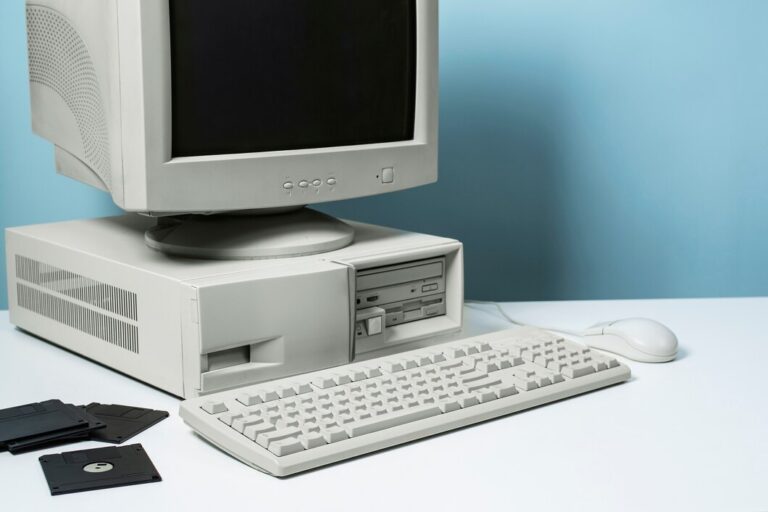
The development of sound cards history has closely followed the growth of personal computing, digital audio, gaming, and multimedia applications. Early PCs were designed primarily for business and productivity tasks, and their built-in audio capabilities were extremely limited. Over time, dedicated audio hardware transformed computers into machines capable of playing music, producing speech, supporting MIDI instruments, and delivering complex game sound effects. The development of PC sound cards was particularly important during the 1980s and 1990s, when products such as AdLib and Sound Blaster helped establish standards that shaped computer audio history for decades.
Today, most computers use audio hardware integrated directly into the motherboard, making separate sound cards less common for everyday users. However, understanding how sound cards developed provides an interesting look at the transition from simple PC beeps to sophisticated digital audio systems.
What Is a Computer Sound Card?
A sound card is a hardware component that allows a computer to process, generate, record, and output audio.
A traditional sound card could perform several functions, including:
- Converting digital audio data into signals that speakers or headphones can reproduce
- Converting incoming analog audio into digital data
- Generating synthesized sounds
- Supporting MIDI devices
- Providing microphone and line-level inputs
- Mixing multiple audio sources
- Offering hardware-based audio processing
Older computers often required a separate expansion card to obtain these capabilities. The card would be installed into an expansion slot inside the computer and connected to speakers, headphones, microphones, or other audio equipment.
Modern computers generally perform many of these functions through integrated audio circuitry on the motherboard. Dedicated sound cards still exist, particularly for users interested in recording, music production, gaming, audio engineering, or specialized playback.
How Did Early PC Audio Work?
The earliest IBM-compatible personal computers did not provide the rich audio experience people associate with modern PCs.
Early PCs commonly relied on a simple internal speaker. Software could control this speaker to produce basic tones and beeps. The hardware was useful for alerts, system notifications, and primitive sound effects, but it was not designed for realistic music playback.
This limitation influenced early software design. Developers who wanted to add sound to applications had to work within strict hardware constraints.
Simple tones could indicate events such as:
- Errors
- Startup activity
- Notifications
- Game events
- System warnings
Games could create sequences of tones to represent music, but the results were very different from the sampled music and digital soundtracks that became possible later.
This period is an important part of computer audio history because it demonstrates that audio was initially an optional capability rather than a central feature of personal computing.
Early PC Sound and Expansion Hardware
As PCs became more popular for gaming and entertainment, demand grew for better audio.
Expansion slots gave hardware manufacturers an opportunity to add capabilities that were not included in the original computer design.
A dedicated audio expansion card could provide additional sound-generation circuits, connections for external audio equipment, and more sophisticated methods of producing music.
Instead of relying entirely on the computer’s basic speaker, a sound card could generate multiple channels and different types of synthesized sounds.
This created a new ecosystem around PC sound cards.
Game developers could write software specifically for supported audio hardware. Users could then configure their games to match the sound card installed in their machines.
The result was a period in which choosing an audio card was an important part of configuring a gaming PC.
AdLib and the Beginning of a New PC Audio Era
One of the most important milestones in sound card history was the arrival of the AdLib sound card.
The AdLib card became widely associated with FM synthesis, a technique for creating sounds electronically rather than simply playing back recorded audio.
FM synthesis uses mathematical relationships between waveforms to produce different tones. By adjusting parameters, software could create sounds resembling musical instruments and other effects.
This represented a significant improvement over simple PC speaker audio.
Games could now produce:
- More complex melodies
- Multiple simultaneous notes
- Instrument-like sounds
- Richer effects
- More expressive background music
The AdLib standard became an important target for game developers. Software began offering configuration menus where players could select AdLib or compatible audio hardware.
This development helped establish dedicated sound hardware as an important component of PC gaming.
Sound Blaster History
The Sound Blaster history is one of the most influential chapters in the development of PC audio.
Creative Technology introduced the original Sound Blaster in the late 1980s. The product combined capabilities that made it useful for both music and digital sound effects.
One of its important advantages was support for digital audio playback alongside synthesized sound.
This mattered because recorded digital audio opened possibilities that pure FM synthesis could not provide.
Instead of generating every sound mathematically, software could play back stored audio samples. This could be used for:
- Speech
- Sound effects
- Instrument samples
- Environmental sounds
- Voice recordings
Sound Blaster compatibility subsequently became extremely important in PC software, particularly games.
As more developers supported Sound Blaster-compatible hardware, the name became closely associated with PC audio compatibility.
Why Sound Blaster Became Important for Games
The significance of Sound Blaster was not only the hardware itself. Compatibility became a major part of its success.
During the DOS era, games frequently included audio configuration menus. Players might be asked to select their sound card, input/output settings, interrupt configuration, and other hardware parameters.
A game might offer options such as:
- PC speaker
- AdLib
- Sound Blaster
- Roland MIDI hardware
- Other compatible devices
As Sound Blaster-compatible hardware became widespread, supporting that standard became a practical choice for developers.
This helped create a feedback cycle: more games supported the hardware, which encouraged more users to purchase compatible cards, which encouraged more developers to support them.
MIDI and Computer Music
MIDI, or Musical Instrument Digital Interface, introduced another important dimension to PC audio.
Unlike a digital audio recording, MIDI does not primarily store a recording of the sound itself. Instead, MIDI data communicates musical instructions, such as which note should be played, when it should start, how long it should last, and other performance information.
A MIDI sequence might tell a compatible synthesizer to play:
- A particular note
- At a specific velocity
- Using a selected instrument
- At a defined point in the musical sequence
This made MIDI particularly useful for computer-generated music.
During the development of computer audio history, MIDI became important for musicians, game developers, composers, and users connecting computers to electronic instruments.
Some PCs could send MIDI information to external synthesizers, while sound hardware could provide its own synthesized instruments.
DOS Audio and Gaming
DOS audio deserves special attention because the DOS gaming environment played a major role in popularizing sound cards.
DOS games generally operated much closer to the hardware than modern operating systems do. Developers often had to work with specific hardware configurations and resources.
As a result, audio configuration could be a technical process.
Players might need to specify:
- I/O address
- IRQ
- DMA channel
- Sound card type
- MIDI configuration
If these settings were incorrect, the game might produce no sound or fail to initialize the audio hardware.
Despite these limitations, the DOS era produced a remarkable range of game audio.
Sound cards allowed developers to create music and effects that were far more sophisticated than basic PC speaker tones.
Games could feature atmospheric music, explosions, weapon effects, character speech, environmental sounds, and other audio elements.
Digital Audio Changes the Experience
One major transition in PC audio was the move from synthesized sound toward digital audio playback.
Synthesized audio creates sound using electronic or mathematical techniques. Digital audio playback instead stores samples representing recorded sound.
With digital samples, a game could reproduce an actual recording of a voice or sound effect.
For example, instead of generating a synthetic approximation of a spoken phrase, software could store a recording and play it back.
This made game audio more expressive.
However, digital audio required storage space and processing resources. During the early PC era, memory and disk capacity were limited, so developers had to carefully manage sample size and quality.
This is another reason the development of sound cards was closely tied to broader improvements in computer hardware.
Windows and the Multimedia Revolution
The transition from DOS toward Windows changed how computers handled multimedia.
Microsoft Windows increasingly provided standardized multimedia interfaces that allowed software to communicate with audio hardware through operating-system services rather than relying exclusively on direct hardware access.
This helped make audio less dependent on individual hardware configurations.
The rise of Windows multimedia also coincided with broader changes in computing.
Computers increasingly became capable of handling:
- Music playback
- Digital video
- Recorded speech
- Multimedia presentations
- Audio editing
- Internet media
- Educational software
- CD-ROM applications
The computer was no longer simply a productivity machine. It was becoming a general-purpose multimedia platform.
CD-ROMs and Computer Audio
CD-ROM technology contributed significantly to the growth of multimedia computing.
Audio CDs could store high-quality digital music, and computers equipped with CD-ROM drives could play them.
Multimedia software could combine:
- Text
- Images
- Animation
- Video
- Music
- Narration
- Interactive elements
This placed greater demands on PC audio systems.
Sound cards became part of a larger multimedia environment rather than being used primarily for games.
Educational programs, encyclopedias, creative applications, and entertainment software increasingly incorporated sound.
Integrated Audio Arrives
As computers evolved, manufacturers began integrating audio functionality directly into motherboards.
This development changed the role of the traditional expansion sound card.
Instead of purchasing and installing a separate card, users could obtain basic audio functionality as part of the computer itself.
Integrated audio offered several advantages:
- Lower hardware cost
- Simpler installation
- Fewer expansion cards
- Easier system configuration
- Reduced space requirements
For everyday computing, integrated audio became sufficiently capable for many users.
Motherboard audio could handle common tasks such as:
- Music playback
- Video sound
- Voice calls
- Gaming
- Microphone recording
- Headphone output
As a result, dedicated sound cards became less necessary for mainstream consumers.
Dedicated Sound Cards in Modern Computers
The decline of traditional sound cards did not mean that dedicated audio hardware disappeared.
Instead, the market became more specialized.
Dedicated sound cards and external audio interfaces remain useful for people who need particular audio capabilities.
Examples include:
Music producers
Recording professionals may require multiple inputs, high-quality converters, low-latency monitoring, and specialized connections.
Gamers
Some dedicated audio products provide additional processing features, amplification, or support for specific headphone and speaker configurations.
Audio enthusiasts
Users with specialized speaker or headphone systems may want particular digital-to-analog conversion or amplification hardware.
Content creators
Streamers, podcasters, and video creators may require multiple microphones and other audio sources.
In many modern setups, external USB audio interfaces have become an alternative to traditional internal PCI or PCI Express sound cards.
How Modern Sound Cards Work
Although today’s hardware can be much more sophisticated, the basic concept remains familiar.
When a computer plays digital audio, the audio data must eventually be converted into a physical electrical signal that can drive headphones or speakers.
A simplified process looks like this:
Digital audio file → Audio processing → Digital-to-analog conversion → Amplification → Speaker/headphone
For recording, the process goes in the opposite direction:
Microphone → Analog signal → Analog-to-digital conversion → Digital processing → Computer storage
The digital signal can then be processed by software or hardware.
Modern audio systems may also perform tasks such as:
- Volume control
- Equalization
- Mixing
- Noise reduction
- Spatial processing
- Sample-rate conversion
- Microphone processing
The exact architecture varies between devices.
From Hardware Compatibility to Software Abstraction
One of the biggest changes from the DOS era to modern computing is the relationship between applications and hardware.
In DOS, software often had to know much more about the sound hardware it was using.
Modern operating systems generally provide abstraction layers and standardized audio interfaces.
An application can request audio playback without needing to directly control every hardware register.
The operating system and audio drivers help translate those requests into instructions that the hardware can process.
This makes modern audio systems considerably easier to configure.
Users generally do not need to manually enter IRQ and DMA settings simply to hear sound from a game or video.
The Legacy of PC Sound Cards
The legacy of PC sound cards extends well beyond the physical expansion cards themselves.
Their development helped establish expectations that computers should be capable of producing high-quality multimedia audio.
Several important transitions occurred:
PC speaker → synthesized sound → FM synthesis → digital samples → MIDI and digital audio → multimedia audio → integrated audio
Each stage expanded what computers could do.
The history also demonstrates how compatibility standards can influence technology. When a particular hardware design becomes widely supported by software, compatibility can become as important as raw technical specifications.
This was particularly evident during the Sound Blaster era.
Why Sound Card History Still Matters
Studying sound card history provides a useful perspective on how personal computing evolved.
Modern users can play a high-quality music track, join a video meeting, record a podcast, or launch a game without thinking about the complex history behind those capabilities.
Earlier computer users faced a very different environment. Audio could depend on a particular expansion card, hardware address, driver, software configuration, and application support.
The progression from basic beeps to integrated digital audio illustrates several broader technology trends:
- Specialized hardware eventually becomes standardized.
- Hardware capabilities become integrated into mainstream systems.
- Software increasingly abstracts hardware complexity.
- Multimedia features become standard expectations.
- Older technologies remain influential even after they disappear from ordinary use.
Legacy and Preservation
Although standalone sound cards are no longer required for most everyday computers, their influence remains visible in retro computing and gaming.
Classic DOS games are often played through emulators that reproduce the behavior of historical hardware. Enthusiasts also maintain original PCs and sound cards to experience older software using period-appropriate equipment.
For these users, audio hardware is part of the historical character of the computer.
A game designed around FM synthesis or Sound Blaster-compatible digital audio can sound different depending on the hardware or emulation settings used.
Preserving this technology therefore involves more than keeping old circuit boards. It also involves documenting drivers, configuration methods, software compatibility, MIDI instruments, and the techniques developers used to create audio within historical hardware limitations.
Conclusion
The history of computer sound cards reflects the broader transformation of the personal computer from a productivity-focused machine into a multimedia device. Early PCs relied on simple internal speakers, but demand from software developers, musicians, and gamers encouraged the development of dedicated audio hardware.
AdLib helped popularize FM-synthesized PC music, while the Sound Blaster history became closely associated with digital audio, game compatibility, and the expansion of PC multimedia. MIDI added another method for computers to communicate musical information, while DOS audio became an important part of the early PC gaming experience.
The arrival of Windows multimedia APIs, CD-ROM applications, and increasingly capable processors gradually changed how computers handled sound. Eventually, audio functionality moved onto the motherboard, making integrated audio the standard for most users.
Today, dedicated sound cards occupy a more specialized role, but their technological legacy remains important. Understanding this computer audio history shows how innovations in synthesis, digital recording, MIDI, hardware compatibility, and operating-system software transformed the way computers create and reproduce sound.
About the Author