The IBM PC history is one of the most important stories in the development of modern personal computing. When IBM introduced its first personal computer in 1981, the company was already a major force in business technology and mainframe computing. However, the personal computer market was developing rapidly, with companies such as Apple, Commodore, Tandy, and others attracting consumers and businesses. IBM’s decision to enter this market resulted in the original IBM PC, officially known as the IBM Personal Computer 5150. Although its hardware was not revolutionary compared with every computer available at the time, its business reputation, software partnerships, open architecture, and widespread adoption helped establish the foundation of the modern PC industry.
The IBM PC influenced how computers were designed, purchased, upgraded, and used. More importantly, the machine helped create a platform that other manufacturers could reproduce and expand. This eventually led to the enormous market for IBM-compatible computers and helped establish the PC standard that continues to influence computing decades later.
IBM’s Entry Into the Personal Computer Market
To understand the significance of the IBM PC, it is useful to look at the company’s position before 1981.
IBM had built its reputation around large-scale computing systems used by governments, universities, banks, corporations, and other institutions. Its mainframes were powerful, expensive machines that required specialized facilities and trained personnel.
By the late 1970s, however, computing technology was becoming smaller and more affordable. Microprocessors made it possible to build relatively inexpensive computers for individual users. Personal computers began appearing in homes, schools, hobbyist communities, and small businesses.
Companies such as Apple and Tandy were gaining attention in this emerging market. IBM initially did not treat personal computers as a central part of its traditional business. The market was comparatively small compared with IBM’s mainframe operations, and personal computers did not fit the company’s established approach to computer development.
That changed when IBM recognized that personal computing could become an important business opportunity.
IBM assembled a small team to develop a personal computer rapidly. Rather than following the company’s traditional process of designing almost every component internally, the team adopted a different strategy. It used commercially available hardware and software from outside suppliers.
This decision would become one of the defining elements of IBM computer history.
The IBM PC 5150
IBM announced the IBM PC 5150 on August 12, 1981. The machine was designed primarily for business and professional users, although it could also be used for education, programming, and personal applications.
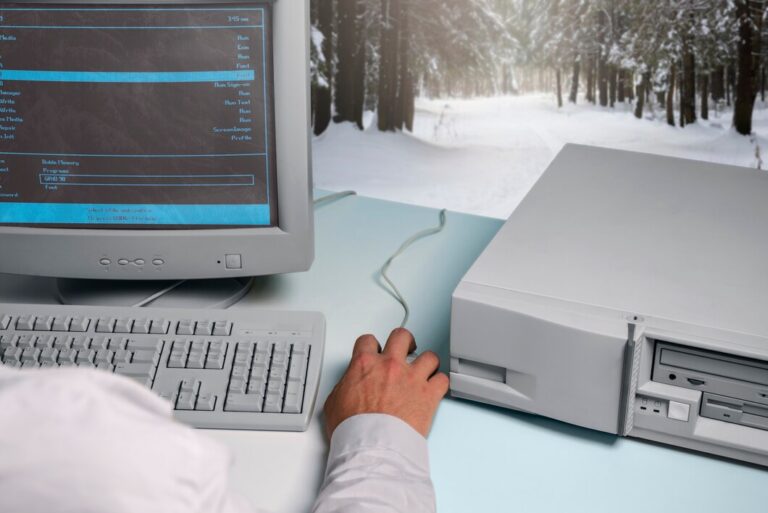
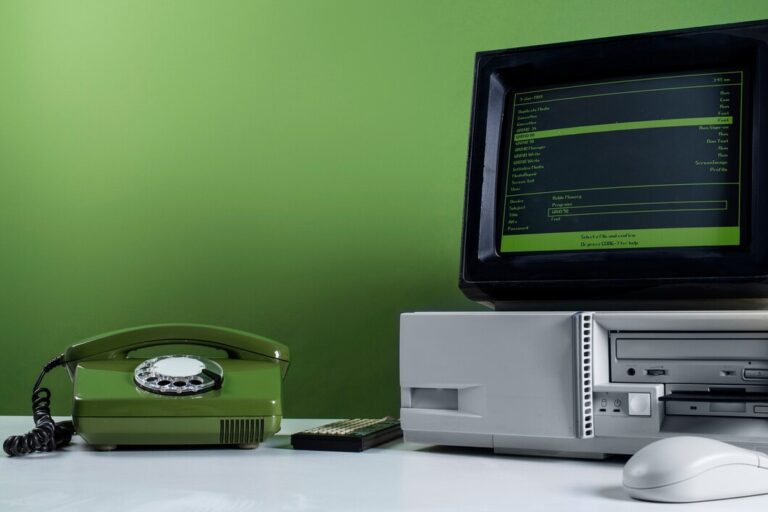
The original system was relatively straightforward by modern standards. It included an Intel 8088 processor, memory that could be expanded, expansion slots, a keyboard, and support for floppy disk storage. Users could connect displays, printers, and other peripherals.
The machine was available in several configurations, allowing buyers to select hardware according to their requirements and budget.
The original IBM PC was not the first personal computer, nor was it necessarily the most technically advanced machine available when it appeared. Its importance came from a combination of factors.
IBM had enormous credibility among business customers. Organizations that were hesitant to purchase computers from smaller or less-established manufacturers could feel more comfortable buying a machine carrying the IBM name.
The IBM PC also offered expandability. Instead of treating the computer as a fixed appliance, IBM provided expansion slots that allowed users to install additional hardware.
This design helped make the computer useful for different business requirements.
Hardware Design of the Original IBM PC
The IBM PC’s hardware architecture played a major role in its later influence.
At the center of the system was Intel’s 8088 processor. The processor was related to the 8086 family but used an 8-bit external data bus, helping IBM reduce certain system costs while retaining compatibility with the broader 8086 architecture.
The system could be configured with different amounts of memory, and expansion slots allowed additional hardware to be installed.
Users could add components such as:
- Additional memory
- Graphics adapters
- Serial communication hardware
- Modems
- Printer interfaces
- Specialized expansion cards
- Storage devices
This expandability was particularly attractive to businesses because a computer could evolve as requirements changed.
The IBM PC could also be configured with one or more floppy disk drives, while hard disk storage became available through later developments in the PC family.
The design created opportunities for an ecosystem of third-party hardware manufacturers.
The Role of MS-DOS
Hardware alone would not have made the IBM PC successful. Software was equally important.
IBM selected Microsoft to provide an operating system for the machine. Microsoft supplied an operating system based on 86-DOS, which became IBM PC DOS for IBM and was also marketed by Microsoft as MS-DOS.
MS-DOS provided a command-line environment through which users could launch programs, manage files, and interact with the computer.
The operating system became extremely influential because it was not limited to one particular IBM machine. Microsoft could license its operating system to other manufacturers, creating an important path toward compatibility.
This arrangement had long-term consequences.
As other companies developed computers compatible with the IBM PC architecture, MS-DOS became one of the most important software platforms in the personal computer market.
Applications developed for DOS could therefore reach a large and growing audience.
Why Open Architecture Mattered
One of the most significant elements of the IBM PC was its relatively open hardware design.
IBM did not build the entire machine using proprietary components and technologies. Instead, it used commercially available processors and components and provided expansion capabilities that encouraged third-party development.
The system’s technical documentation also made it easier for other companies to understand how the machine worked.
This approach differed from tightly controlled computer platforms in which one company maintained extensive control over both hardware and software.
IBM’s open approach helped create a market in which other companies could produce expansion cards, peripherals, software, and eventually entire computers compatible with the IBM architecture.
The decision produced an enormous unintended consequence.
Instead of IBM controlling the personal computer platform completely, the company helped create an ecosystem that other manufacturers could participate in.
The Rise of IBM-Compatible Clones
The success of the IBM PC quickly attracted competitors.
Companies realized that customers wanted computers capable of running IBM PC software. If another manufacturer could produce a compatible machine at a lower price, it could compete directly with IBM.
These systems became known as IBM-compatible computers or PC clones.
Producing a compatible computer was not as simple as copying IBM’s machine. Manufacturers had to reproduce enough of the system’s behavior to support its software while avoiding intellectual property problems.
Some companies developed their own implementations of important system components. BIOS compatibility became a particularly important technical and legal issue.
Companies such as Compaq eventually demonstrated that it was possible to build powerful IBM-compatible systems while developing their own compatible BIOS implementations.
As more manufacturers entered the market, competition increased.
This was a major turning point in IBM PC history because the PC architecture was no longer tied exclusively to IBM.
The PC Standard Emerges
As IBM-compatible computers became common, the IBM architecture effectively became a PC standard.
Software developers increasingly targeted the IBM-compatible environment because it represented a large and growing customer base.
Hardware manufacturers also had an incentive to build products compatible with the platform.
This created a powerful network effect.
More compatible computers encouraged more software development. More software made compatible computers more attractive to consumers and businesses. More users encouraged additional hardware and peripheral development.
The result was an expanding ecosystem that became difficult for competing platforms to ignore.
Over time, the term “IBM-compatible” became less important because the PC architecture itself became the dominant standard for many types of personal and business computing.
Business Adoption of the IBM PC
Business adoption was one of the IBM PC’s biggest advantages.
IBM already had strong relationships with corporations and institutions. Businesses trusted the company and were familiar with its support infrastructure.
For many organizations, purchasing a computer from IBM seemed less risky than adopting an unfamiliar technology from a small startup.
The IBM PC could be used for many business tasks, including:
- Word processing
- Accounting
- Spreadsheet calculations
- Database management
- Data entry
- Inventory management
- Financial analysis
- Business communication
- Programming
- Record keeping
Spreadsheet software became particularly important. Applications such as Lotus 1-2-3 helped demonstrate that personal computers could provide significant productivity benefits for business users.
Instead of being viewed only as machines for hobbyists, PCs increasingly became professional productivity tools.
IBM PC and the Workplace Revolution
Before personal computers became widespread, many office computing tasks depended on centralized systems or specialized terminals.
The PC changed that model.
Employees could perform calculations, create documents, maintain databases, and manage information directly at their desks.
This shift had important organizational consequences.
Computing became more decentralized. Individual employees could use software without depending entirely on a central computer department.
The growing availability of business software also meant that companies could adopt computers for specific tasks without purchasing large mainframe systems.
The IBM PC therefore contributed to the broader transition from centralized computing toward distributed personal computing.
IBM’s Growing PC Family
The IBM PC 5150 was only the beginning of IBM’s PC strategy.
The company introduced additional models and improvements as the market developed. These included systems designed for different performance levels and business requirements.
The IBM PC XT, for example, introduced a built-in hard disk option and additional storage capabilities. Later, IBM introduced the PC AT, which used the Intel 80286 processor and provided substantially greater performance.
Each generation contributed to the continuing evolution of the PC platform.
However, IBM’s competitors were also improving rapidly.
The growing clone market meant that IBM had to compete not only against traditional computer manufacturers but also against companies that could often move faster and sell systems at competitive prices.
The Challenge of IBM-Compatible Competition
IBM’s original strategy had helped create a market that was increasingly difficult for IBM to control.
Companies producing compatible computers could adopt new processors and technologies while continuing to support the established software ecosystem.
This created a situation in which the value of the PC platform became increasingly separate from the IBM brand.
Consumers and businesses often wanted compatibility more than they wanted an IBM logo.
That distinction became critical.
As the 1980s progressed, manufacturers such as Compaq, Dell, and many other companies expanded the compatible PC market.
IBM remained an important player, but it no longer had exclusive control over the direction of personal computing.
Software Became a Major Competitive Advantage
The IBM PC also changed the software industry.
Developers could create programs for a standardized hardware environment and potentially sell them to users across many compatible machines.
This encouraged the growth of commercial software companies.
Productivity applications, games, programming tools, database systems, educational programs, graphics software, and communications tools all became part of the growing PC ecosystem.
The larger the installed base became, the more attractive the platform was to software developers.
This created an important feedback loop:
More PCs → more software → more users → more demand for PCs → more software.
The ecosystem became one of the platform’s greatest strengths.
IBM PC History and the Modern PC
The modern desktop and laptop computer owes much of its development to decisions made around the IBM PC architecture.
Modern PCs are vastly more powerful than the original 5150. They use multicore processors, high-speed solid-state storage, large amounts of memory, advanced graphics, wireless networking, and sophisticated operating systems.
Yet many modern computers still descend conceptually from the architecture established by the early IBM-compatible PC industry.
The x86 processor family remained central to personal computing for decades. Software compatibility became an important feature of PC development.
Even as hardware changed dramatically, maintaining compatibility with existing software remained a valuable commercial objective.
The Legacy of the Original IBM PC
The legacy of the original IBM PC goes beyond the machine’s technical specifications.
Its greatest contribution was the creation of a broadly compatible computing platform.
The IBM PC demonstrated that a computer designed for business users could become a foundation for an enormous third-party ecosystem.
It also demonstrated the power of standardization.
When many manufacturers build compatible systems, software and hardware developers can reach a much larger market. Customers gain more choices, and competition can reduce costs while increasing performance.
This model became a defining characteristic of personal computing.
How the IBM PC Changed Computing
The IBM PC changed computing in several major ways.
1. It Made Business PCs Mainstream
IBM’s reputation helped establish personal computers as legitimate business tools.
2. It Encouraged Hardware Compatibility
The IBM architecture became a foundation for a broad compatible hardware market.
3. It Helped Establish Software Standards
MS-DOS and later operating systems became widely used across compatible computers.
4. It Encouraged Third-Party Innovation
Expansion slots and open architecture created opportunities for companies to develop hardware and software for the platform.
5. It Increased Competition
IBM-compatible manufacturers challenged IBM on price, performance, and features.
6. It Accelerated Office Automation
Businesses increasingly used computers for everyday productivity tasks.
7. It Established a Long-Lasting Platform
The PC architecture evolved through many generations rather than disappearing after the original machine.
IBM PC vs. Other Personal Computers
The IBM PC entered a market that already contained several successful computer platforms.
Apple computers offered an integrated user experience and became particularly influential in education, publishing, design, and creative applications.
Commodore computers attracted home users and gamers.
Tandy’s systems were widely available through retail channels.
What distinguished IBM was its combination of corporate credibility, business focus, expandable architecture, and compatibility ecosystem.
The IBM PC did not win simply because it was the first personal computer. It became influential because it connected personal computing with the established world of corporate information technology.
The Importance of the IBM PC Standard
The PC standard that emerged from the IBM architecture became one of the most significant standards in technology.
Standards can be powerful because they reduce uncertainty.
A customer purchasing a compatible PC could expect a substantial library of software and hardware to work with the system. A software developer could target a large installed base. A hardware manufacturer could develop components for a broad market.
This interoperability helped create a self-reinforcing technology ecosystem.
The PC standard also influenced future generations of computers even when individual manufacturers changed.
IBM’s Long-Term Influence
Although the personal computer market eventually became highly competitive, IBM’s influence remained significant.
The company’s decision to enter personal computing helped legitimize the market for corporate customers.
The IBM PC 5150 became a reference point for compatibility, while MS-DOS helped create a common software environment.
The open architecture encouraged competitors and third-party developers.
Together, these factors transformed personal computing from a collection of competing machines into a large ecosystem built around compatibility.
Conclusion
The story of IBM PC history is not simply the story of one computer. It is the story of how a major technology company entered a rapidly developing market and unintentionally helped create a platform that competitors could expand upon.
The IBM PC 5150 introduced IBM’s vision of a personal computer for business and professional users. Its use of widely available components, expandable hardware, and an operating system supplied through Microsoft helped establish a foundation for future systems.
MS-DOS became a major software platform, while IBM’s relatively open architecture encouraged third-party hardware and software development. The resulting clone market increased competition and helped turn IBM’s architecture into a broader PC standard.
The impact extended far beyond the 1980s. Businesses adopted PCs for productivity, software developers built large commercial markets around the platform, and hardware manufacturers competed to provide faster and more affordable compatible machines.
Perhaps the most important lesson from IBM computer history is that technological influence does not always come from creating the most advanced product. Sometimes it comes from creating a platform that other companies can build upon.
The IBM PC became that platform. Its architecture, software ecosystem, and business acceptance helped shape the personal computer industry and established ideas about compatibility, expandability, and standardized computing that continue to influence PCs today.
About the Author