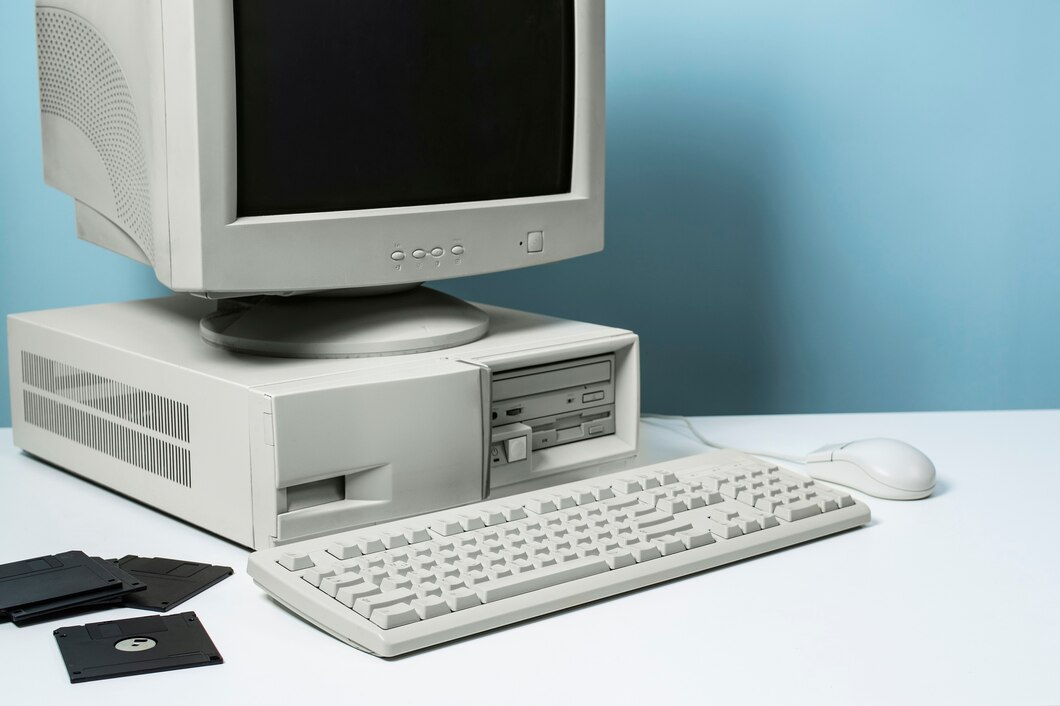
For many people, Windows 95 history represents a major turning point in personal computing. Released by Microsoft in August 1995, Windows 95 introduced a more approachable way to interact with a computer while bringing several technologies together under one operating system. Its graphical interface, Start menu, taskbar, improved hardware support, and growing focus on networking helped make PCs easier and more useful for everyday households.
Before Windows 95, using a home computer could involve navigating complicated menus, manually configuring hardware, and learning unfamiliar commands. Windows 95 did not eliminate all of those challenges, but it moved personal computing toward an experience that felt more intuitive. Its influence could be seen in everything from how people opened applications to how they connected devices and accessed the emerging internet.
The Pre-Windows Era: Computing Before Windows 95
To understand why Windows 95 became so important, it helps to look at what personal computing was like before its arrival.
During the early years of the PC revolution, many computers relied heavily on command-line interfaces. Microsoft’s MS-DOS was particularly influential. Users commonly typed commands to launch programs, manage files, and navigate directories. While powerful, this approach required users to remember commands and understand the structure of their computer’s file system.
Microsoft introduced earlier versions of Windows as graphical environments that operated alongside or on top of DOS. Windows 3.0, released in 1990, and Windows 3.1, released in 1992, brought graphical windows, icons, menus, and mouse-based interaction to a much larger audience.
These versions were important steps forward, but they still carried much of the complexity associated with DOS-based computing. Hardware installation could be difficult, multitasking had limitations, and the overall user experience was not yet as integrated as what Windows 95 would provide.
At the same time, personal computers were becoming increasingly common in homes. People were using PCs for word processing, educational software, spreadsheets, games, and basic communications. As the market expanded, there was growing demand for computers that ordinary users could operate without extensive technical knowledge.
This changing environment created an opportunity for a new generation of Windows.
The Windows 95 Launch
The Windows 95 launch became one of the most highly publicized software releases of its era. Microsoft promoted the operating system as a major step forward rather than simply another incremental Windows update.
Windows 95 officially launched on August 24, 1995. The release represented Microsoft’s attempt to create a more integrated desktop operating environment while maintaining compatibility with a huge library of existing PC software.
The launch received extraordinary attention from consumers and the technology industry. Microsoft invested heavily in advertising and promotion, making Windows 95 feel more like a mainstream consumer product than a technical software release.
One of the most recognizable elements of the campaign was its use of the Rolling Stones song “Start Me Up,” which helped associate the new Start button with the operating system’s launch.
The excitement surrounding Windows 95 reflected something larger than Microsoft’s marketing strategy. By the mid-1990s, computers were becoming increasingly important in everyday life, and consumers were beginning to expect technology to be easier to use.
Windows 95 responded to that expectation with a desktop environment designed around recognizable concepts such as folders, shortcuts, buttons, menus, and a taskbar.
Windows 95 Features That Changed the Desktop
Several Windows 95 features helped distinguish the operating system from its predecessors.
The desktop became more organized around a graphical workspace. Users could place shortcuts and files on the desktop, access programs through menus, and switch between open applications more easily.
Windows 95 also improved multitasking compared with earlier consumer versions of Windows. Users could run multiple programs and move between them through the taskbar.
Long file names were another practical improvement. Earlier DOS conventions placed significant restrictions on file names, while Windows 95 supported much longer file names. This made it easier to identify documents and organize personal files.
The operating system also introduced improved networking capabilities, better support for multimedia, and technologies designed to simplify hardware installation.
Perhaps most importantly, Windows 95 brought many of these functions together into one coherent interface.
The result was an environment that encouraged people to interact with computers visually rather than relying primarily on typed commands.
The Windows 95 Start Menu
The Windows 95 Start menu became one of the operating system’s most recognizable innovations.
Instead of requiring users to manually navigate program directories or type commands, the Start button provided a central location for accessing applications and system functions.
Clicking Start opened a menu containing categories such as Programs, Documents, Settings, Search, Help, and other options. This created a simple mental model: if you wanted to do something with your computer, you could begin by clicking Start.
That idea became deeply embedded in desktop computing.
The taskbar complemented the Start menu by displaying buttons for open applications. Users could quickly move between programs without minimizing everything or searching through overlapping windows.
Together, the Start menu and taskbar established a desktop-navigation pattern that influenced subsequent versions of Windows and became familiar to generations of PC users.
The importance of the Start menu was not necessarily that it performed a technically revolutionary task. Its importance came from making common actions easier to discover.
For new computer users, discoverability mattered. Rather than requiring people to know exactly where a program was located, the interface gave them visible options to explore.
Plug and Play: Making Hardware Easier
Another significant development was Microsoft’s Plug and Play technology.
Before Plug and Play became common, adding hardware to a PC could be frustrating. Users might have needed to configure IRQs, memory addresses, ports, drivers, or other settings manually. A hardware upgrade could turn into a technical troubleshooting session.
Windows 95 aimed to reduce this complexity.
With compatible hardware, Plug and Play allowed the operating system to detect devices and automatically configure many of the settings required for them to work. The experience was not always perfect, and compatibility problems still occurred, but the basic concept was transformative.
Instead of thinking about hardware configuration as a specialized technical task, consumers could increasingly think in terms of connecting a device and letting the operating system handle the setup.
This approach became especially important as home computer users began adding more peripherals, including printers, sound cards, modems, scanners, and other devices.
Plug and Play therefore contributed to a broader shift toward consumer-friendly computing.
Windows 95 and the Rise of the Internet
The mid-1990s were also the beginning of the internet’s transformation from a specialist network into a mainstream consumer technology.
Windows 95 arrived at an important moment in this transition. Its networking capabilities helped position the PC as a communication device as well as a tool for productivity and entertainment.
Microsoft also released Internet Explorer separately and later bundled it with Windows versions during the rapidly developing browser era.
For many home users, getting online required a modem, a telephone connection, an internet service provider, and appropriate software. The process could still be complicated compared with today’s broadband and wireless connections, but Windows 95 helped create an environment in which networking became increasingly accessible to ordinary PC owners.
People began using home computers to send email, visit websites, participate in online communities, download software, and communicate with people beyond their immediate geographic area.
This changed the role of the home PC.
A computer was no longer simply a machine for writing documents or playing offline games. It could serve as a gateway to a rapidly expanding digital world.
Windows 95 and PC Gaming
Gaming was another major part of Windows 95’s impact.
PC gaming had already become a large industry before Windows 95, particularly through DOS-based games. However, the transition toward Windows as a gaming platform helped bring computer games closer to the mainstream consumer desktop.
Windows 95 provided improved multimedia support and introduced technologies that made it more attractive for game developers. Microsoft’s DirectX platform, introduced in the Windows 95 era, became particularly important for game development by providing standardized ways for software to interact with graphics, sound, input devices, and other hardware.
This helped developers create games that could take advantage of PC hardware without having to design every component of their software around individual hardware configurations.
During the Windows 95 era, computer games increasingly became part of the broader home entertainment environment.
Families could use the same PC for schoolwork, communication, productivity, music, and gaming.
That versatility was one of the defining strengths of the personal computer.
A New Kind of Home Computer
Windows 95 helped change how people thought about computers in the home.
Previously, owning a PC could feel like owning a specialized machine that required technical knowledge. Windows 95 contributed to a different image: the computer as a general-purpose household device.
A family could use one machine for multiple purposes. Parents might use it for work and finances. Students could use it for assignments and educational software. Children could use it for games. Other family members could explore email and, increasingly, the World Wide Web.
This versatility encouraged more households to view computers as useful everyday tools.
The graphical interface also helped lower the psychological barrier associated with computing. Users did not necessarily need to understand how the operating system worked internally to perform basic tasks.
They could click icons, open folders, drag files, and select commands from menus.
That visual approach became a defining characteristic of mainstream personal computing.
The Cultural Impact of Windows 95
The cultural impact of Windows 95 extended beyond technology.
The operating system became a recognizable part of 1990s popular culture. Its launch generated substantial media attention, and the operating system’s branding became familiar even to people who were not particularly interested in computers.
The Start button became almost synonymous with using a Windows PC.
For a generation of users, learning to operate a computer meant learning the Windows 95 interface. Concepts such as the desktop, taskbar, Start menu, Recycle Bin, folders, and shortcuts became part of everyday digital vocabulary.
Windows 95 also helped normalize the idea that software could be designed for ordinary consumers rather than exclusively for technical specialists.
This was significant because personal computing was entering schools, offices, libraries, and homes at the same time.
The operating system’s influence could therefore be seen not only in software development but also in digital literacy.
Windows 95 and the Broader Windows History
Within Windows history, Windows 95 occupies an important position between Microsoft’s earlier DOS-oriented operating environments and the more integrated Windows platforms that followed.
Windows 95 retained compatibility with DOS-era software while moving users toward a more modern graphical environment.
It was followed by Windows 98, which built upon many of the ideas introduced or popularized during the Windows 95 era. Later consumer operating systems continued to evolve the desktop, hardware support, networking, multimedia capabilities, and internet integration.
The specific interface changed over time, but many underlying concepts remained recognizable.
The Start menu and taskbar became recurring elements of Microsoft’s desktop operating systems. Hardware detection and automated configuration became increasingly sophisticated. Internet connectivity became a central feature rather than an optional addition.
In this sense, Windows 95 was not simply a successful product. It was part of a larger transition in the history of personal computing.
Limitations of Windows 95
Although Windows 95 was influential, it was far from perfect.
Hardware compatibility could still be problematic, particularly when users installed devices that lacked reliable drivers. Plug and Play reduced configuration problems but did not eliminate them.
System stability was also a concern. Windows 95 was a hybrid operating environment with roots in DOS, and it did not provide the same level of architectural isolation associated with later Windows platforms.
Memory management, crashes, driver conflicts, and software compatibility could still cause frustration.
Internet access was another area where the experience remained primitive by modern standards. Most home users depended on dial-up connections, which were slow compared with today’s broadband and mobile networks.
These limitations are important because they demonstrate that Windows 95 did not suddenly make computing effortless. Instead, it represented a major step in a longer process of making computers more accessible.
Why Windows 95 Mattered to Families
The most significant effect of Windows 95 may have been its ability to bring different computing activities together.
A household did not need separate machines for every task. One Windows PC could support productivity software, educational applications, games, multimedia, communications, and internet access.
The operating system also helped establish expectations about how computers should behave.
Users increasingly expected applications to have familiar menus and windows. They expected files to be organized into folders. They expected open applications to appear on a taskbar. They expected a central menu to provide access to programs and settings.
These expectations became so common that many users eventually stopped thinking about them as design choices.
That is one of the clearest signs of lasting technological influence: when an innovation becomes ordinary.
The Legacy of Windows 95
The legacy of Windows 95 can be seen throughout modern desktop computing.
Its Start menu concept continued through many generations of Windows, even when Microsoft experimented with different layouts. The taskbar also remained a fundamental part of the Windows desktop.
The operating system helped popularize the idea of a consumer-oriented graphical desktop that could accommodate productivity, entertainment, communications, and internet access in one place.
Its influence also extended to hardware and software development. Plug and Play encouraged expectations of easier device installation, while DirectX became an important foundation for Windows gaming.
Windows 95 also played a role in establishing Microsoft Windows as a dominant consumer desktop platform during a critical period in the growth of the PC industry.
From a broader historical perspective, its importance was not simply about individual features. It was about combining those features into an operating environment that millions of people could use.
Conclusion
The story of Windows 95 history is ultimately the story of personal computing becoming more accessible to everyday users. Its Windows 95 launch in 1995 arrived at a time when PCs were moving rapidly from specialist tools into homes, schools, and mainstream workplaces.
The operating system introduced or popularized important concepts, including the Windows 95 Start menu, taskbar, Plug and Play hardware support, improved networking, multimedia capabilities, and a more approachable graphical interface.
It also arrived as the internet and PC gaming were entering a new phase, helping position the home computer as a versatile platform for work, communication, entertainment, and exploration.
Windows 95 had technical limitations, and later versions of Windows eventually replaced many of its underlying technologies. Nevertheless, its design ideas influenced the way people interacted with computers for decades.
For many users, Windows 95 was the moment the PC stopped feeling like a machine that required specialized knowledge and started feeling like an everyday household tool. That shift helped define an important chapter in Windows history and left a lasting mark on the evolution of home computing.
About the Author